

Want to know how to revive sourdough starter? Maybe you think your sourdough starter has gone bad or is unable to rise a loaf of bread?
Forgotten about your sourdough starter at the back of the fridge?
Maybe you’ve been away or just been busy and now you’d like to get back into baking with your sourdough starter – but it’s been forgotten at the back of the fridge and now looks like something that grew in a swamp.
Never fear. Unless there’s visible mold on your sourdough starter, it will be able to be revived!
Sourdough starters are actually really hard to kill!
And in fact it’s very unlikely that your sourdough starter has gone bad!
This post contains affiliate links. Please see our disclosure policy.
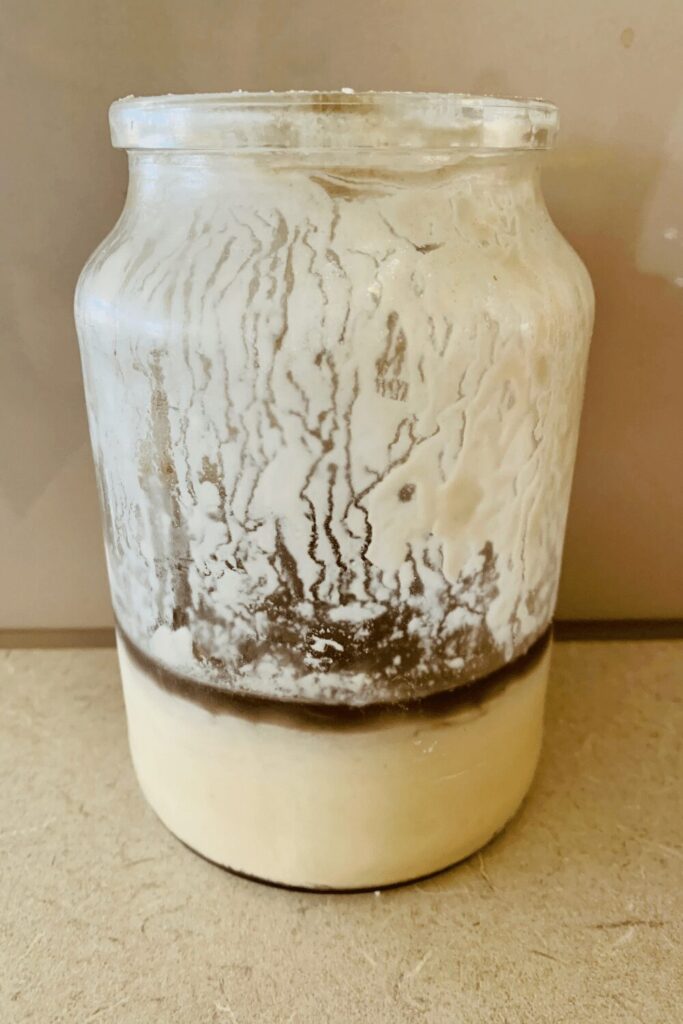
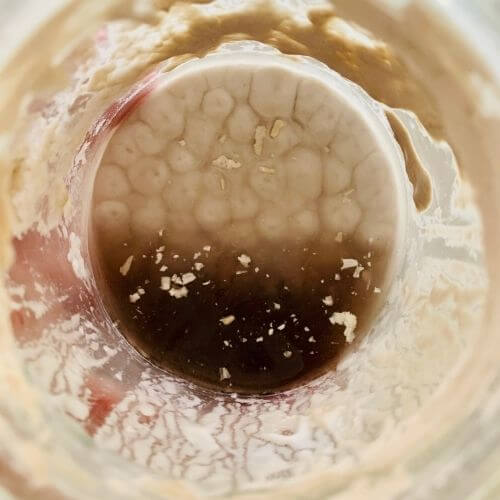
Even if your starter looks like this! A thick black layer of liquid on top?
Maybe there is old starter on the sides of the jar that looks a bit darker than it should? And the smell … like nail polish remover or paint thinner!
Believe it or not – this sourdough starter hasn’t gone bad and can be saved!
You might think you’ve killed your sourdough starter, but chances are it can be brought back to life.
Help! My Starter Has Formed Black Liquid
The most common issue that arises from forgetting about your starter in the fridge for a long period of time is that it generally develops hooch.
But, unlike the hooch that forms when your starter is left out, hooch that forms over long periods in the fridge is often dark purple or even black and looks absolutely vile.
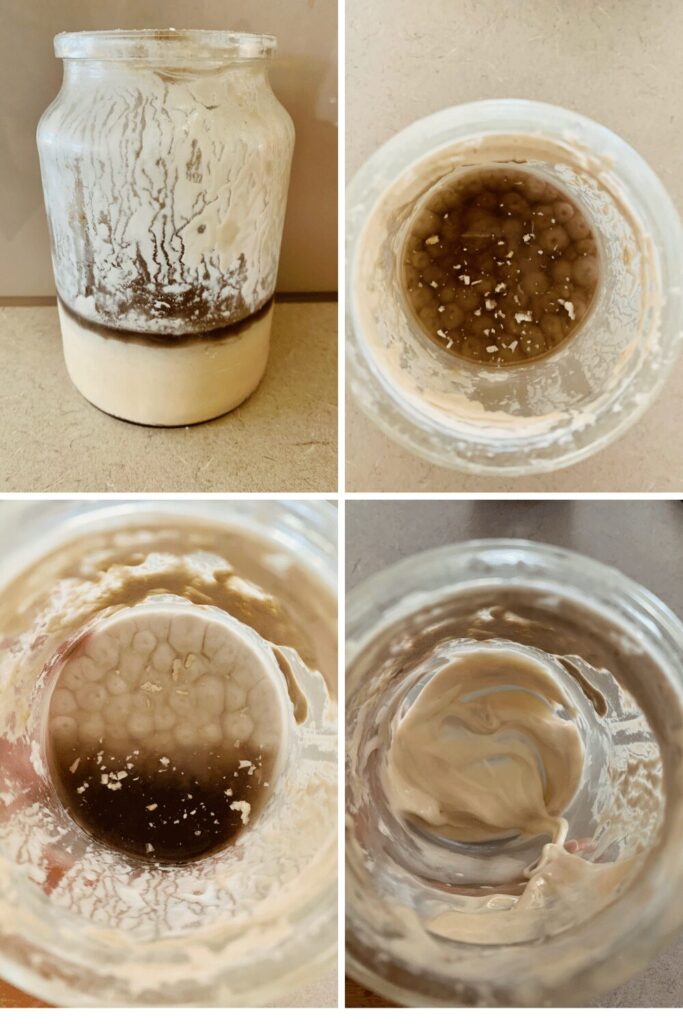
The thing is, as long as there is no visible mold on the surface of the hooch – or the sides of your jar – your starter will be fine.
Hooch is just a sign that it is starving. This makes sense given that it’s been forgotten about in the back of the fridge.
Your forgotten sourdough starter will more than likely smell really bad too.
Possibly like acetone or nail polish remover – or even worse. But don’t stress – this smell is also a sign that your yeast and bacteria are starving.
If you want to know how to prevent hooch from forming in the future, check out this comprehensive guide to preventing hooch in your sourdough starter.
Just a note about mold – if you do see some fuzzy green or black mold on the sides of the jar or even on top of the hooch – you must toss the starter entirely.
Mold is a non negotiable and the spores will have penetrated the whole starter.
You definitely don’t want to be consuming mold!

How To Revive An Old Sourdough Starter
In order to restore your sourdough starter to its former glory, you need to do the following:
- Pour off as much of the dark hooch as you can.
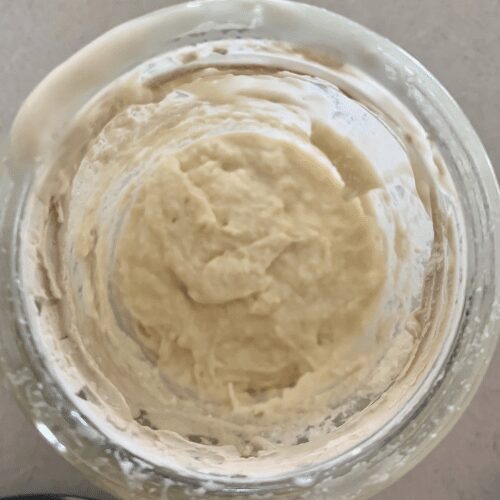
- Discard most of the starter (you can either just remove it from the jar or place some of the starter into a clean jar). You can see how much I removed in the photo below.
- Feed the remaining starter with 100g of flour and 100g of water. Let it sit out at room temp for around 12 hours.
- Take 50g of starter from the jar and feed it another 100g of flour and 100g of water. Leave the starter for around 12 hours. After this second feeding it should double. If it does then it’s ready to use. If it doesn’t, repeat step 4 every 12 hours until it does.
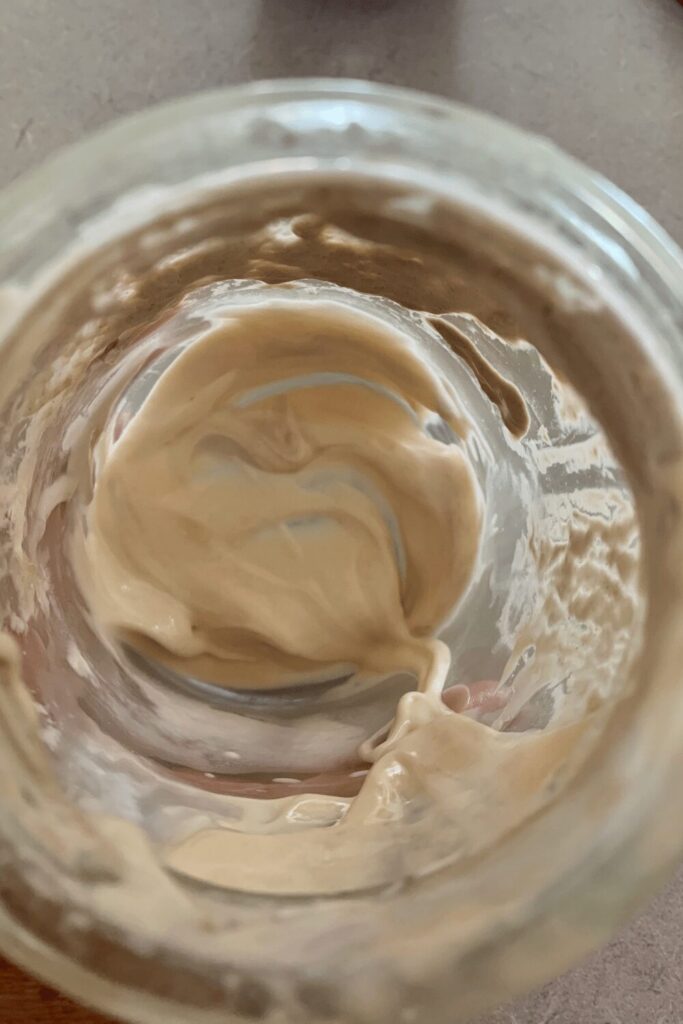
The above process gives your neglected sourdough starter a huge feed (if you measured it would be somewhere around the 1:5:5 in terms of sourdough starter ratios).
You need to give your poor starving yeastie beasties a nice big feed to refresh them and get them back to their usual happy selves. This also helps to balance out any acid build up and is part of doing a monthly sourdough reset.
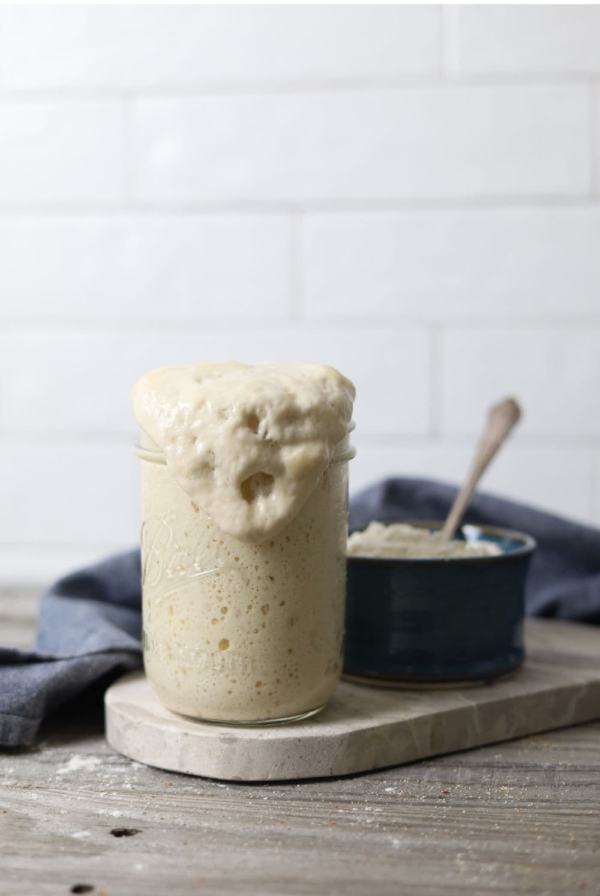
Depending on how mature your starter was when you placed it into the fridge, one or two feeds should be enough to get it back.
But if it your starter is still sluggish after 2 feeds, don’t stress, just feed again and you will start to see some action.
Best Tips for Reviving Sourdough Starter
You can see that even when your sourdough starter looks like something from the swamp, it can almost always be revived. Here are my best tips for quickly reviving your sourdough starter back to optimal health:
- Pour off the hooch when it’s been stored for a long time. Many people say to stir it in – and this is fine if it’s “fresh” hooch. But if it’s been in the fridge for a few months, I recommend pouring it off.
- Add the water to your jar first, give it a good shake to really move the wild yeast around. Then add the flour and stir. This will super boost your old sourdough starter.
- Once your sourdough starter is doubling and smelling healthy, dehydrate a portion of it so you never get caught out again.
- Remember to feed your sourdough starter regularly – even if it’s in the fridge – to ensure that you don’t end up with another swamp monster.
Further Reading
If this post was helpful, you might enjoy these ideas:
- Have I Killed My Sourdough Starter?
- Don’t lose your starter to neglect or mold – save it by drying it out and storing it safely.
- What to do if you find mold in your sourdough starter.
- Need some ideas for all the sourdough discard you’ve accumulated? You’ll find loads of inspiration here.
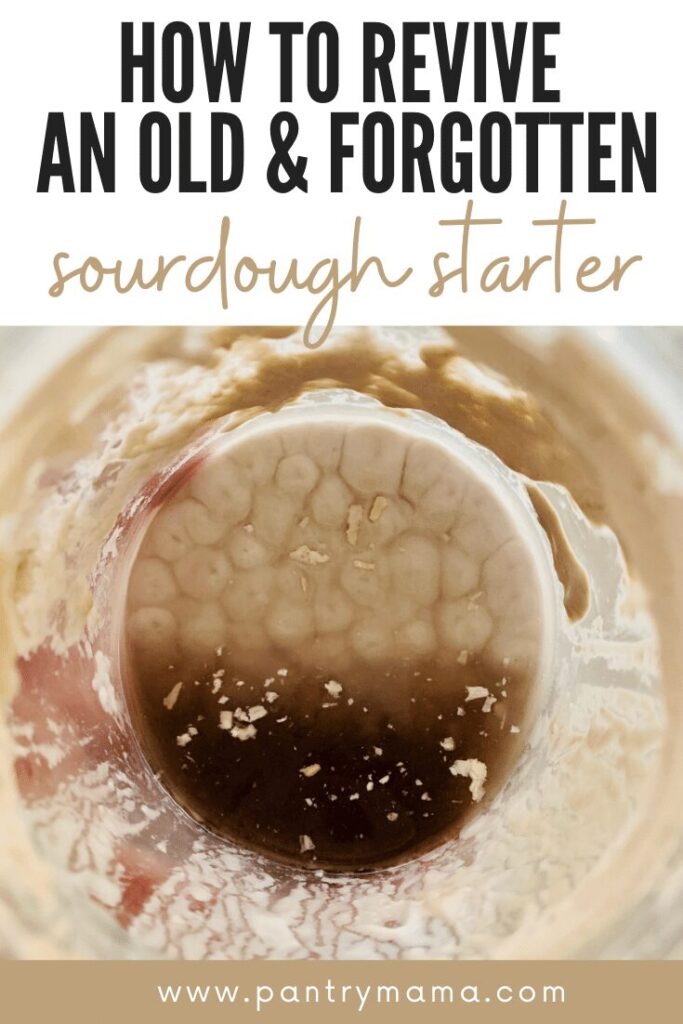
How To Revive Sourdough Starter
Equipment
- Digital Scales
- Jar
Ingredients
- 500 g All Purpose Flour
- 500 g Water
Instructions
- Pour off as much of the dark hooch as you can.

- Discard most of the starter (you can either just remove it from the jar or place some of the starter into a clean jar).
- Feed the remaining starter with 100g of flour and 100g of water. Let it sit out at room temp for around 12 hours.
- Take 50g of starter from the jar and feed it another 100g of flour and 100g of water. Leave the starter for around 12 hours.
- After this second feeding it should double. If it does then it's ready to use. If it doesn't, repeat step 4 every 12 hours until it does.
Nutrition
Nutrition information is automatically calculated, so should only be used as an approximation.
Like this? Rate and comment below!









Thank you, I had done step one, now I know that I just need to keep at it. Thank you.
Just revived my sourdough starter!! Thank-you!!!
I followed your first step and the sourdough starter doubled within 12 hours. Should I have stopped there? I did follow the second step and the starter is overflowing out of my container! After that, if you’re not ready to use it, do you put it in the fridge?
I have a starter that I left in the fridge for a couple of months. It is thick and smells of alcohol. I forgot to pour off the hooch or disgard any. I just fed it. Is it ok?
Hi do you feed the 50 you removed, or the remaining contents after you’ve taken 50? Thanks
You have been my go-to resource since starting the sourdough adventure this summer! (more misadventure haha)
Seemingly out of nowhere, my starter was yielding overly wet and shapeless dough. Each time I “salvaged” by dumping it into a loaf pan. I tried a stint of feeding it more regularly, did the less hydration ratio, and had been doing 50/50 Rye Flour/Reg Flour up until the plop loaves.
I then resorted to trying to revive some discard I had in the fridge instead – on the second feed per these instructions it did double and bubble! However, it still seems to be wet? I did another feed. Anything else I should be particularly mindful of?
Maybe start pulling back on the water after these revive instructions?
Appreciate your help@
I am at step 1 for reviving my starter. At the first 12-hour sit, is it covered? Thank you.
Hi, I have a question about step 4. When I take 50g from the jar, am I discarding the rest? Or am I discarding 50g and adding the 100g flour and water to jar?
Thank you
Hi, do you discard the 50 grams or feed the 50 grams..? Some more clarity would be nice as many people have asked this one!
Thank you so much for this. Just revived my starter after months forgotten in the fridge! This was really helpful. I came home last night to a blow out it worked so well 🤣
Thank you so much! I thought my 40 year old starter might have kicked the bucket!
This article was so encouraging! You clarified just how I could keep the faith for some starter I received from a good friend and want to do well with (after 3 months neglected in the fridge). Thanks too for the discard recipe ideas!
You don’t say how much starter in wt. you feed initially with the 100g of flour and water?
Followed your instructions. Got a little more confidence with what I was doing after day 2, managed to waken up a very neglected & forgotten about starter I’d be given. The baking of my first loaf is next. Thank you for you help. Really helpful guidance.
I think I read this wrong… I read that in step 4, I should remove 50g and then add 100g of flour and 100g of water to the remaining starter. Did you mean I should be adding the 100g of flour and 100g of water to the 50g of starter that I removed?
Hello . I’m new to sourdough bread making . My sister in law gave me one cup of starter and seems like I didn’t feed it enough bc it won’t rise . Once I’ve done the steps above , how do I know how much to feed it every week after that ? I’m confused about the ratio once I’ve completed above steps . Also , can I put the starter AND the dough (once it’s made ,)on a warming pad? I bought it on Amazon . Thank you in advance 🙂
In this case, what do you do with the starter you discard?
Put it in the trash?
Put it down the drain?
I’m not sure.
You can throw it in the trash or compost bin.
Why do you remove 50 grams and feed rather than just feeding the entire starter.
My starter was healthy. Then I was away for portions of the summer. I was home every 5-10 days and fed my starter and put it back into the fridge. Now I’m trying to revive it. I’ve been feeding it every 12 hours for 6 days; I’ve added a bit of rye flour to some feedings…it’s not changing at all!! Help please!!
Curious note, there was no hooch! I also have a jar of discard that’s been in the fridge a long while and it has no hooch either.
What does it mean if my sourdough has a nail polish smell? And how can I prevent that in the future? I’m guessing I would need to revive it by discarding most of it?
This totally saved my starter! It had the exact same look as your top photos and I wasn’t sure if it was mold or if it should be tossed (hadn’t touched it for several years). I went ahead and fed it twice, and it’s totally bubbling and smelling healthy. I’m so excited because this is from my dad’s starter from the 1980’s and I would have hated to lose it. Thank you thank you!
Thank you so much! This helped me revive 3yo starter left in my fridge.
Yay! So happy to hear that, Bonnie 🙂
This worked for me. I had tried to revive my starter in the usual way but it looked very sad and was hardly bubbling at all. I took 50g of that sad looking starter, added 100g each of flour and water and the next day it was frothing beautifully.
Thank you. She lived again!!!
Is there a way to get rid of kahm’s yeast once and for all? I scrape it off but it keeps coming back. I don’t want to start over, I hope you can help.
Not really, if it keeps coming back you might actually have to start again unfortunately 🙁 Sometimes, you can scrape it off and it will stay away, but if it keeps coming back, I’d toss it and start again. Do you have a dried sourdough starter as a back up? I highly recommend this so you never really have to start again 🙂
This really did the trick! My starter has come back to life!! Thank you so much!!
HELP! I came across your post when looking for ways to revive my 5 year old starter (fingers crossed). I’ve been following your method but wonder if I’m doing it wrong because step 4 is unclear to me – do you remove all the starter EXCEPT 50 grams, or just remove ONLY 50 grams of starter to discard before adding the 100g water + 100 g flour? I’ve been doing the latter because that’s what step 4 reads like and after 3, 12-hour feedings, its coming back to life but I have a lot of starter now. Am I doing it right or wrong? Should I discard most of it in my next step? Thanks!
Ok so with step 4 you want to take 50g of starter and put it in a clean jar and feed that 50g of starter with 100g of flour and 100g of water. The rest of the starter that’s left in the original jar can be tossed (that’s discard). Hope that helps 🙂
Thank you for clarifying! I’ll only keep 50 gms of the original starter for each feeding – it’s working!