
If your sourdough starter isn’t bubbling and doubling or behaving like it should, you need to give it a boost and strengthen your sourdough starter! Sourdough starters can suffer through a fair bit of neglect, but sometimes it can be a bit of a struggle to get them back on track. I’m going to share my tried and tested methods to strengthen a sourdough starter. It’s not luck, it’s consistency and understanding what is making your starter weak in the first place.
These tips will work to strengthen your sourdough starter if:
- your starter is constantly smelling like nail polish remover, even after a feed.
- your starter has been a bit neglected (left in the fridge unfed a bit too long) or you’ve skipped a few too many feeds on the counter (this has likely caused your starter to become acidic);
- you’ve been growing your sourdough starter for a few weeks, it’s just not doubling consistently and seems to be at a plateau.
- your sourdough loaves are consistently coming out lacking oven spring, with a gummy interior and pale crust.
Table of Contents
What Causes A Weak Sourdough Starter?
A weak sourdough starter can be caused by many factors, but in my experience in helping thousands of sourdough home bakers grow thriving colonies of yeast and bacteria, the most common causes of a weak sourdough starter is acidity. Acid build up is caused by consistent neglect (leaving your starter in the fridge unfed for over 2 months or on the counter for a few days). This neglect allows the lactic acid bacteria to produce too much acid which essentially hinders the yeast. Wild yeast survive and thrive in a slightly acidic environment (which is why they can tolerate living alongside lactic acid bacteria), but they struggle to reproduce in a highly acidic environment, which means if your starter becomes too acidic, it stops bubbling (since the bubbles are created by the yeast).
If your yeast aren’t happy, then your dough will not rise. It’s pretty simple.
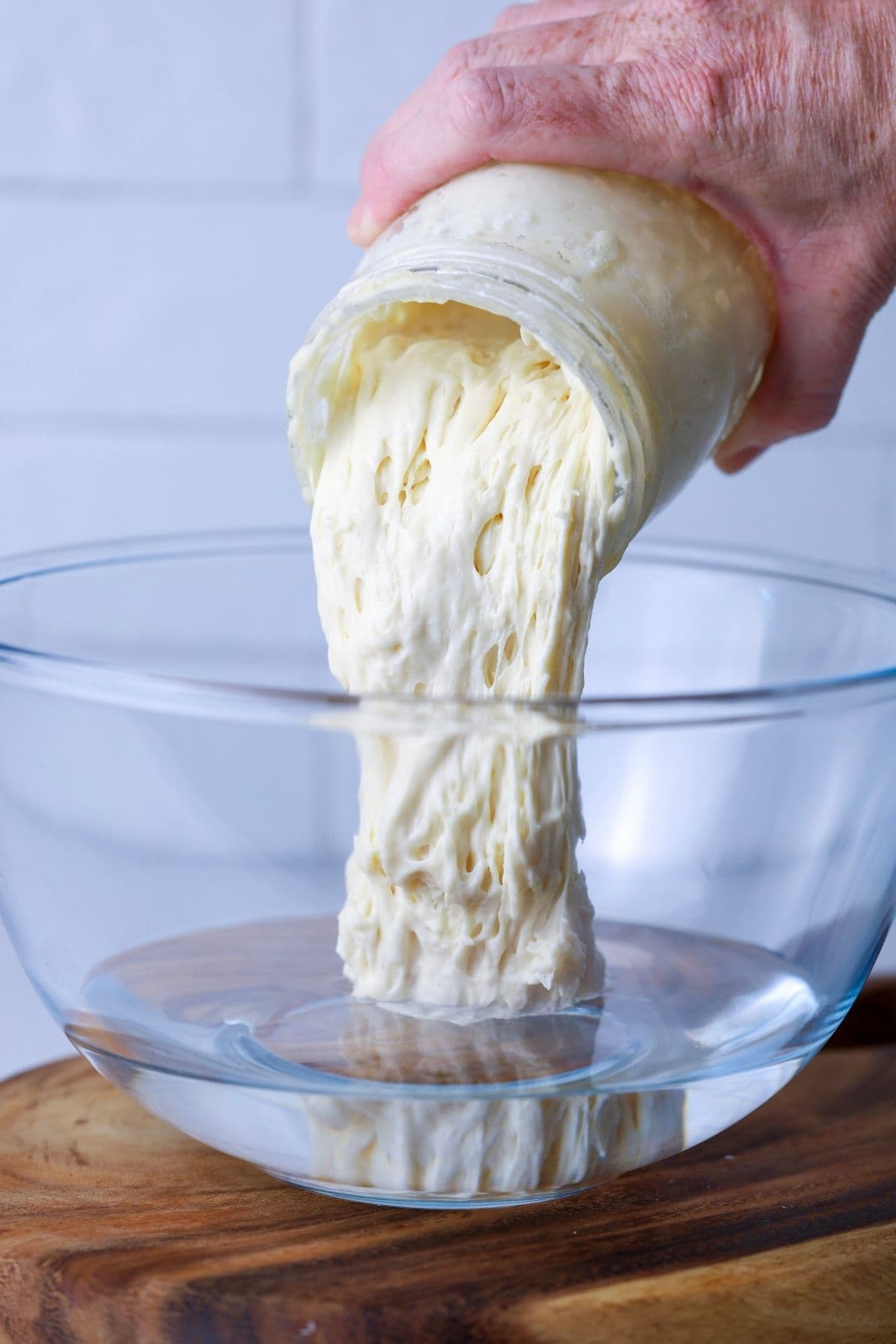
A strong starter should double, or even triple, consistently after being fed (happy yeast equals a happy starter). The timing of this will depend on the feeding ratio you use. A healthy starter should smell pleasant and yeasty and be teaming with bubbles. It should produce a lofty loaf with an open crumb structure. You can read more about how a sourdough starter works or when is your starter is ready to bake with.
This post contains affiliate links. Please see our disclosure policy.
Use A Scale!
Always use a digital kitchen scale to weigh your sourdough starter, flour and water in grams. Using a scale means that you are consistently feeding your sourdough starter the same weight each time and not guessing anything. Remember, a cup of flour and cup of water do not weigh the same, so following ratios like this are not helpful and will cause you problems as you try to create a healthy sourdough starter. I’m pretty passionate about using a scale and weighing sourdough ingredients! You can read more about the benefits of weighing sourdough ingredients if you’d like to understand this more.

Stir Your Starter
One of the easiest ways to encourage a strong, healthy sourdough starter is to stir your starter between feedings. Now you might think this is too simple, but hear me out! The yeast and bacteria in your sourdough starter can’t actually move, depsite the fact that they are actually alive. Stirring your sourdough starter consistently actually moves the yeast around, giving them access to more flour and water, which is what they use to produce carbon dioxide, the gas bubbles which make your starter (and dough) rise!
Kate’s STARTER Tip
While a sourdough starter does not require oxygen in order to work, a little oxygen when you first feed your starter is actually helpful for the yeast, so stirring your starter really well after feeding and again after a few hours is not going to do it any harm!
Feed Your Sourdough Starter Superfood
If you have created your sourdough starter from a white, processed flour, it will really benefit from having a boost of rye flour. Rye flour is like a superfood to your sourdough starter and it will help to strengthen it fairly fast by providing additional nutrients. In fact, rye flour starters perform notoriously well (in my experience it’s better to use half rye flour and half bread flour or all purpose flour, rather than 100% rye flour). Rye flour will also help to make your starter more sour, which can make your sourdough bread more sour tasting too.
To boost your sourdough starter with rye flour, substitute half your normal flour with rye flour at each feeding for a few days and you should see a noticeable difference in your starter’s activity level.
Freshly milled whole wheat flour is also very beneficial to your starter if you have access to it and can help to increase the wild yeast in your sourdough starter. You might also enjoy this guide to feeding your sourdough starters different flours.
Discard Before Every Feed
It’s as simple as it sounds. Before you feed your sourdough starter, you must discard some. The easiest way to do this is to feed your starter into a clean jar and then just toss what’s left in the old jar. Not discarding can lead to an acidic starter that is sluggish, smells bad and doesn’t rise like it should. Read more about why you must discard sourdough starter.
Rethink Your Feeding Ratio
If your starter continually produces hooch, it’s a sign that it’s hungry. It may mean that you need to increase the amount you’re feeding it, rather than the frequency you feed it.
Try doubling the amounts of water and flour you are feeding your starter each time – so feeding at a 1:2:2 ratio. A 1:2:2 ratio can be better than a 1:1:1 ratio because it can help to rebalance your starter. If you’re worried about using more flour, just reduce the amount of starter, so instead of 50g of starter, use 25g of starter, then you’ll still feed it 50g of flour and 50g of water.
You might like this in depth guide to sourdough starter ratios.
Keep Your Starter At A Lower Hydration
If your sourdough starter seems to be a little thin, it can be hard to see if it’s actually bubbling as the bubbles will escape very quickly and you won’t get any big bubbles on the side of your jar. Thin, runny starters can also become acidic very easily.
In order to strengthen your sourdough starter try and give it flour only for one or two feeds. This will make the mixture stiffer and essentially lower the hydration of your starter.
If your starter is quite runny, it should be easy to stir the extra flour into the mixture. If it seems a little stiff, it will loosen up as it eats and ferments the flour.
Once you’ve done one or two feeds of flour only, your starter should be thick enough and you can go back to normal feedings of flour and water.
If you’re concerned that feeding your starter flour only will upset it’s ratio – don’t be. If you need your starter to be at 100% hydration for a recipe, you can easily get it back to 100% hydration at the next feed. Just put 25g in a clean jar and then feed 25g of flour and 25g of water – you’ll then have a 100% hydration starter.

Keep Your Sourdough Starter Warm
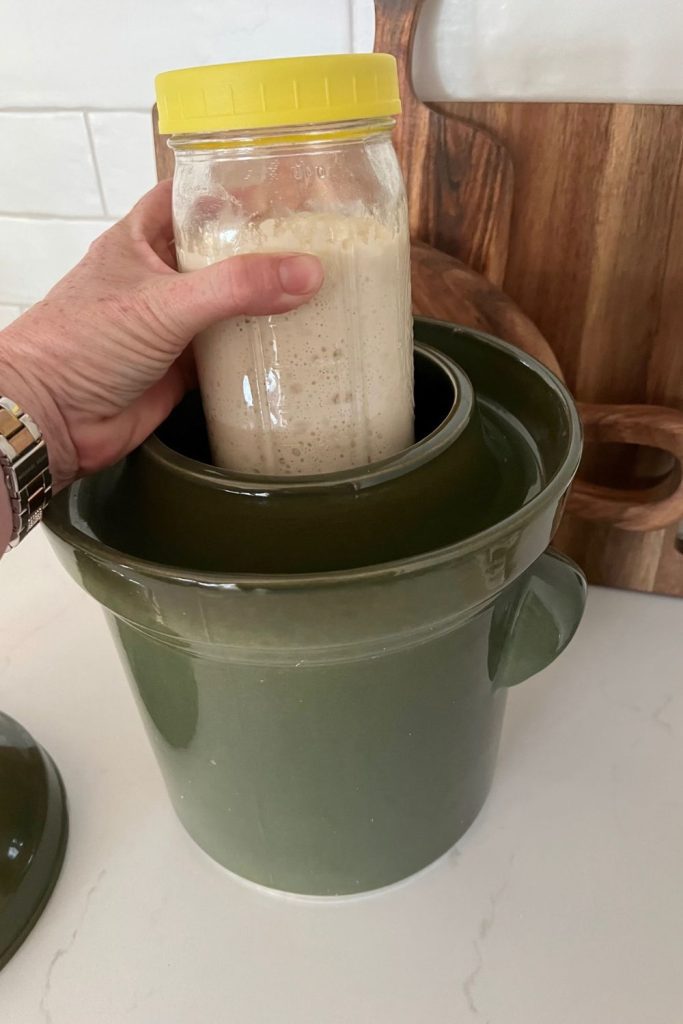
Starter temperature is so important when when you first establish your sourdough starter, and also when trying to strengthen a weak sourdough starter. A sourdough starter that is being kept in cooler temperatures (below 70ºF/21ºC) will not colonise and thrive as well as a starter that is kept above 75ºF/24ºC). The trick with this is to keep your starter warm, but not let it get above 28ºC because this will encourage the acid build up that we are trying to avoid.
Totally Refresh Your Starter
If you are really seeing no consistent activity from your starter, you can give it a complete refresh. This will generally get your starter going again after a period of neglect or even overfeeding. This is especially helpful if you suspect your starter has an acid build up.
- Put 5g of your starter into a clean jar (you can discard the rest).
- Feed this 5g of starter with 25g of flour and 25g of water and stir in really well (this is essentially a 1:5:5 feeding ratio).
- Cover loosely and leave this to peak (at least double). If it doesn’t double, then continue to step 4 after 12 hours.
- Take 5g from your jar and put it into a clean jar. Add another 25g flour and 25g of water to this 5g of starter, stirring really well. Cover again and leave until it peaks. It should be really bubbly and smell pleasant now.
- Once the starter in your jar is at peak, it should be back to normal and you can use it to bake or at least start feeding normally. I recommend feeding your refreshed starter at a 1:2:2 ratio from now on to stop it from becoming acidic. Remember to discard to ensure you’re not getting that acid build up occurring again.

I hope these tips help you to strengthen your sourdough starter and ultimately help you to bake better sourdough bread! Just remember that generally, a weak sourdough starter is caused by too much acid building up in your jar, so taking steps to correct the balance in your starter jar will bring you rewards for many years to come.
Frequently Asked Questions
You can but there really is no need to. Sugar will give the yeast more to feed off, however this will not necessarily strengthen your sourdough starter. I would keep the sugar to add to your loaves – unless you are trying to create a sweet sourdough starter.
In the first few weeks of creating a sourdough starter, it is possible that your starter will bubble, but not actually rise (as in double). This is fine in the early stages of sourdough starter establishment. It just means that the bacteria in your jar are fighting it out for supremacy. Once the good bacteria win the fight, you’ll see that your starter begins to double. It’s very normal for a sourdough starter to bubble, but not rise, for a number of days in the early stages. Just keep going.
Absolutely. As mentioned above, stirring is a fantastic way to get oxygen into your sourdough starter which is essential for its growth.
No! There is absolutely no need to add pineapple juice to your sourdough starter. This will change the acidity in the jar. Just stick to flour and water (along with the tips in the post above).
Yes you can. It’s a good idea to add rye to give your starter a boost (if you think it needs it). If you are swapping flours (like swapping from all purpose to whole wheat or vice versa) understand that your sourdough starter may go through a little dormant period while it adjusts to the new food source. It will recover, but it might take a few days. Unless you are unhappy with your sourdough starter’s progress, it’s generally better to stick to the same flour for each feed to maintain a consistent starter.
Absolutely – the quality of the water you feed your sourdough starter is very important. You should avoid distilled, reverse osmosis and chlorinated water. Check out this guide to the right water for sourdough starter.













If I am not actively baking sourdough, how often should I be feeding my starter while in the fridge?
You don’t necessarily need to feed it, however this guide will help you work out whether you need to or not 🙂