
This post contains affiliate links. Please see our disclosure policy.
If you’ve been following me for a while, you’ll know I’m a huge advocate for using a scale to weigh sourdough ingredients (and in fact any baking ingredients). Sourdough baking relies on precise ratios of flour, water, and starter — and even small differences can change the way your dough behaves. That’s why a good digital scale is one of the most important tools you can have in your kitchen.
Over the years I’ve used quite a few different scales while testing recipes for The Pantry Mama. Some are better suited to large doughs, others are perfect for measuring small quantities of ingredients.
In this guide, I’m sharing three baking scales I regularly use in my own kitchen:
- My trusty KD-8000, which is my everyday workhorse and the best kitchen scale!
- The Ooni Dual Platform Scale, which gives you two scales in one
- The Ikea Digital Scale, which is a great budget-friendly option
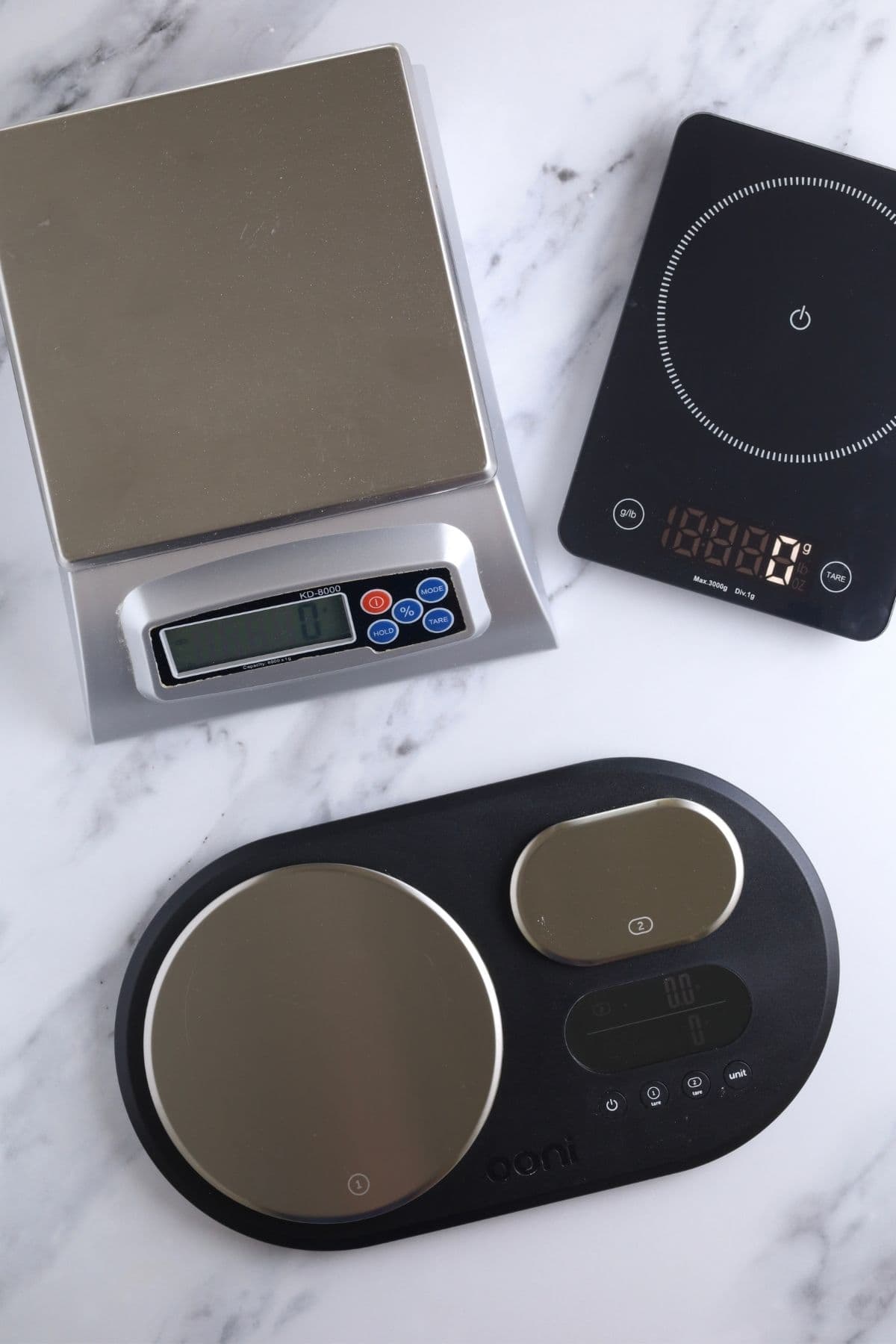
I’m not going to bore you with all the scales that didn’t make the list, because, let’s face it, they’re not here for a reason … and you just want to know which one to buy, right? The 3 scales I’m sharing here have been tested extensively in my kitchen and are still in use today!
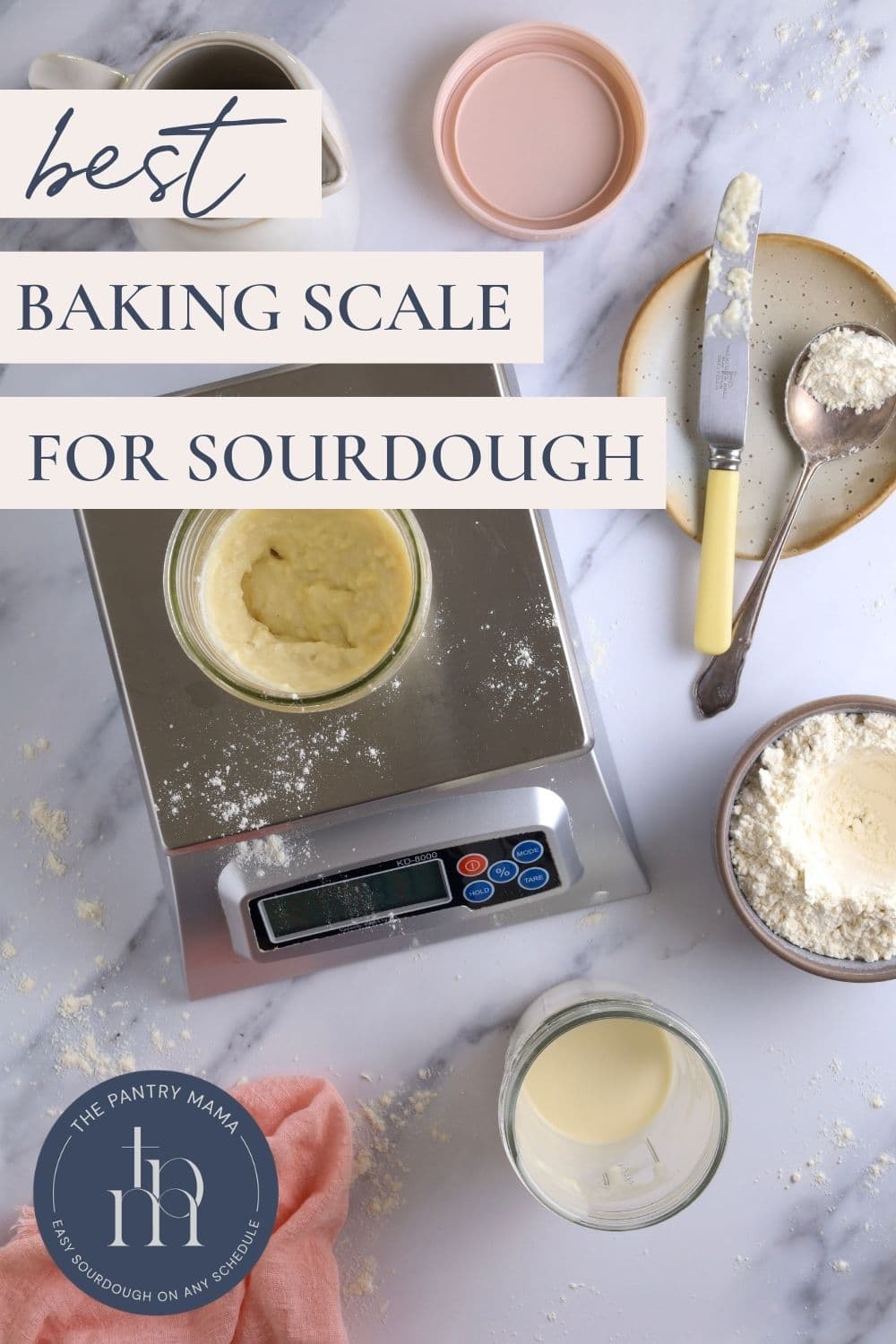
My Go-To Scale: My Weigh KD-8000 Digital Kitchen Scale
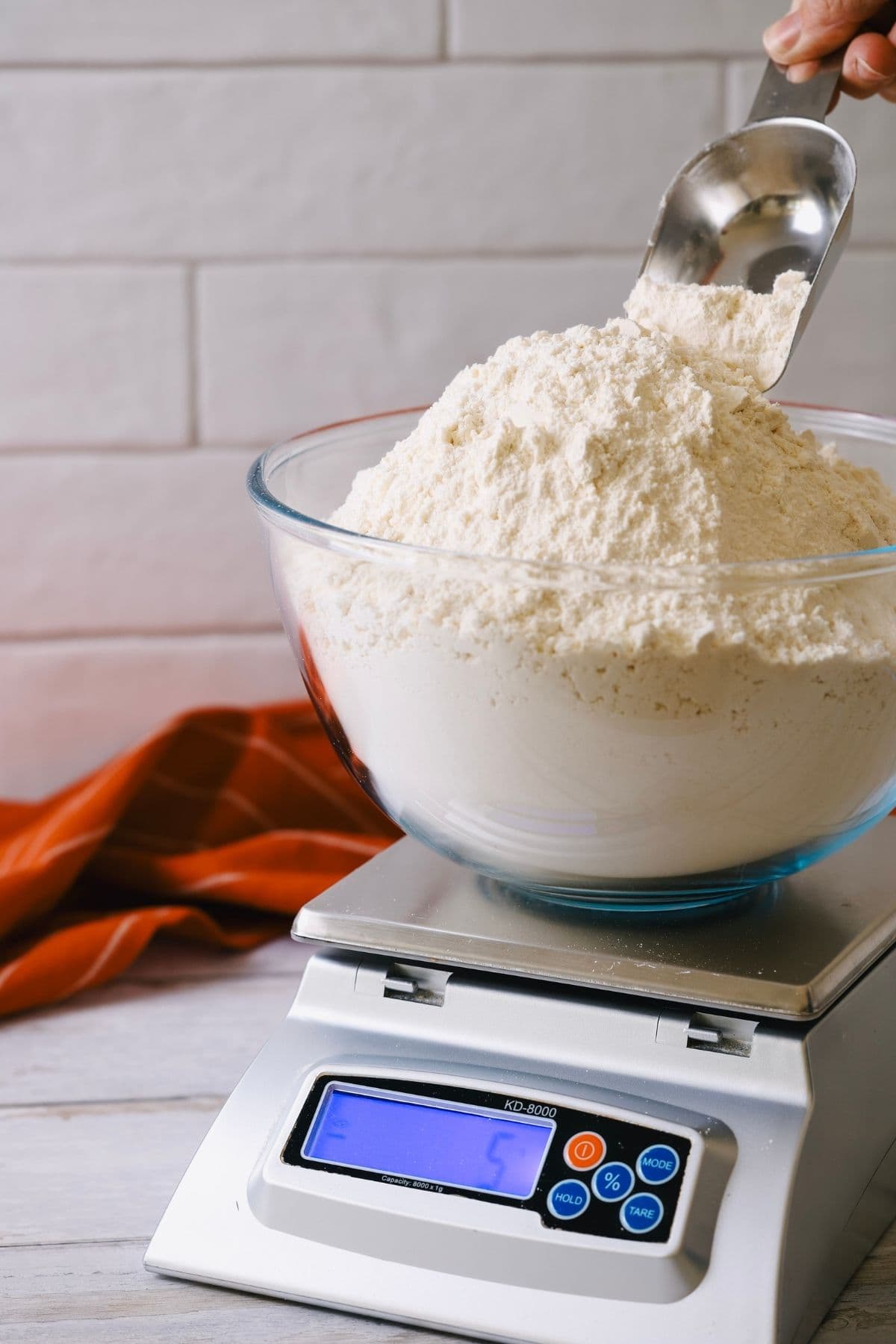
If you’ve ever looked closely at the photos on my website, chances are you’ve already seen this scale many times. The My Weigh KD-8000 has been sitting on my kitchen counter for years and it’s the scale I reach for almost every time I bake sourdough. It’s my top pick!
From weighing ingredients for a recipe to dividing dough into equal portions, this scale has never missed a beat. It’s incredibly reliable and easy to use, which is exactly what you want when you’re baking regularly. I use this scale for pretty much everything. And while it’s really robust, it actually still fits in my baking draw, which is a bonus when I wan to clear my kitchen counters.
Pros
- Extremely reliable and accurate up to 8kg.
- Large stainless steel weighing platform (great for big mixing bowls)
- Easy-to-read display (and has an optional blue backlight).
- Buttons are very easy to wipe clean (and handle a lot of flour being spilled due to their “all in one design”).
- Durable and built to last – I have put this one through its paces in my kitchen!
- Handles large dough weights with ease.
Cons
- Quite high profile, so won’t fit into smaller draws.
- Not the most modern-looking design (which is why I prefer it in a draw).
- Doesn’t measure extremely tiny quantities as precisely as micro scales.
- The platform can come off the scale when you’re weighing sticky doughs which can be annoying, but it’s really easy to put back into position.
How I Use It in My Kitchen
This is my everyday sourdough scale. I use it to:
- Weigh flour, water (and other liquid), and starter when mixing dough;
- Portion dough for multiple loaves, pizzas or rolls;
- Divide dough for shaping (think sourdough pizza, sourdough sandwich rolls etc);
- Weigh add-ins like nuts, seeds, or fruit.
If I had to choose just one scale for sourdough baking, this would absolutely be it. Despite it’s appearance, I really, really love this scale!
Ooni Dual Platform Scale
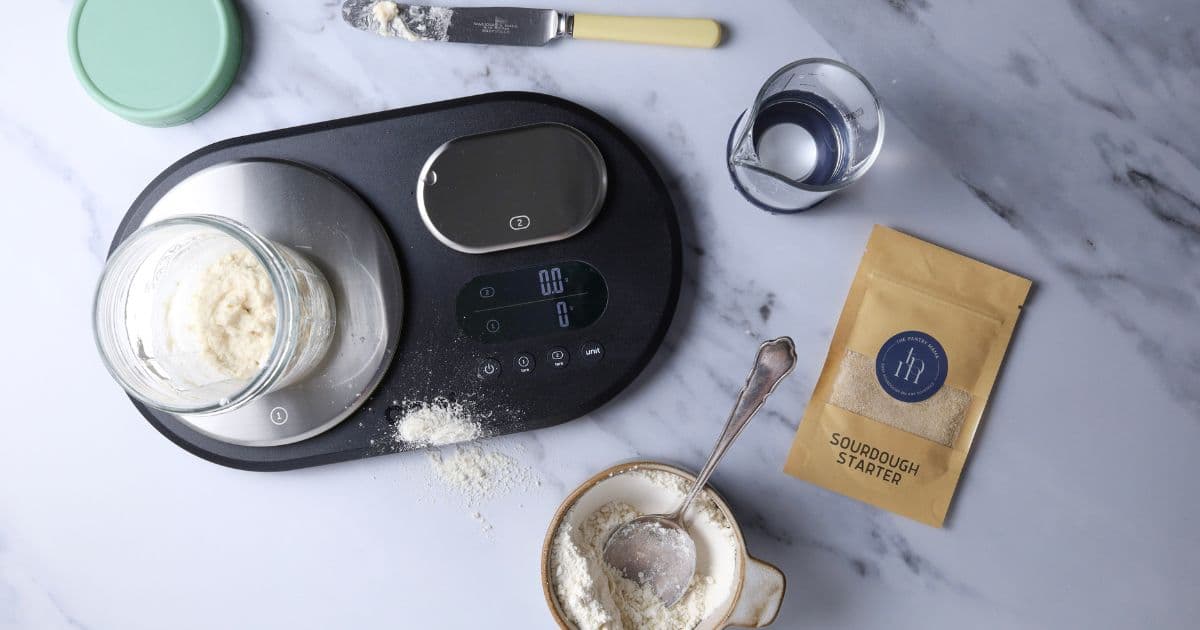
The Ooni Dual Platform Scale is a really clever piece of equipment because it actually includes two scales in one unit.
One platform is designed for larger ingredients (like flour or water), while the smaller platform is perfect for measuring tiny quantities like salt, yeast, or spices.
This makes it especially handy when you’re following recipes that require both larger and very small measurements. And you can use both sides of the scale at the same time. Kinda genius, right?
Pros
- Two scales in one device;
- Small platform is very precise for small measurements (up to 200g);
- Large platform weighs up to 10kg (which is pretty robust);
- Compact and modern design (this fits into very low profile draws) however its actually a nice looking scale so I don’t mind it sitting out;
- Great for pizza dough and sourdough baking.
Cons
- Smaller weighing surface than the KD-8000 so harder to weigh large portions of dough (even though it weighs up to 10kg);
- Not ideal for very large mixing bowls due to small footprint (however it does fit the bowl of my Ooni Halo Pro Spiral Mixer perfectly);
- Spilled flour can get stuck under the weighing platform and in the buttons so you need to be careful to keep it clean;
- Quite expensive (I was very lucky to have mine gifted to me).
How I Use It in My Kitchen
I especially like this scale when I’m measuring small ingredients that need precision, such as:
- Salt
- Cinnamon and other spices
- Baking soda or baking powder
- Spices and add-ins (I generally use spoons for spices, but this scale makes it possible to weigh very small amounts).
I do really like this scale and often use it in videos because of its lower profile. However, the smaller weighing surface mean that I still reach for my KD-8000 scale over this most days.
Ikea Digital Kitchen Scale
If you’re just getting started with sourdough baking and don’t want to invest in a more expensive scale right away, the Ikea digital kitchen scale is a fantastic budget-friendly option.
For the price, it’s surprisingly reliable and does a great job for everyday baking tasks. I picked this one up when I purchased my Ikea Dutch Oven and I have to say I’m really impressed with the calibre of this baking scale!
Pros
- Very affordable (it was under $15);
- Simple and easy to use;
- Lightweight and compact (fits into the smallest draw);
- Great value for money;
- Doesn’t lag when pressing tare;
- Can be changed to ounces if you prefer (although I’m always going to advocate for grams).
Cons
- Smaller platform;
- Not quite as robust as heavier-duty scales;
- Struggles with very large bowls and only weighs up to 3kg (however if you’re not baking big batches of pizza dough this is probably fine);
- Turns itself off when you don’t use it for a few minutes which can be really annoying if you’re half way through a recipe.
How I Use It in My Kitchen
I tend to use this scale when I need something quick and simple, or when I’m baking smaller batches.
It’s also a great option if you’re just starting out with sourdough and want a scale that does the job without spending a lot. It’s the scale I put into sourdough baking gift baskets when I’m getting friends started with sourdough because it’s just such a great price point!
Which Baking Scale Is Best for Sourdough?
If you bake sourdough regularly, a reliable scale quickly becomes one of your most used kitchen tools.
For me, the KD-8000 is still my absolute favorite. It’s dependable, accurate, and handles everything from ingredients to heavy dough without any fuss.
That said, the Ooni scale is fantastic if you want the flexibility of measuring both large and very small quantities, while the Ikea scale is a great entry-level option if you’re just getting started.
The best scale ultimately depends on how often you bake and what features matter most in your kitchen.
Why You Should Use a Scale for Sourdough Baking
Sourdough baking is all about ratios. The balance between flour, water, salt, and starter determines everything from how your dough feels during mixing to how well your bread rises in the oven. Sourdough ratios are so important to the success of your dough!
While many baking recipes use cups and tablespoons, sourdough (and in fact most baking recipes) works best when ingredients are measured by weight rather than volume (and seriously I will not convert my recipes into cups and tablespoons).
The reason is simple: ingredients like flour can vary hugely depending on how they are scooped. A cup of flour can weigh anywhere from 120g to 160g, which can dramatically change the hydration of your dough.
Using a digital scale removes that guesswork completely. When you measure ingredients in grams, you know you’re adding the exact amount needed for the recipe to work as intended.
This is especially important for sourdough beginners and home bakers, because it helps create consistent results from one bake to the next. You’re never left guessing or wondering about inaccuracies in the ingredients you’re using. I’ve written a whole post about why you should weigh your sourdough ingredients, just in case you’re still not convinced!
What to Look for in a Baking Scale for Sourdough
If you’re looking at buying a scale that I haven’t mentioned here (and there are so many on the market, you really are spoiled for choice), there are a few things you should consider before you buy. Not all kitchen scales are created equal. Here are a few things that I would consider before buying a scale.
Accuracy
The most important feature is accuracy. A good baking scale should measure in 1 gram increments so you can reliably measure ingredients like salt and yeast. You want accurate readings to ensure consistency in your sourdough, so always go with a reputable brand!
Capacity
Sourdough dough can get heavy, especially when you’re mixing multiple loaves at once. Look for a scale that can handle at least 5kg so you can weigh large bowls of dough without any issues.
Tare Function
The tare function allows you to reset the scale to zero after placing a bowl on it. This makes it easy to add ingredients one at a time without having to do any math. When someone says ohhhh I can’t use a scale, I always say, just press tare!! If the scale you’re considering doesn’t have a tare button, it should be a hard pass.
Platform Size
A larger platform makes it easier to balance mixing bowls and containers without blocking the display. The last thing you want is for your mixing bowl to cover the display!
Durability
If you bake sourdough regularly, your scale will get a lot of use. A durable scale that can handle flour, sticky dough, and the occasional spill will last much longer. Avoid buttons that could become compromised if they get gummed up with flour or dough.




Being in the U.K., using scales is nearly universal! Should I have to weigh any messy ingredient, such as meat, fish, or even dough, I just put a clean plate or bowl on the scale and tare to zero to weigh the ingredient/s. The scales stay clean and the used plate or bowl goes straight into the dishwasher.
The CON you listed forThe My Weigh KD 8000 is not telling the whole story. This very good scale has 3 shut off programmable options: 2 min, 5 mins and manual shut down. This last one will keep the scale on until you shut it off. I think you should let your followers know this. Thanks for all your bread baking help!