
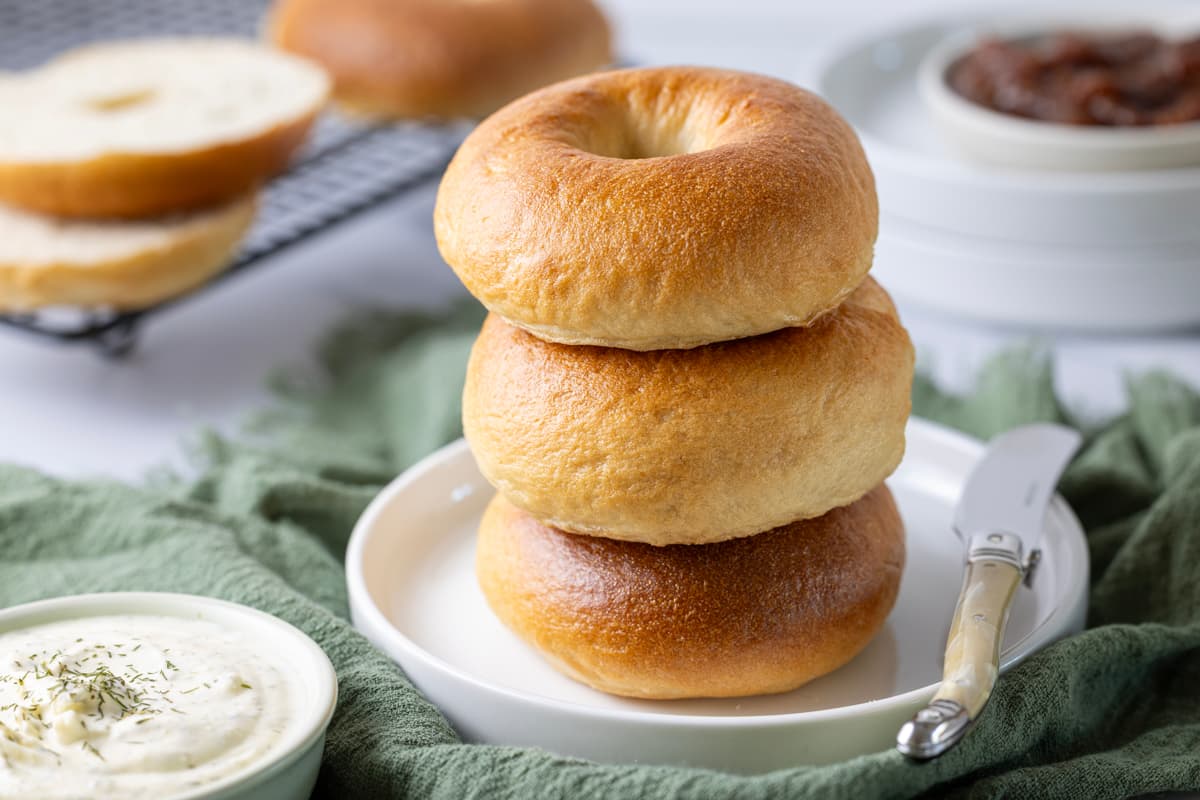
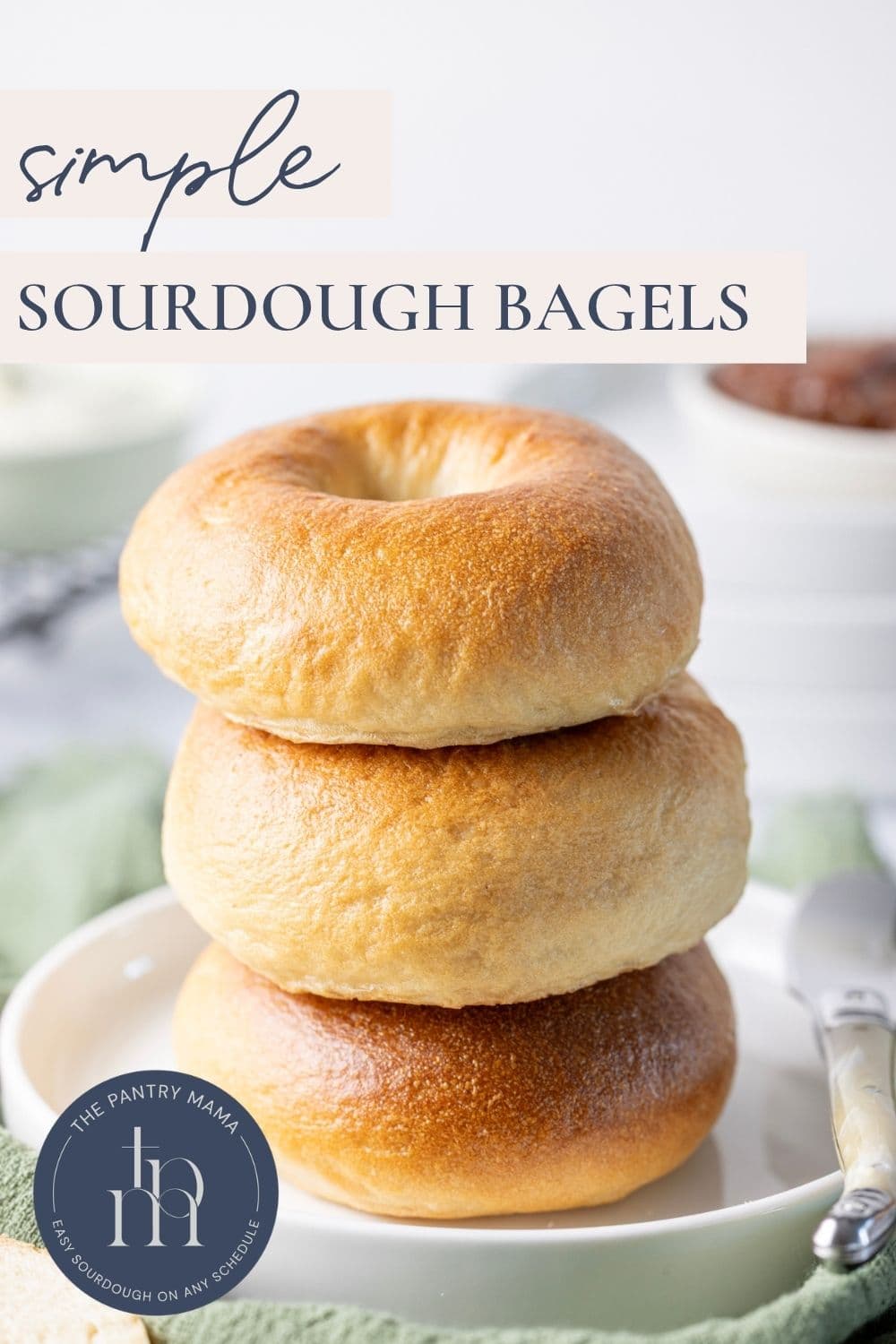
This easy sourdough bagel recipe can be made using discard and will have you wondering why you haven’t made them before! Trust me, you’ll never buy them from the store again – especially if you make a double batch and stash a batch in the freezer. Get your sourdough starter ready … because you are going to want to make these immediately!
This post contains affiliate links. Please see our disclosure policy.
Why You’ll Love This Reipce!
- Chewy Texture – These sourdough bagels have a complex sourdough flavor and deeply golden, chewy texture thanks to sourdough fermentation.
- Add Your Own Toppings – You can bake these as plain sourdough bagels, or add toppings like poppy seeds, everything bagel seasoning or sesame seeds. You can adjust this recipe to suit any topping preference.
- Easy Breakfast Idea – Just like sourdough English muffins, these sourdough bagels are an easy breakfast idea that can be made ahead and frozen for added convenience.
Ingredients
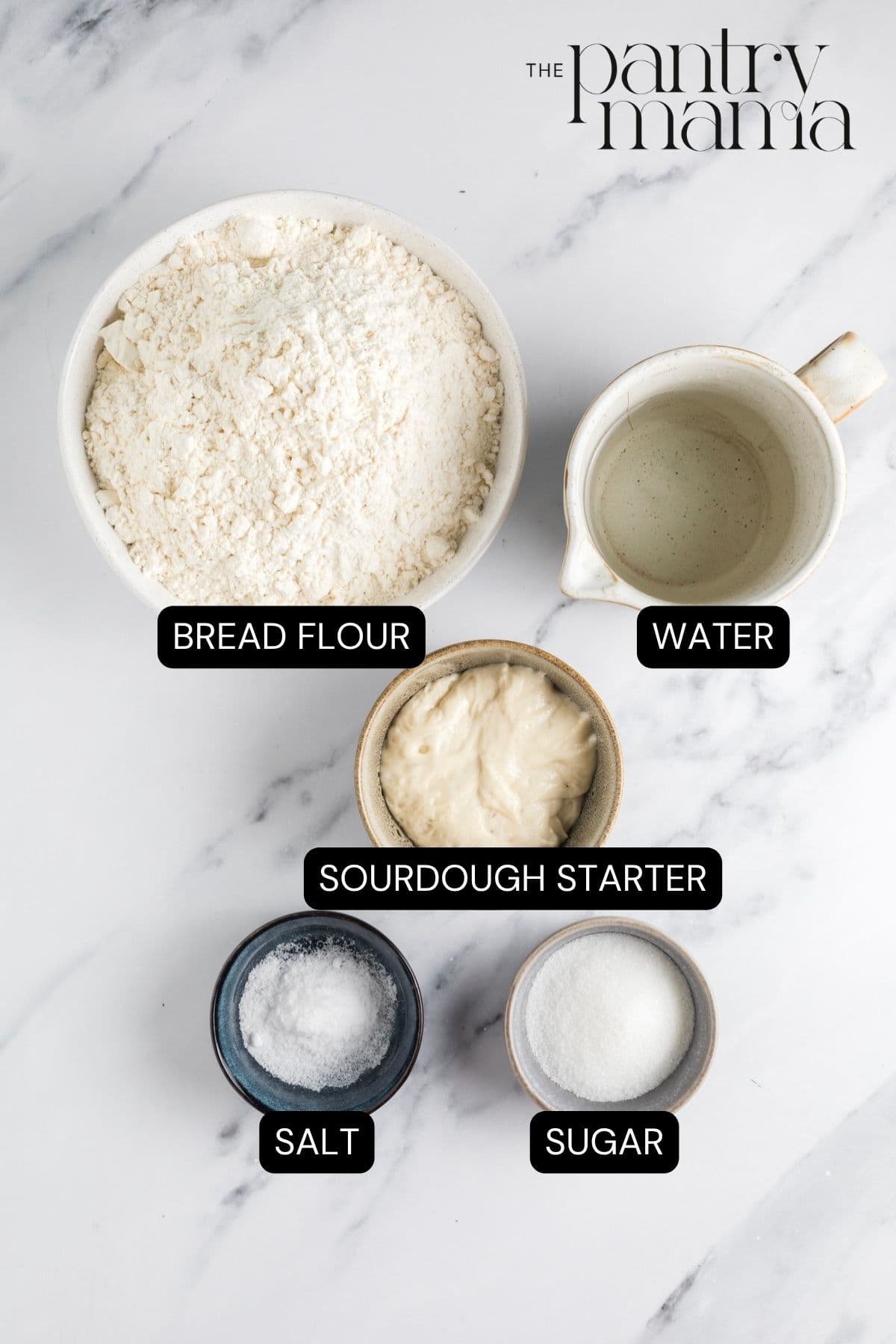
- Sourdough Starter – I prefer to use active sourdough starter, but I’ve added notes for using discard further down.
- Bread Flour
- Water
- Sugar
- Salt
- Honey – This is just for boiling the bagels in before you bake them. You can also use baking soda if you prefer.
How To Make Sourdough Bagels
Making sourdough bagels is incredibly easy! It’s a lower hydration dough which is really easy to work with. While you can knead this sourdough bagel recipe by hand, I recommend using a stand mixer fitted with a dough hook attachment.
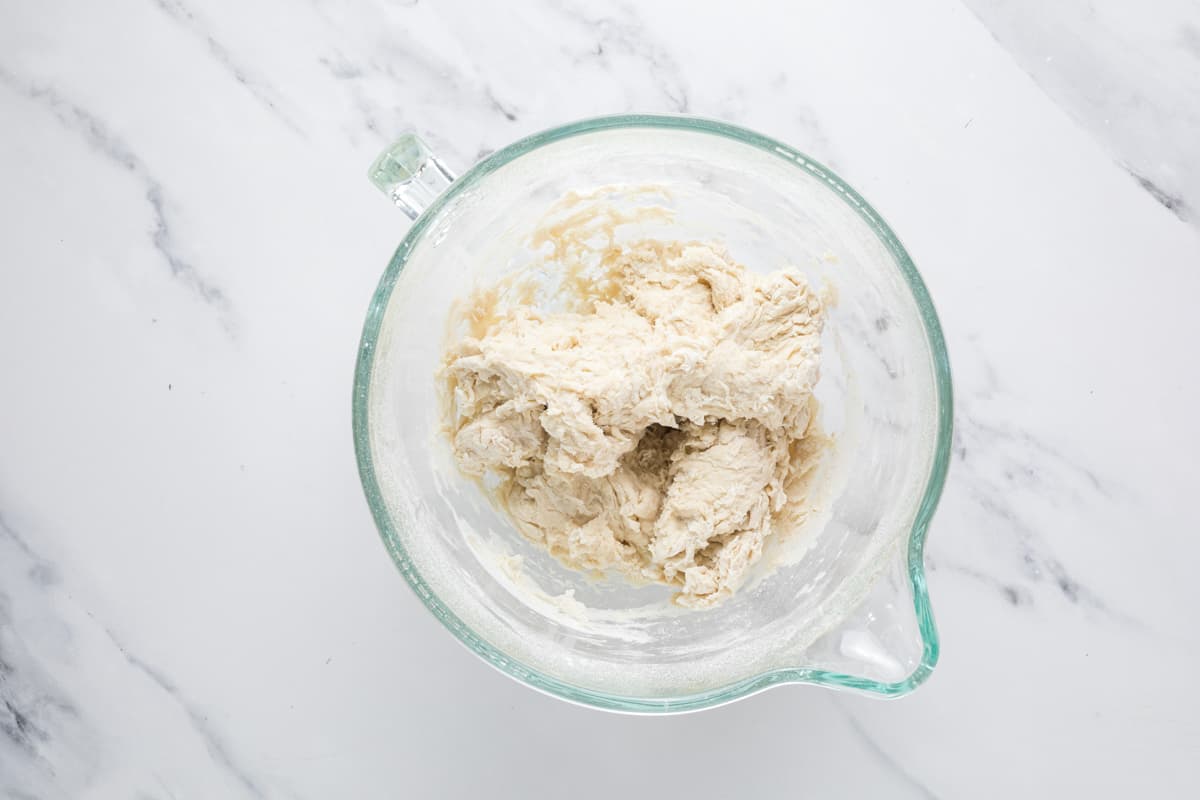
Add your active sourdough starter, water, flour, sugar and salt to the bowl of a stand mixer and bring together to form a shaggy dough using the dough hook attachment. Allow the dough to rest for around 15 minutes.
Knead the dough, either in your stand mixer or by hand, for around 10 minutes until it is smooth and supple. If you’re using a stand mixer, make sure you leave the mixer on a low speed. You’ll know the dough is ready to move to bulk fermentation when it’s slapping the sides of the bowl. This is a stiff dough (much like sandwich bread dough) so it won’t be super elastic, however it should be smooth and not sticky.
Once the dough is sufficiently kneaded, you’ll need to allow it to rise or ferment at room temperature. You want the dough to double and be puffy and soft.
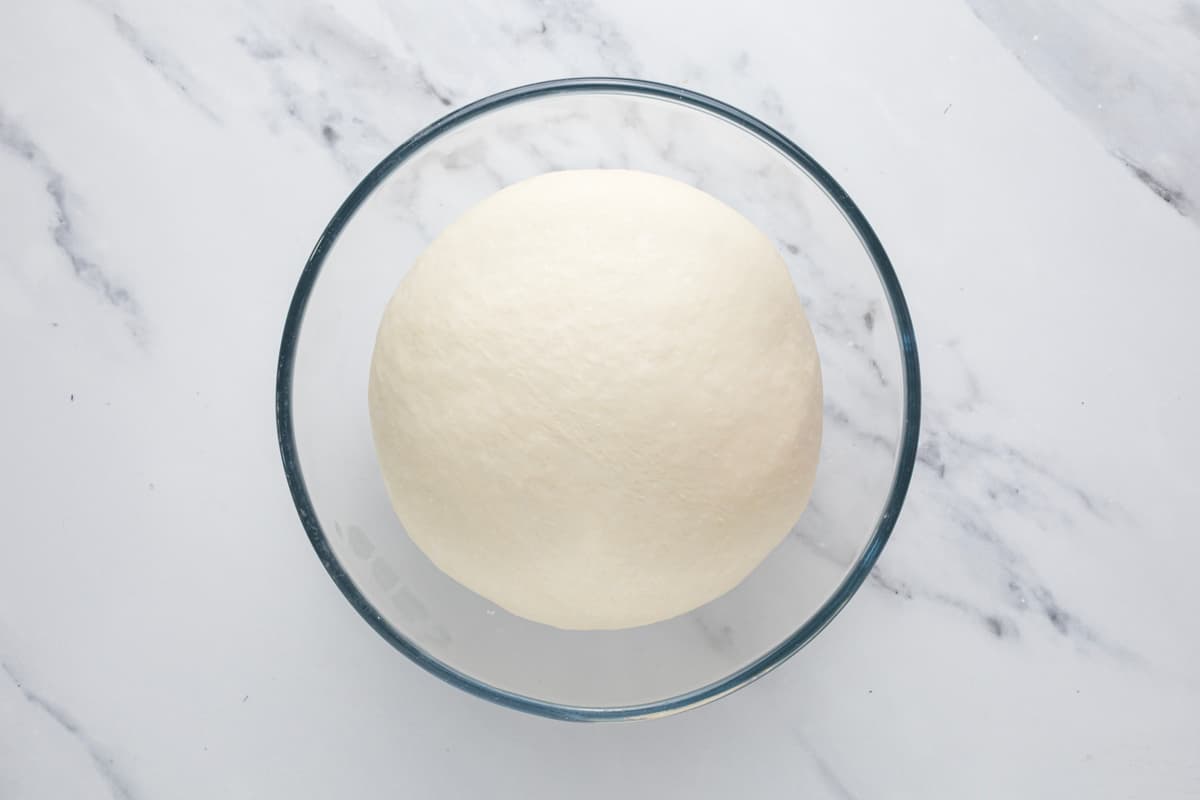
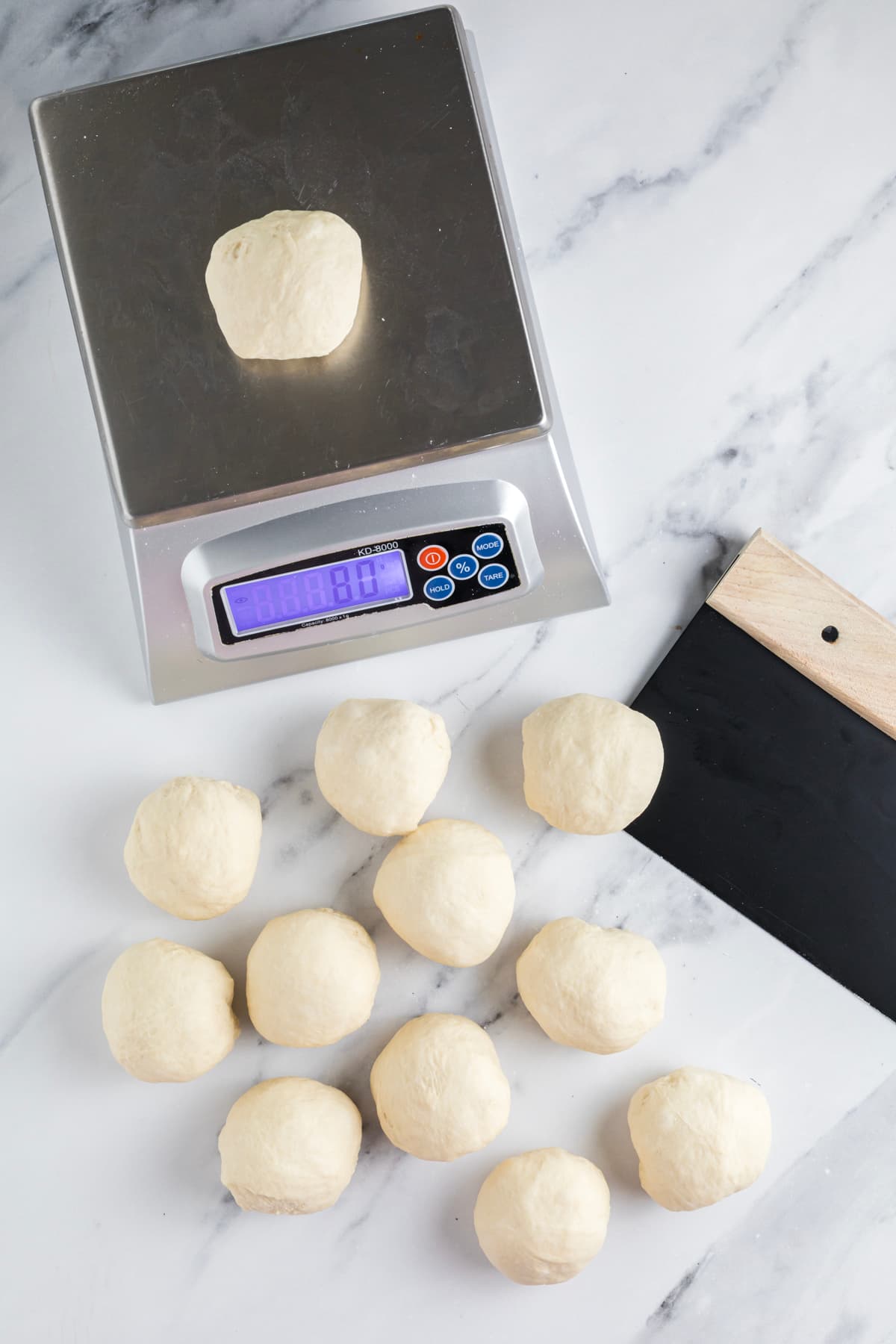
Once the dough has risen, you’ll need to shape the bagels. It’s quite simple, you just need a little patience. Divide the dough into 12 equal pieces (75 grams each). Shape each piece of dough into a small ball.
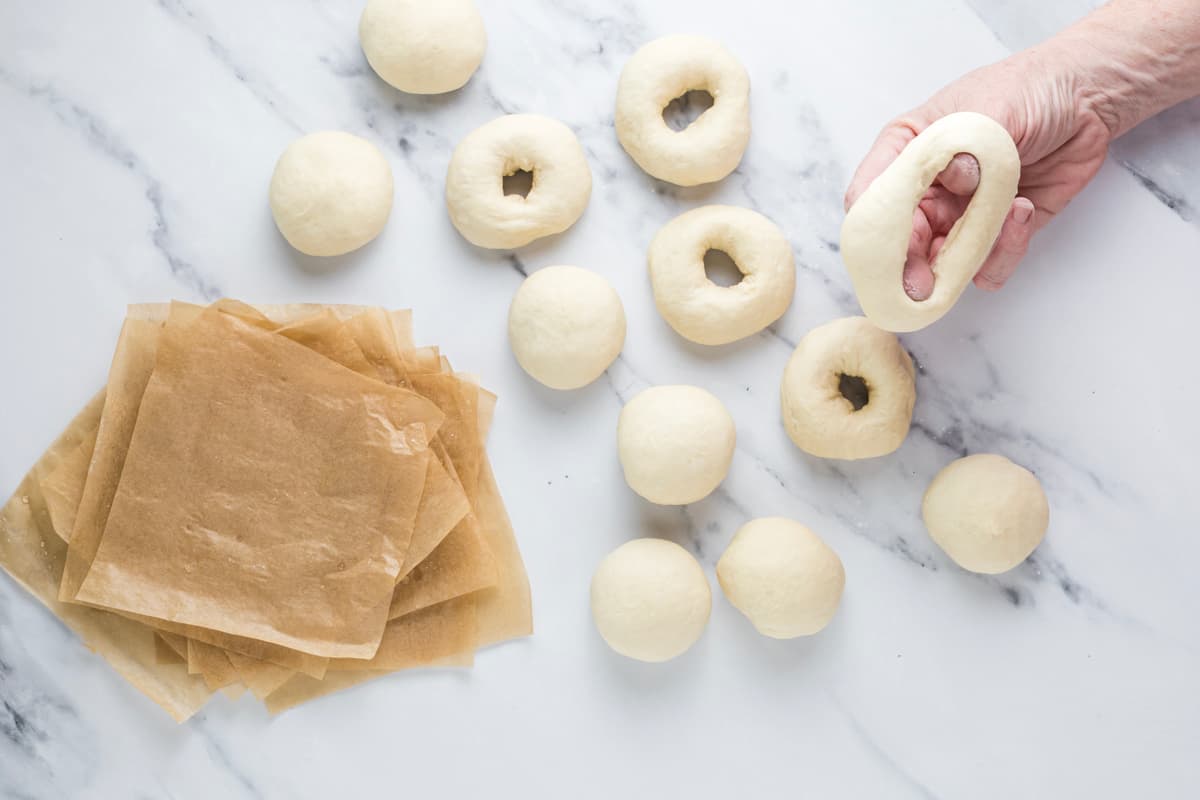
Take each ball and poke a hole in the middle.
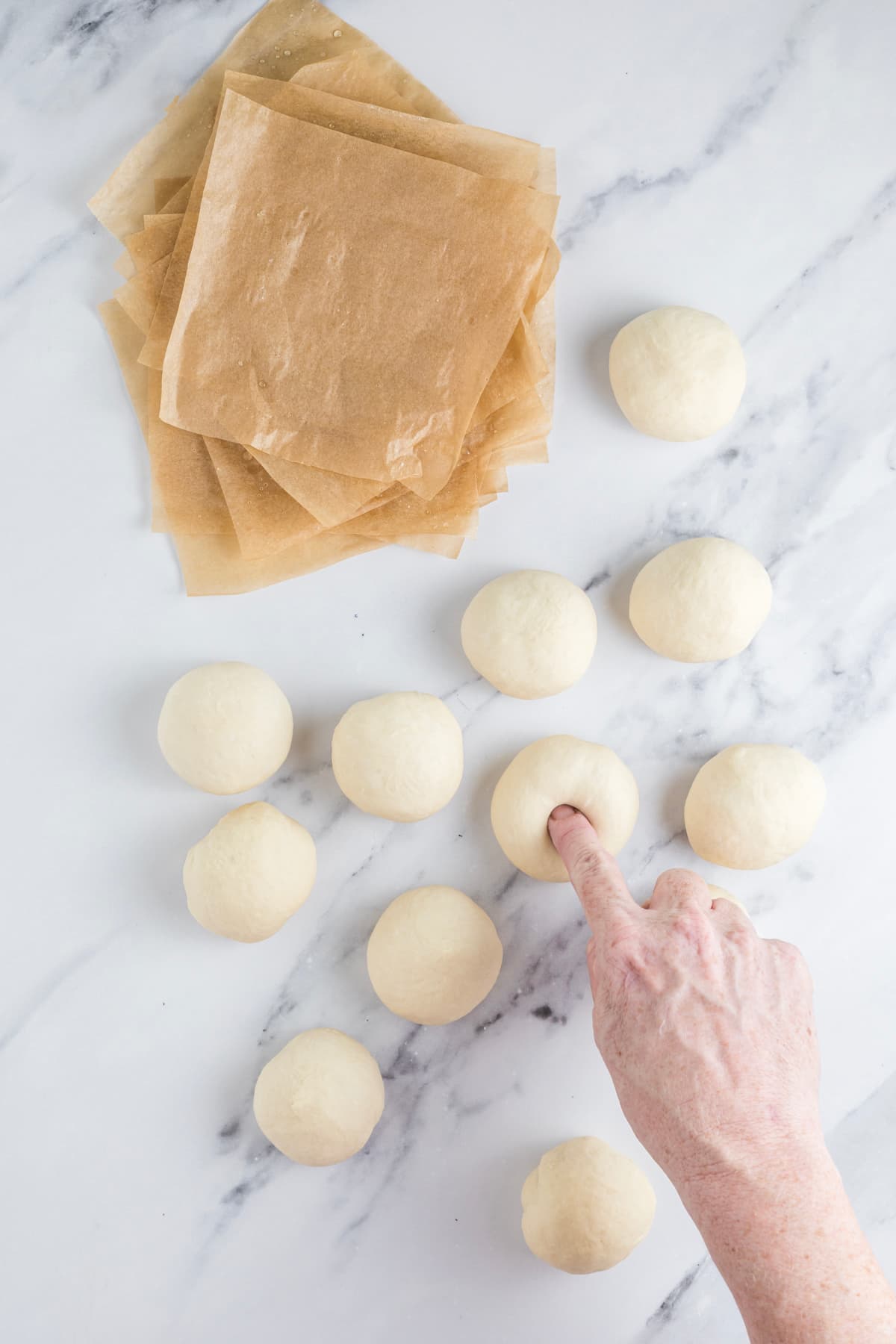
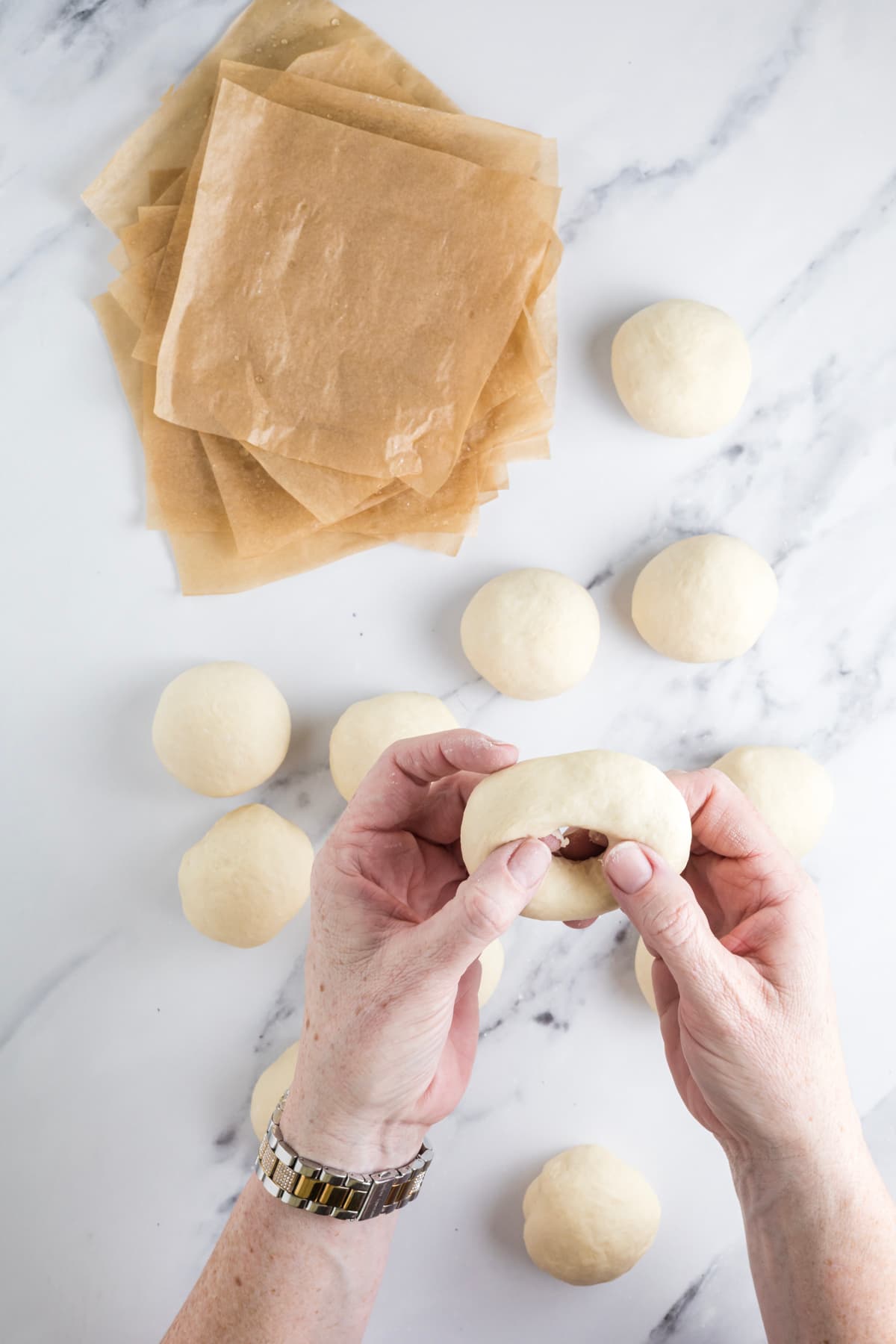
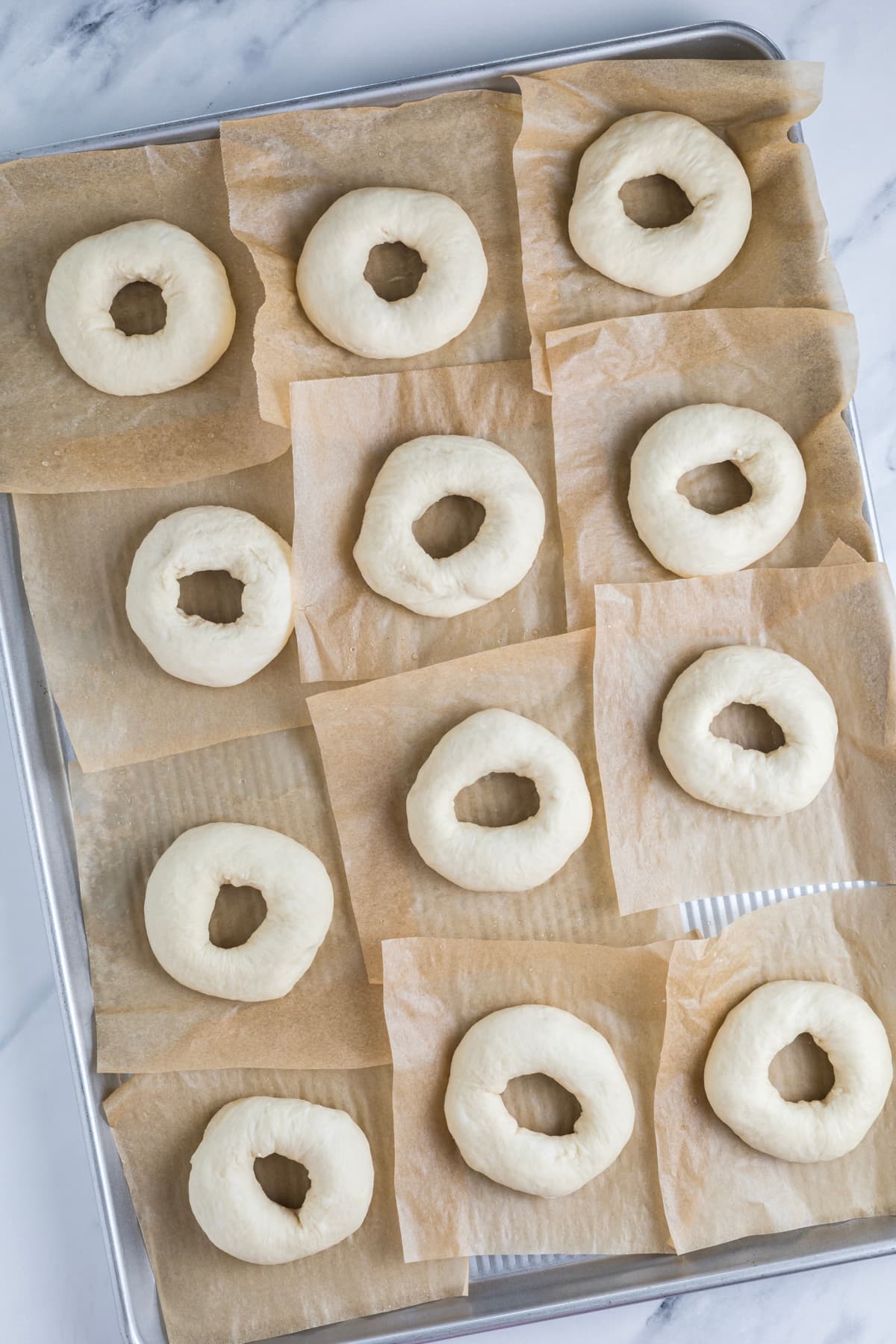
Gently stretch the hole out and then place each bagel onto a baking sheet lined with parchment paper.
Kate’s Pro Tip
The Bagel Boiling Trick That Saves Their Shape
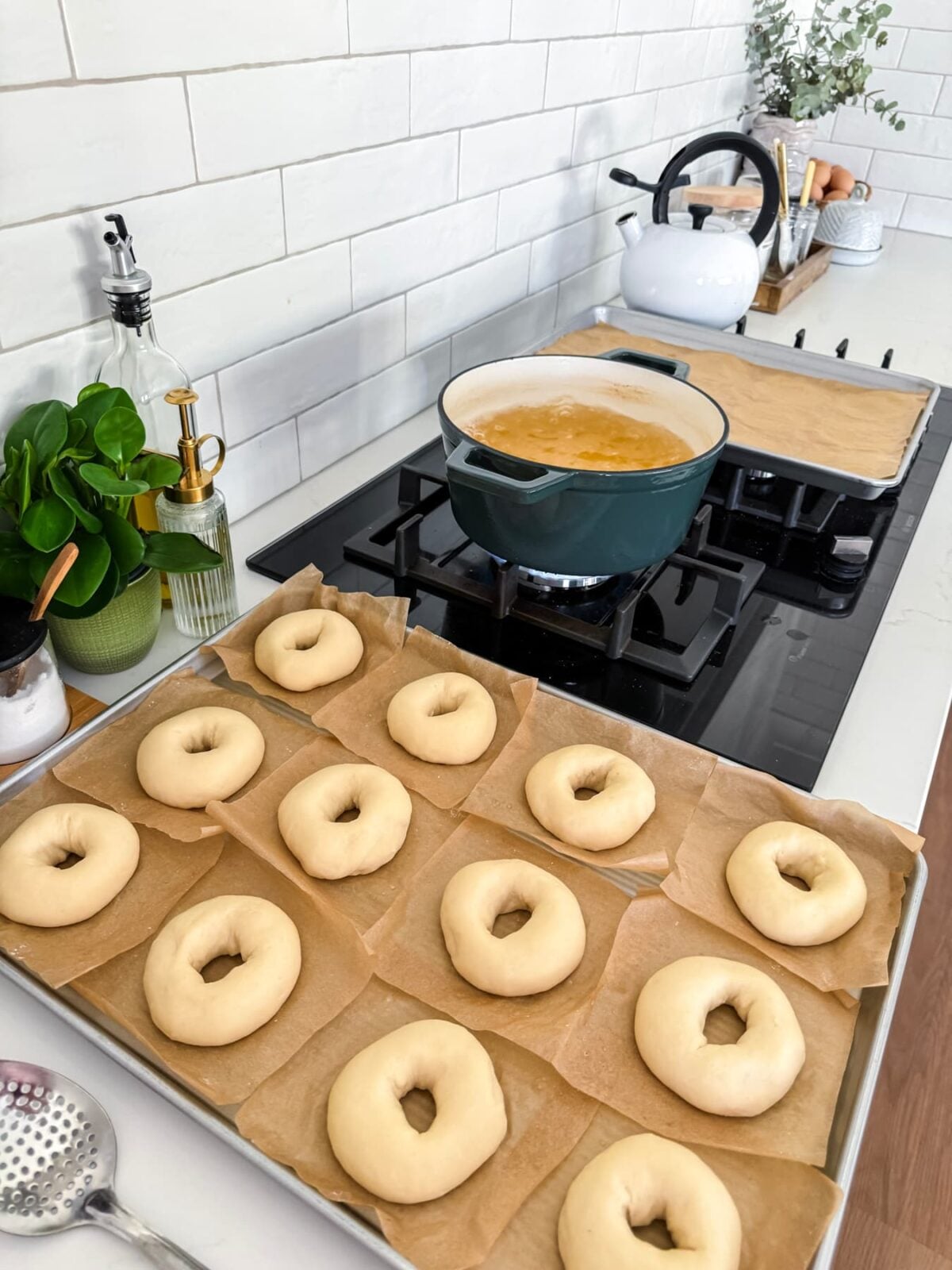
To avoid disturbing your proofed bagels, place each one on a small square of parchment paper before proofing. When it’s time to boil them, lower the bagels into the water with the paper still attached, paper side up. The water will loosen the parchment so you can gently peel it away without stretching the dough or ruining the shape.
Cover the shaped bagels with a flour sack towel and allow them to proof until they become lovely and puffy. Don’t use plastic wrap here as it will stick to the bagels and can be really hard to remove without breaking the outer skin of the bagels.
While they are puffing up, bring a pot of water with 40 grams of honey added to the boil and preheat your oven to 200ºC (400ºF).
When the water is boiling, carefully place 3-4 bagels into the boiling water at a time. You want to boil them for around 30 seconds each.
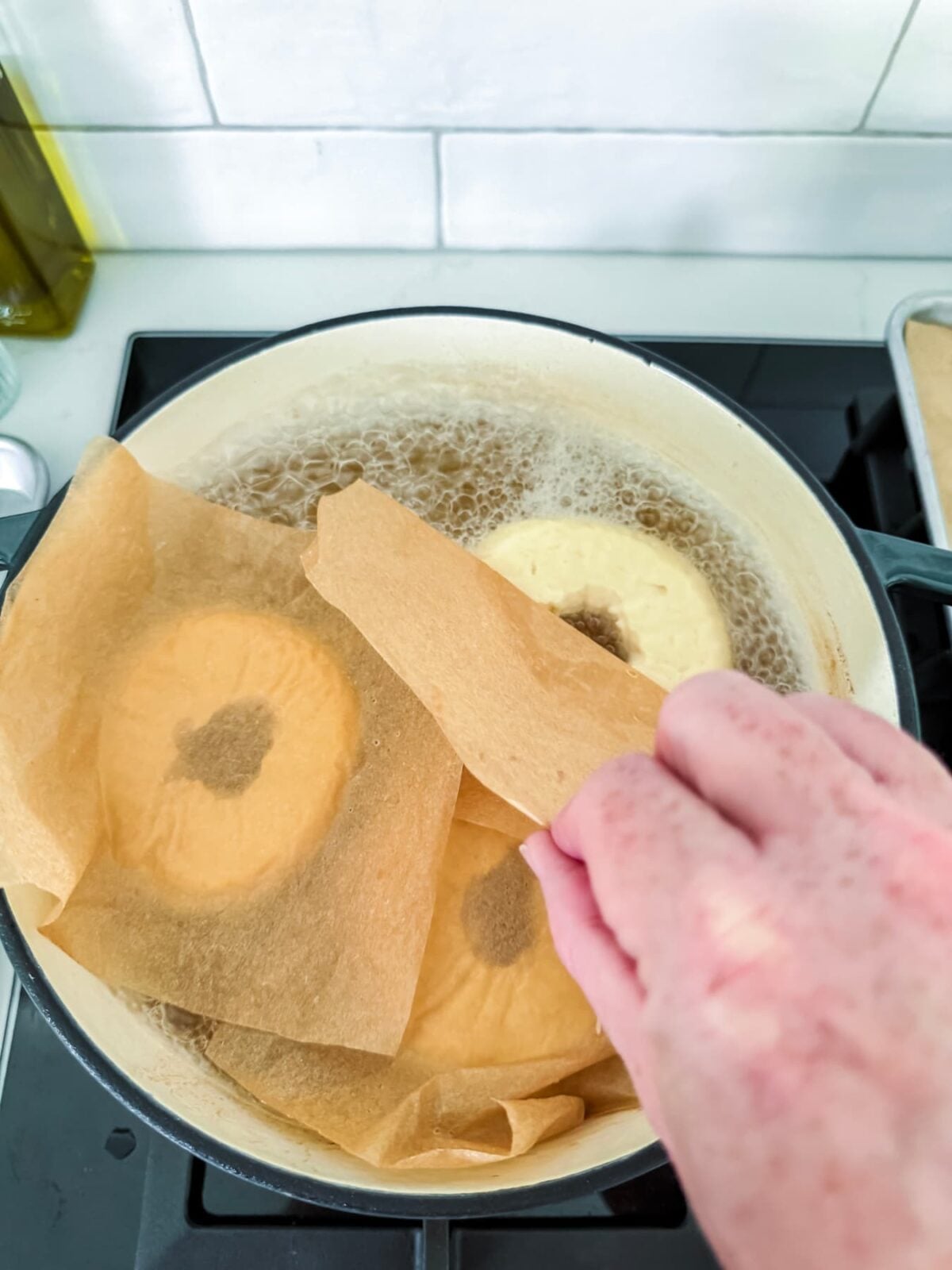
They should float to the surface and that’s when you know to take them out. If you prefer really chewy bagels, boil them for up to 2 minutes each. Carefully remove the bagels from the boiling water using a slotted spoon.
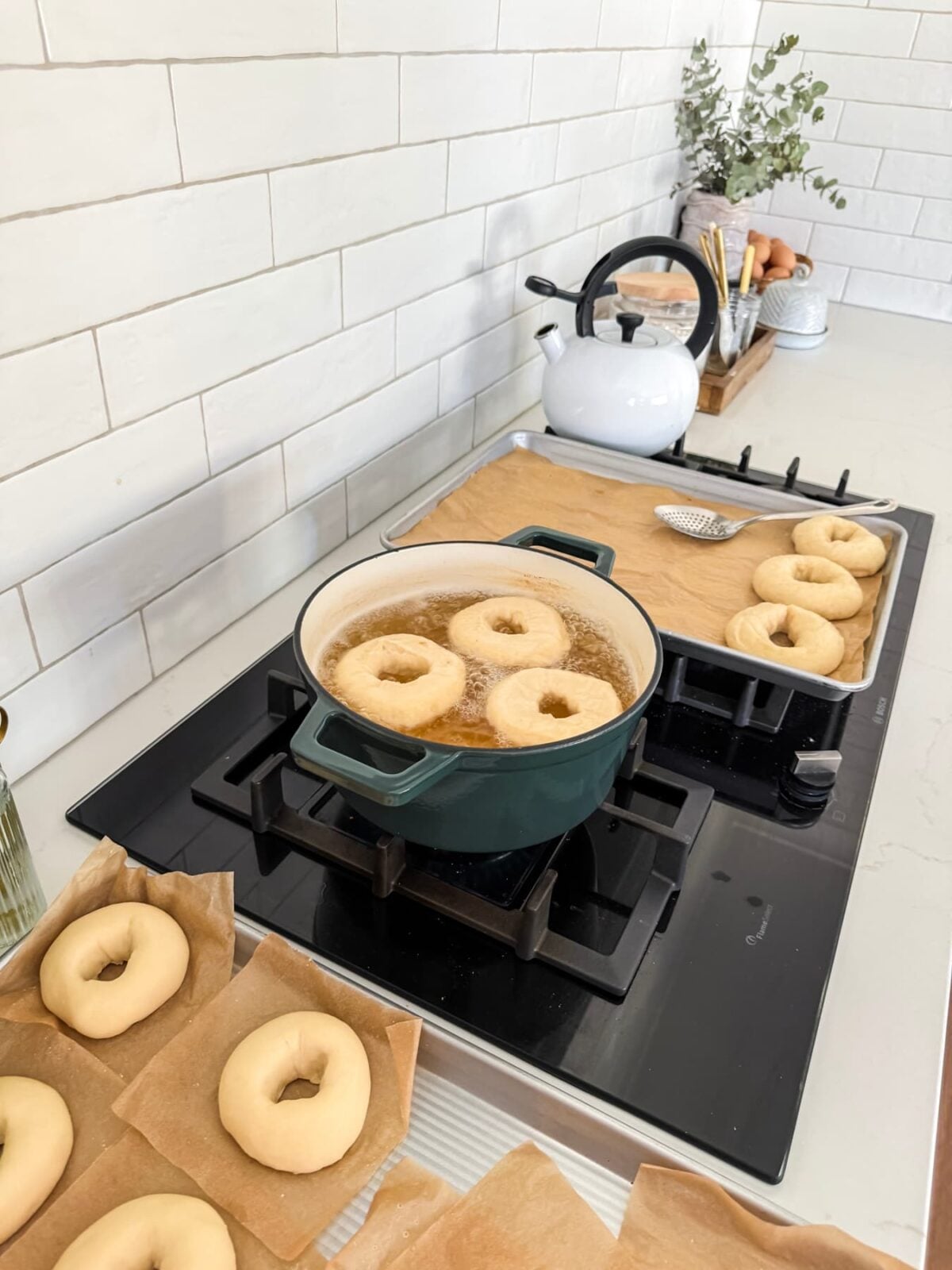
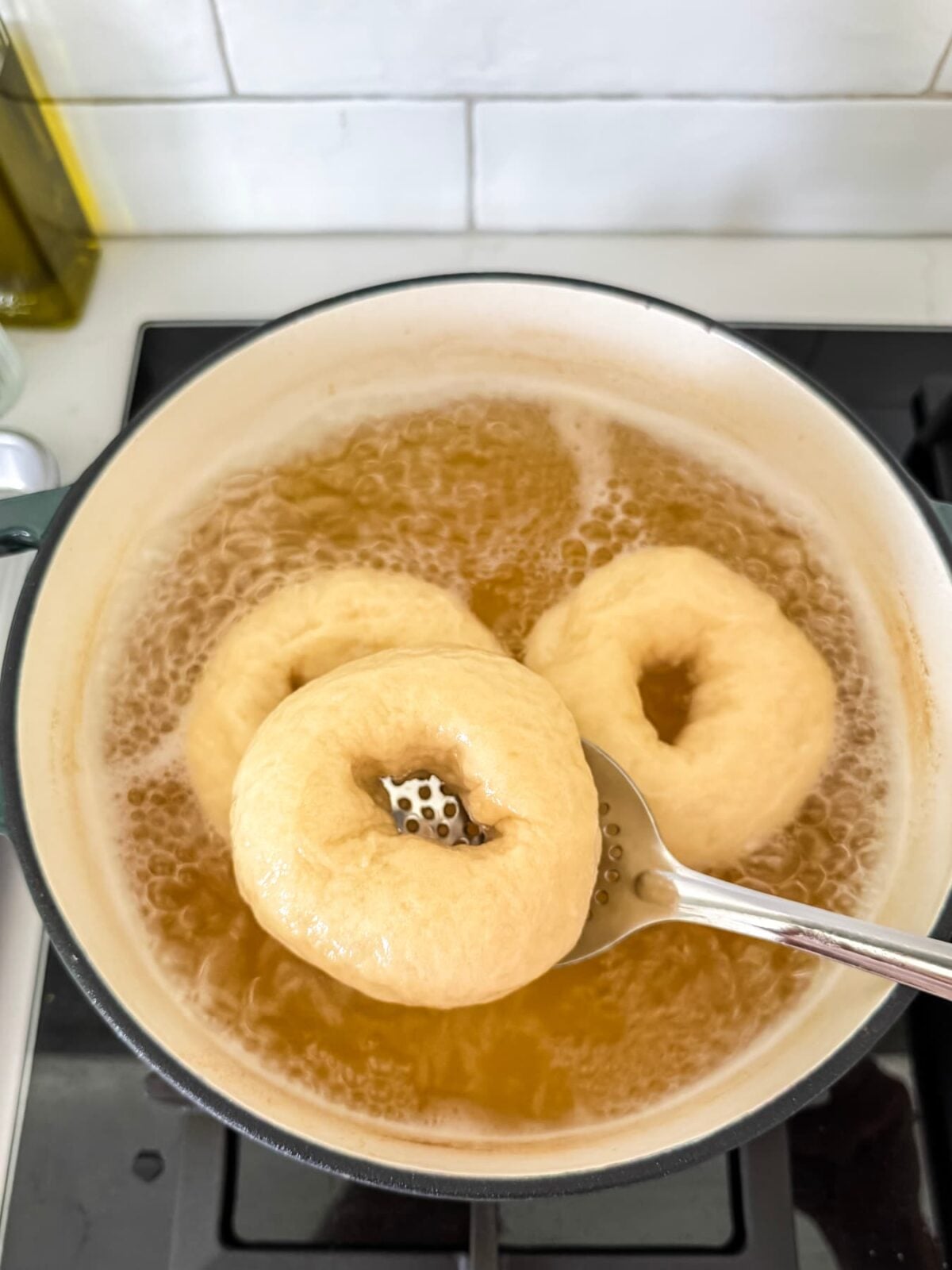
If you want to add seeds or seasonings, dip the wet bagel into the seeds/seasonings before placing on a baking tray lined with parchment paper. You can leave them plain if you wish.
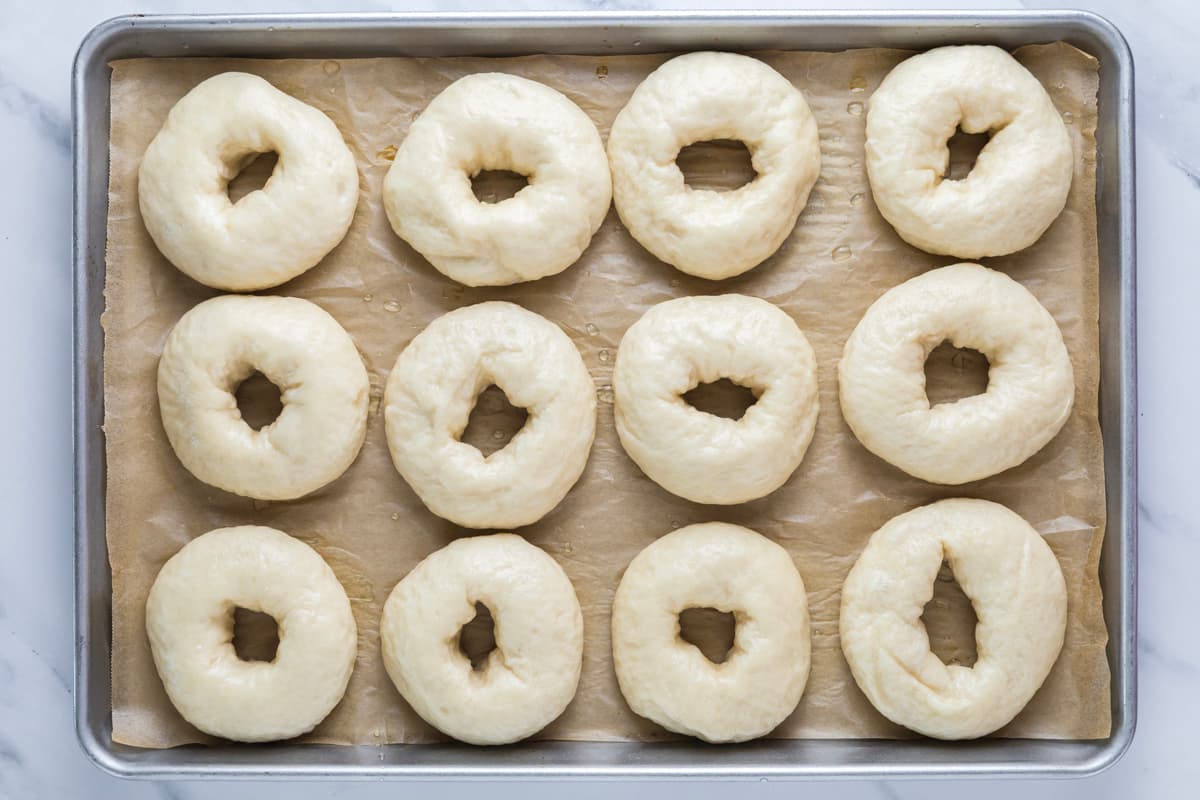
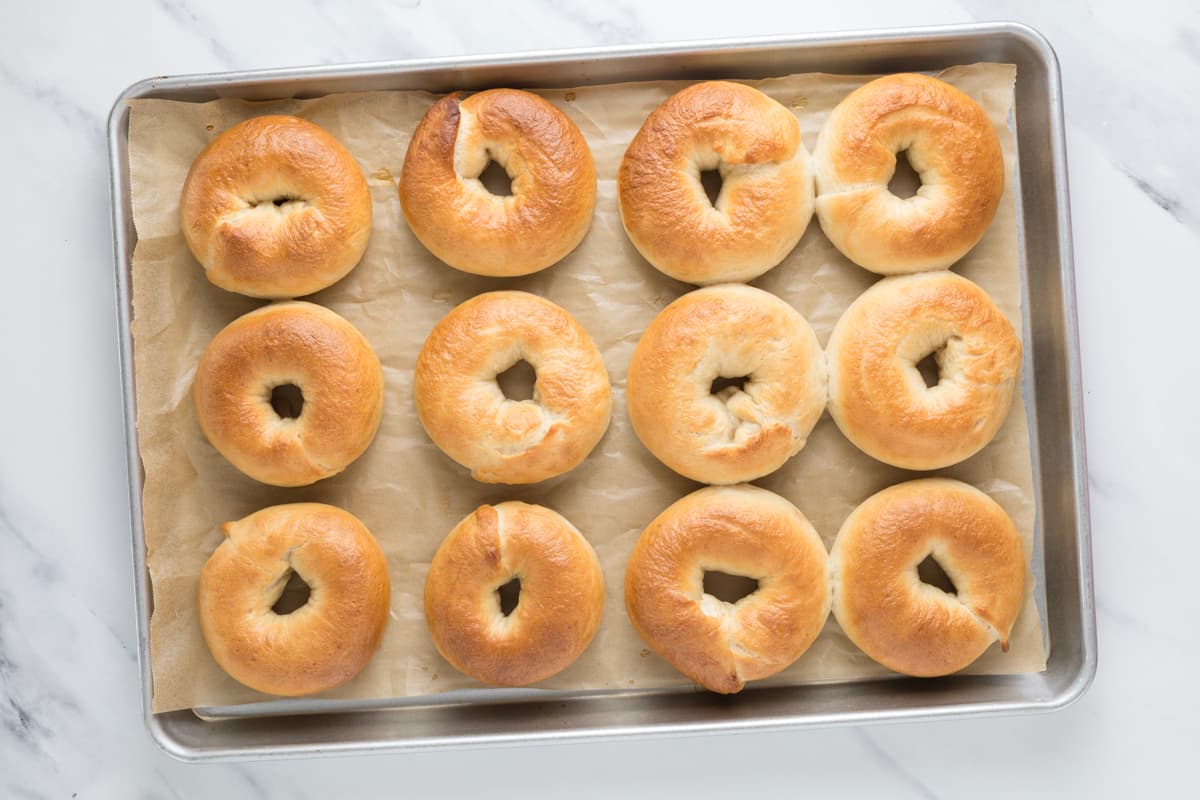
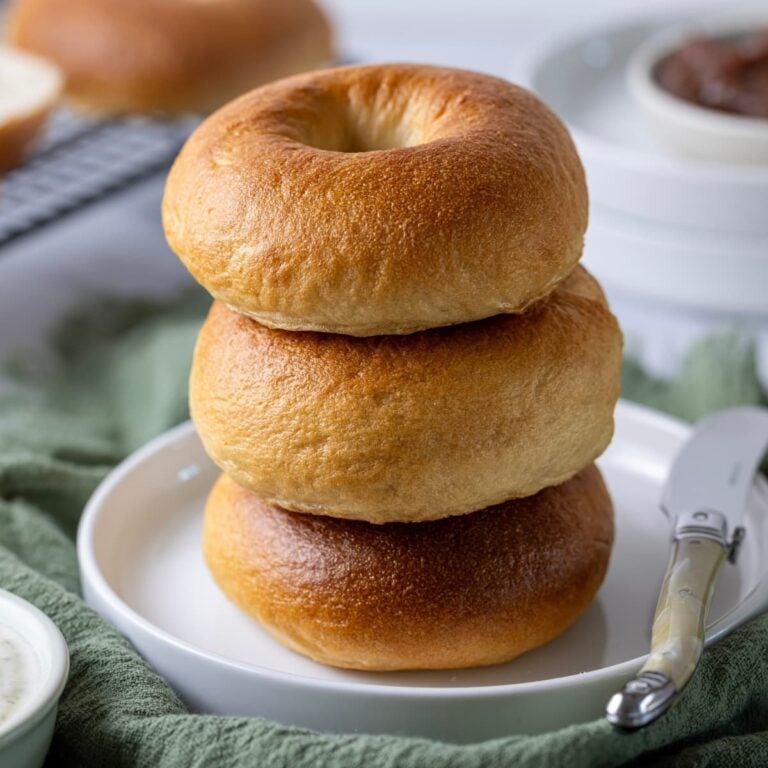
Bake the bagels for around 20 – 25 minutes at 200ºC (400ºF), until they are a deep golden brown. Remove them from the oven when they are golden brown. Allow them to cool before you enjoy them!
Using Sourdough Discard
You can make these sourdough bagels using discard or fed starter. I love making them with fed, bubbly starter and leaving the to bulk ferment on the counter overnight. It gives them such a lovely, distinct sourdough flavor. If you would like to use discard, I recommend adding just a pinch of yeast, particularly if you’re still in the establishment stage of your sourdough starter. This means you can still leave them on the counter overnight if you want to.
Adding more than a pinch of commercial yeast will make them rise much faster – and this is good if you need them in a hurry (tell me it’s not just me that wakes up craving bagels for breakfast?).
So there’s a few options I’ve given – and I’ve put them in a little table to make it easier to understand:
| Starter | Yeast | Bulk Ferment |
| Fed, Active Sourdough Starter | No | Overnight (or until the dough has doubled). |
| Sourdough Discard | Pinch | Overnight (or until the dough has doubled). |
| Sourdough Discard | Up to 7g | Around 1-2 hours (or until the dough has doubled). |
This is a great resource if you’re confused about the difference between sourdough starter and sourdough discard.
Notes on Shaping Bagels
Over the past few years, I’ve tested many different methods of shaping sourdough bagels. From poking a hole in the middle of a ball of dough, to making ropes and twisting them to even more complicated methods!
And do you know what, I have come to the conclusion that the easiest shaping method is my original “poking holes” in a ball of dough. It might not be the most glamorous of methods, but it’s easy for beginners and works every time! Plus, when you boil the bagels, you don’t risk the ends of the bagels coming apart, which can sometimes happen if you’re using the rope method to shape them.
Alternative Bagel Shaping Method
If you prefer the traditional rope method, start by gently flattening one piece of dough into a rough rectangle. Roll it up tightly from one long edge, pinching the seam closed as you go. Roll the dough into a rope around 8 to 10 inches (20 to 25 cm) long, leaving the center slightly thinner than the ends.
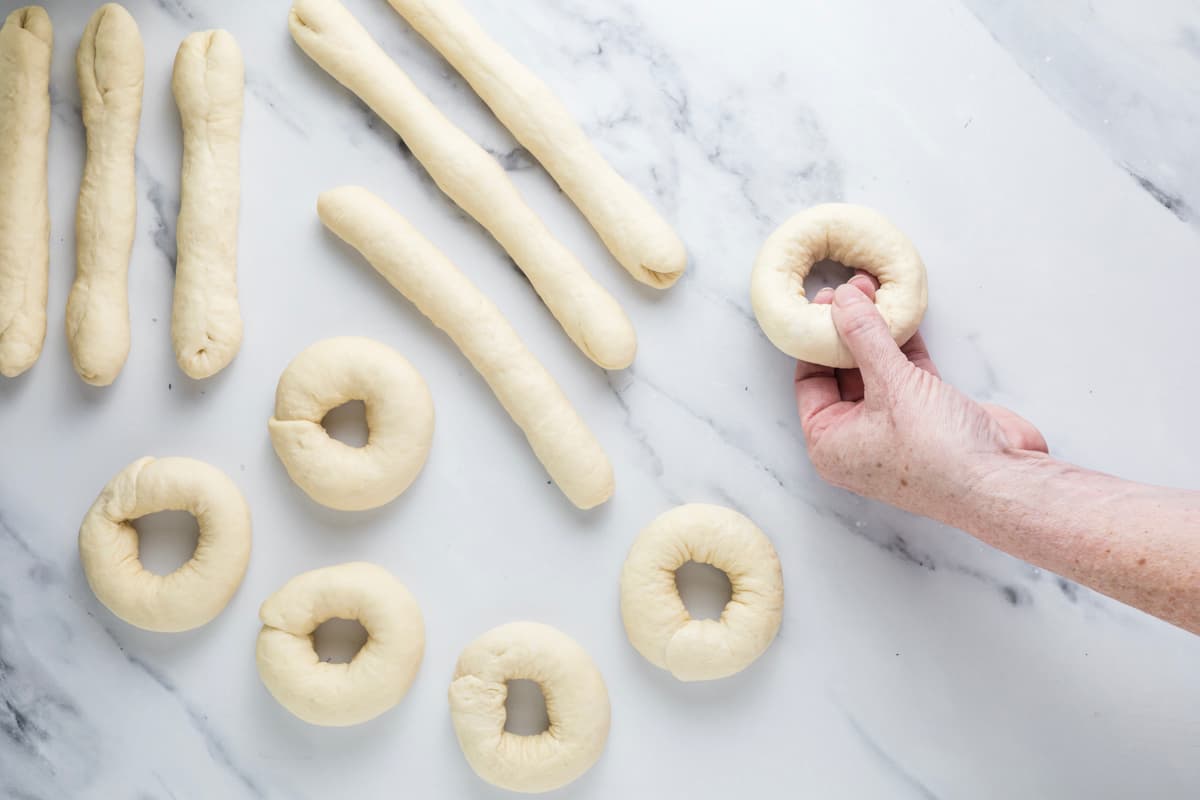
Wrap the rope around your fingers, overlapping the two ends by about 1 inch (2.5 cm).
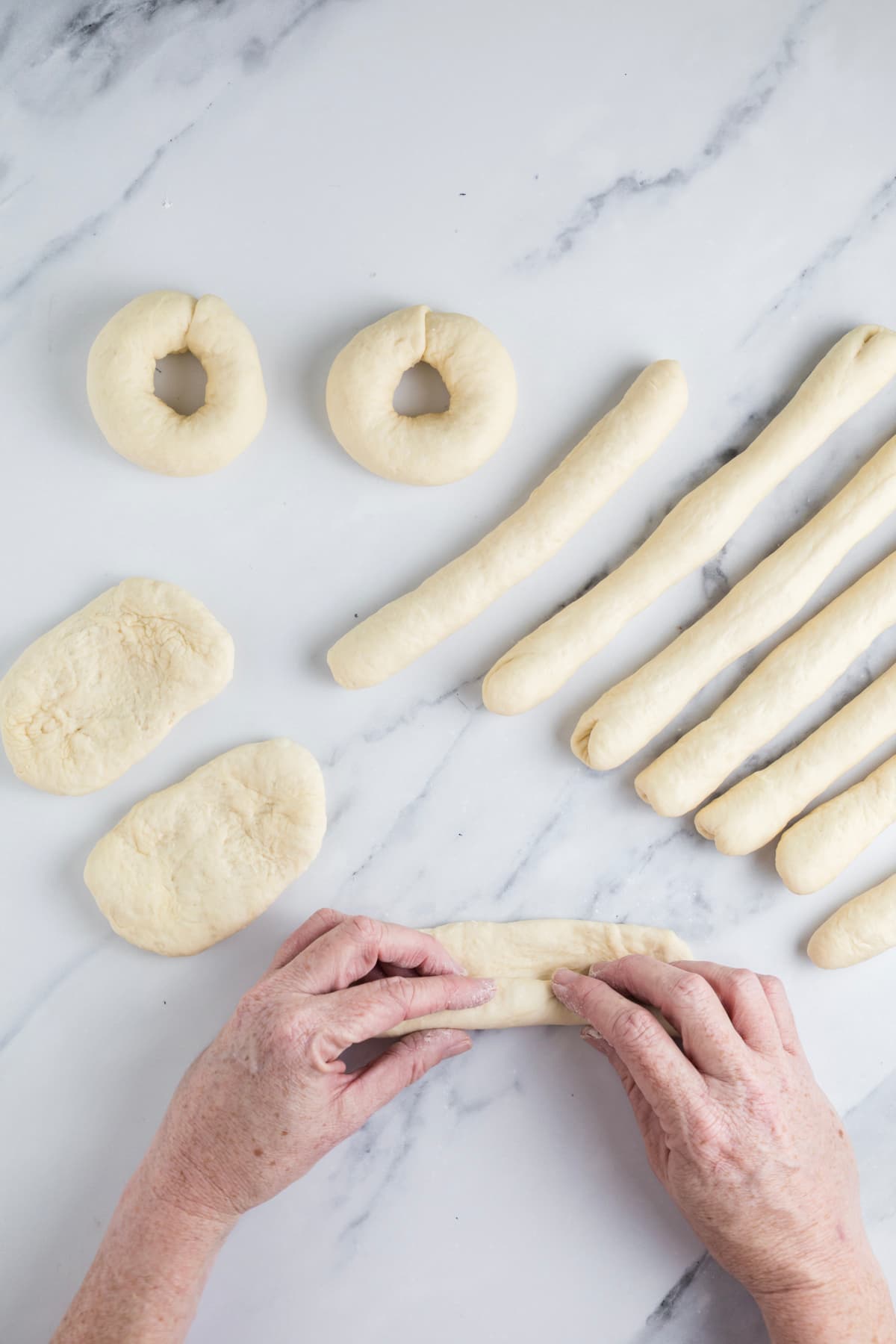
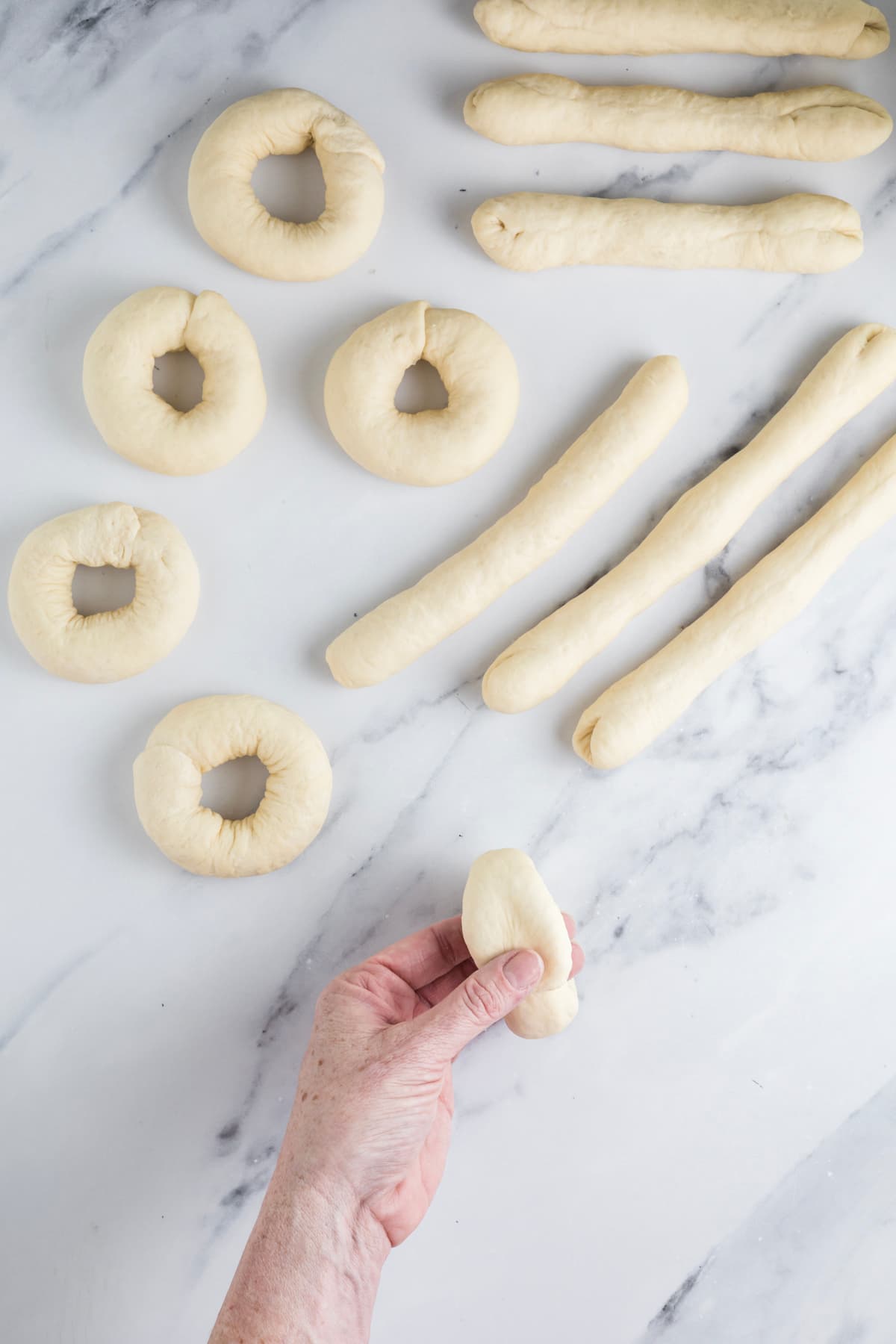
Press the ends together firmly, then roll the seam gently against your work surface to seal it. Place the shaped bagel seam side down on your prepared baking sheet and repeat with the remaining dough.
Kate’s Pro Tip
How To Keep the Hole in Your Bagels
To make sure your bagels keep their signature hole, stretch the dough a little more than you think you need to after poking the hole. You can place your index finger inside and gently spin the dough to smooth and widen the center. As the bagels proof, the dough will relax and the hole will shrink slightly, so starting with a larger hole helps it stay open through boiling and baking.
Why Do You Boil Sourdough Bagels?
Sourdough bagels are different from other types of rolls because they are boiled in water before being baked in the oven. They can be boiled in plain water or water with baking soda, lye, malt syrup or honey added. I find they taste best when boiled in honey water. The honey gives them the most lovely golden crust once baked.
The boiling of the bagels sets the crust and gives them their signature chewiness. The longer you boil them, the chewier the crust will be. They will look a little lumpy and bumpy after boiling. This is normal and they will still bake as per normal. Once they are boiled, you can dip them in any seeds you’d like to top them with. The boiled bagels will be wet and a little sticky so the seeds will stick to them.
Timeline for Sourdough Bagels
It’s really good to have a timeline worked out for baking sourdough bagels – so that you can have them baked fresh for breakfast.
It can be overwhelming to schedule sourdough, so here’s the timetable I work to when making these for breakfast. Remember this is an example only!
DAY 1
Lunchtime – feed sourdough starter.
7 pm – mix the bagel dough and set aside to ferment overnight.
DAY 2
6 am – shape sourdough bagels and set aside to get puffy.
7.30 am – preheat oven and put on pot of boiling water.
7.45 am – boil bagels and then into the oven by 8am
Using this timetable, you could be eating warm bagels by 8.30 am! If you are using discard with a little yeast, this timetable will still work – just make sure it’s literally just a pinch or they will over ferment overnight. You might also enjoy this guide to creating sourdough baking timetables.
Serving Suggestions
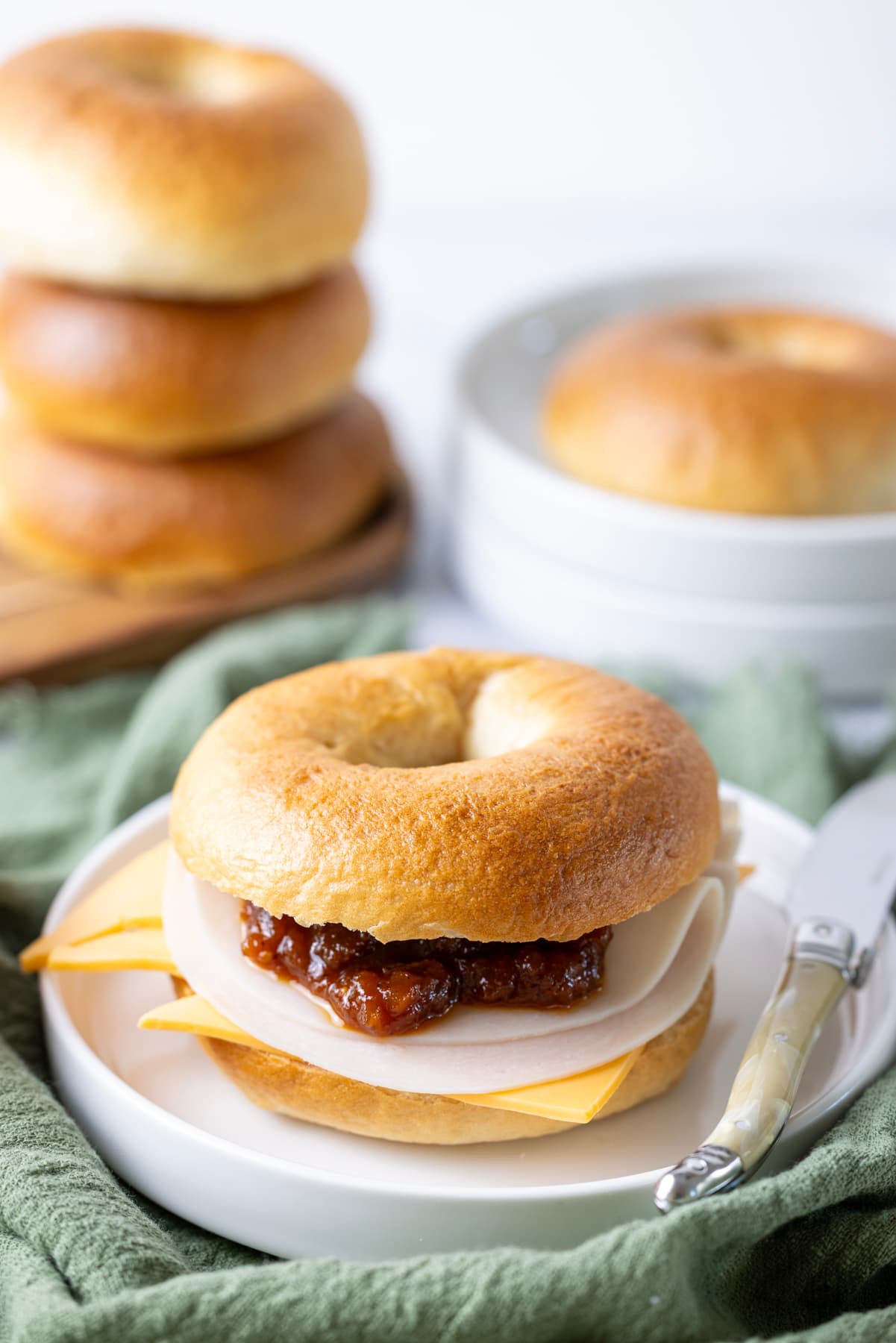
Bagels can be enjoyed with both sweet and savory toppings. You can pretty much put anything you like on a bagel. Traditionally they are eaten with cream cheese or lox – but these days, pretty much anything goes!
Some of the most delicious toppings for your bagels include:
- Cream cheese, deli ham and sliced tomato with lashings of black pepper.
- Smoked salmon, cucumber and cream cheese topped with some fresh dill.
- Seeded bagels are delicious with this whipped garlic and herb butter.
- Plain bagels work well with this cream cheese fig spread (seriously yummy) or this cultured butter.
You can personalise these easy sourdough bagels by topping them with your favorite seeds and seasonings or you might like to try these sourdough pumpkin bagels, jalapeño cheddar sourdough bagels, sourdough rye bagels, cinnamon raisin sourdough bagels or these sourdough egg bagels! And if you love things bite sized don’t miss these sourdough discard bagel bites with honey cream cheese dip!
How To Store + Freeze
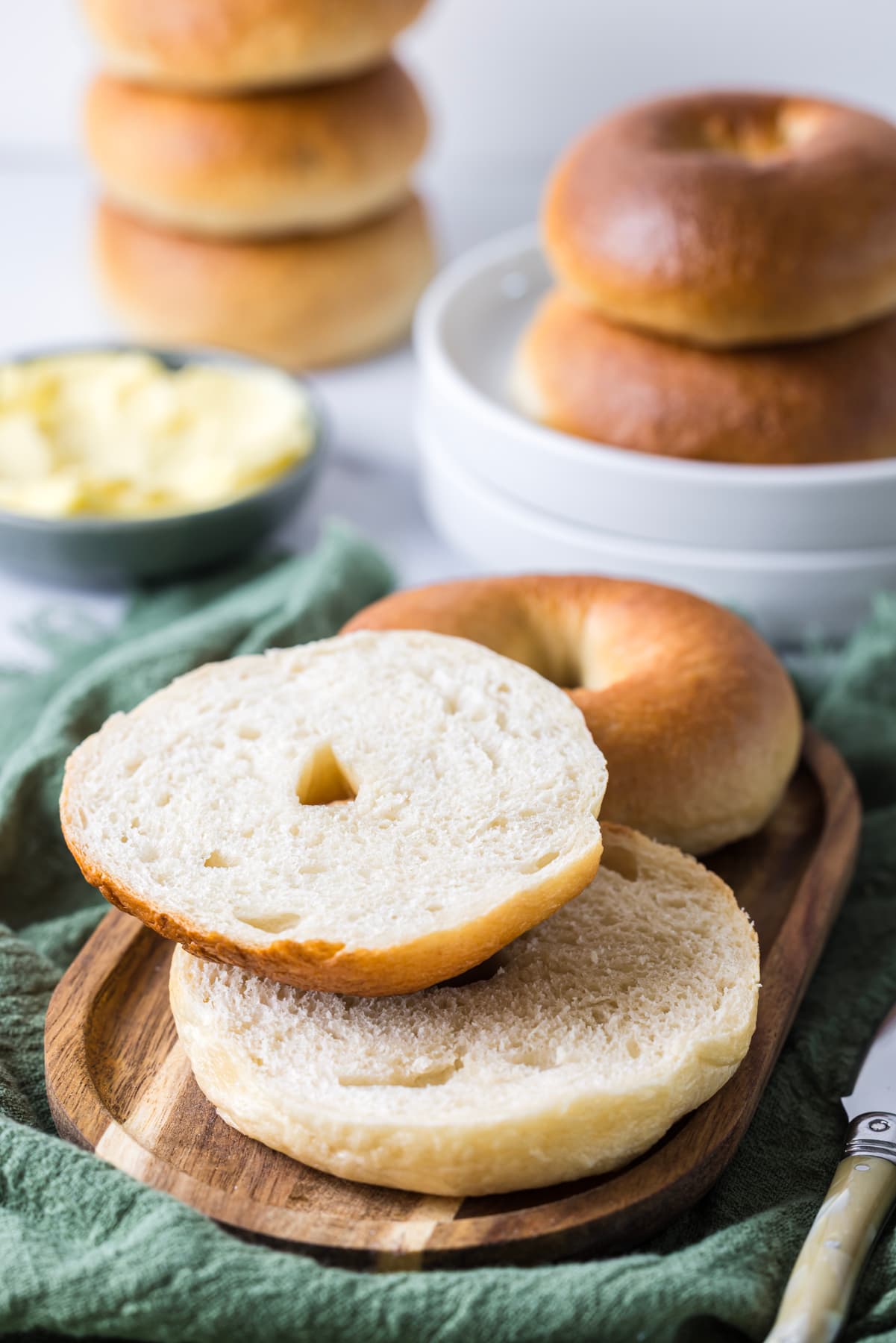
Sourdough bagels are best eaten fresh. Allow them to cool a little and then slice them open. They should be consumed within 12 hours of baking for the best crust and crumb experience.
They do freeze well. I use a large resealable plastic bag and place the bagels in. You can then remove them as you need. Allow them to defrost completely before toasting or warming slightly in the microwave.
Frequently Asked Questions
Flat sourdough bagels are generally a result of under fermentation or under proofing. This means you haven’t allowed the sourdough starter or yeast to fully rise the dough which means they won’t puffy up properly when you bake them. They will dense and much more chewy than they should be. The solution for this is to allow the bagels plenty of time to rise, particularly after shaping.
Bagels are often boiled in honey, sugar or even malt syrup. All of these ingredients are high in sugar. Bagels are then placed onto a baking tray where the bottom is in contact with the tray. As they are quite small, bagels don’t take long to bake and the extra sugar sitting on the crust can cause premature browning. Just keep an eye on your bagels while baking to ensure you can turn the temperature down if necessary.
No you can’t over knead bagel dough, particularly because bagel dough is generally very low in hydration which means you really do need to work the dough hard to ensure it’s fully combined and the gluten network develops sufficiently.
I highly recommend using a stand mixer. It’s quite low hydration and is a stiffer dough than a regular sourdough bread. If you are using a regular stand mixer with a dough hook attachment, 5 to 10 minutes at speed 2 will get the dough mixed. Just remember to give the machine a break every 2 minutes to protect the motor.
You can knead this dough by hand but it will take lots of muscles to get the dough worked through. But it’s definitely doable! Whatever you do – do not add extra water to the dough as this can make the dough too soft and you will not be able to shape the bagels correctly.
I do always add diastatic malt powder to my dough when making sourdough bagels as it improves the color and flavor of the crust. If you have some on hand, I recommend adding it, particularly if your bread flour doesn’t already have it added.
Sourdough Discard Bagels Recipe
Equipment
- Stand Mixer recommended
- Baking Trays
- Stock Pot for boiling bagels
- Slotted Spoon
Ingredients
- 100 g Sourdough Starter, can be discard or fed and bubbly
- 500 g Bread Flour
- 250 g Water, warm
- 30 g Sugar
- 10 g Salt
For Boiling
- 2 Litres Water
- 40 g Honey
Instructions
- I recommend using a stand mixer for this recipe as it is a stiff dough and can easily be kneaded in a stand mixer.Add sourdough starter (discard), water, flour, sugar, yeast (if using) and salt to the bowl of your stand mixer and bring together to form a shaggy dough (you can use the paddle for this part). Allow the dough to rest for around 15 minutes.
- Knead the dough (you'll need to use a dough hook for stand mixers) for around 10 minutes until it is smooth and supple. This is a stiff dough (much like sandwich bread dough) so it won't be super elastic, however it should be smooth and not sticky. Remember to give the stand mixer a break every few minutes.
- Once the dough is sufficiently kneaded, you'll need to allow it to rise or ferment. You want the dough to double and be puffy and soft.
- Once the dough has risen, you'll need to shape the bagels. It's quite simple, you just need a little patience. Divide the dough into 12 pieces weighing 75 grams each. Shape each piece of dough into a small ball.
- Take each ball and poke a hole in the middle. Gently stretch the hole out and then place each bagel onto a baking sheet lined with parchment paper. Cover the bagels with a flour sack towel and allow them become lovely and puffy.
- While they are puffing up, bring a pot of water with 40 grams of honey added to the boil and preheat your oven to 200ºC/400ºF.
- When the water is boiling, carefully place 3-4 bagels into the boiling water at a time. You want to boil them for around 30 seconds each. They should float to the surface and that's when you know to take them out.If you prefer really chewy bagels, boil them for up to 2 minutes each.
- Carefully remove the bagels from the boiling water using a slotted spoon.If you want to add seeds or seasonings, dip the wet bagel into the seeds/seasonings before placing on a baking tray.You can leave them plain if you wish. I like to do a mix of seeded and plain.
- Bake the bagels for around 20 – 25 minutes at 200ºC/400ºF. Remove them from the oven when they are golden brown.
- Allow them to cool before you enjoy them!
Notes
Nutrition
Nutrition information is automatically calculated, so should only be used as an approximation.
Like this? Rate and comment below!










I make this recipe all the time and we LOVE IT!!! I’d like to add a fridge rise (for scheduling reasons) but am not sure how to adapt the recipe for that. Can I just rise on the counter for a bit shorter and add a fridge BF? Reduce the starter from 20% to 15%? Any other advice? thanks!
How long do you let the shaped Bagels proof before boiling/baking? Mine has been set to rise for about 6 hours and they’re a little puffy but not much. I used the pinch of yeast method.
It really depends on how much starter you used, the temp of your kitchen, as well as the commercial yeast you added. It is a very low hydration recipe, so it will take longer than you would be used to with sourdough bread. If you’ve only used a little pinch, they will take a while. They will puff up when you boil them though, so I’d probably give them a try 🙂
I used discard and the amount of yeast I used was like 3 pinches (using all five fingers to pinch) of yeast.
I then used my stand mixer to knead it and my dough was pretty warm by the end of mixing so I just chucked it in the fridge for like 16hrs as I made it around 5pm the day before. My dough rose well during its bulk ferment in the fridge.
Easy to shape as well since it was cold, then I did some errands. Proofed for like 1.5hrs to get it nice and soft:)
First off, I tried this recipe and I’m never going back to store bought! If I wanted to make blueberry bagels, at which step would you recommend adding the blueberries? Would you do frozen or fresh? Thank you!
So glad you love the sourdough bagel recipe 🙂 Fresh or frozen blueberries are fine. Add them towards the end of kneading 🙂
How many grams of blueberries would you add? Can I bake the blueberries first and mash them up to make the dough blue?! Love this recipe. Thank you for sharing.
If you’re wanting to make sourdough blueberry bagels, then you can use this sourdough cinnamon raisin bagel recipe and substitute the raisins for blueberries 🙂
I am Really new to sourdough. I have been using my bread machine to knead as I do not have a stand mixer. Could I put all of the ingredients in my bread machine on DOUGH function? It is a 2 hour cycle of mixing/resting/kneading. Or I can choose to just KNEAD and I can set the time. Would either of those work?
I really would like to try this recipe out, but I’m not seeing rise times listed. Any suggestions on what should be done for the first/second rise? Is the first usually out all night covered on the counter or in the fridge? I’m assuming the second one is roughly 1-2 hrs while water boils? Has this recipe been tried with barley malt syrup instead of the honey?
Love this recipe!! THANK YOU
I LOVE this recipe. THANK YOU! Found on tiktok and have made it everyday since! I’m obsessed! One question: my bagels get pretty crunchy on the bottoms. Do you have any tips? I tried baking on pan and also on parchment paper.
These were amazing and so easy to make!!! Can they be made without the sugar?
I made these into sesame bagels. My first time trying a bagel and they were very good. However, I plan on using a baking soda boil next time as I prefer no sweet taste to the bagel. But, I think the slightly sweet would be great for a raisin or whole wheat bagel. The starter is doing its thing now so we can have fresh bagels for Sunday morning. 🙂
I want to use AP flour. Are there any adjustments needed?
If you use the full amount of yeast could you put the dough in the fridge right after the first rise and then pull out the dough, shape, boil and bake? I was think of making to dough around 5pm and still in the fridge until I’m ready to bake them for breakfast in the morning
also curious to know if they can be made without sugar
Made these and they turned out perfect. I’m not a very good cook so I was thrilled at how they turned out. Thank you. You covered all the steps so well
I live in a hot and humid climate. Can I still overnight ferment on the counter using fed. active starter? (My kitchen temp runs around 74-75 degree). Thanks. Can’t wait to try this recipe as I love bagels!!
Love all the recipes I’ve made from your site so far! One of my favorites is the chocolate discard bread – think that would translate well into a bagel? Is there a way to combine your bagel recipe with that, or would that be a bad idea for some reason, as I can’t really find a lot of chocolate bagel recipes? Thanks!
How long does it take to rise to double? I don’t see it in the recipe. Also, can I use wheat flour?
The time to rise will depend on your own starter, temp of the dough, temp of your kitchen so I won’t say exactly how long. You’ll need to keep an eye on your dough and adjust the temperature and or amount of starter to suit your environment 🙂 Yes you can use some whole wheat 🙂
Very good! tastes so much like NY Bagels which I miss very much. The crust is not crispy enough, I made 3 batches 3 ways but can’t get that crunch. Try, try, again!
Silly question but how do I double this recipe?
If you look on the recipe card, you will see there’s a button to double and triple the recipe. If you click x2 then the recipe card will automatically double the recipe for you.
If I am using this recipe with yeast, can I prepare most of the recipe the night before? At what point could I put it in the fridge? Thank you!
Great recipe! Can you add in items to the dough when rising e.g minced pickled jalapeno, dried fruit (raisins, cranberries, blueberries?) vs only as a a part of cream cheese?
Yes you can 🙂 Add these when you first mix the dough 🙂
I’ve made this recipe three Tim’s and they’ve all turned out delicious! I mixed my dough last night and fermented it overnight on the counter. It looks beautiful right now. My problem: I woke up feeling flu-ish and don’t know if I have the energy to complete the bagels today. Can the dough be retarded in the fridge a day or two in hopes I feel better soon?
Loved them! I added some malt, but I don’t know if it made them better or worse, because I didn’t compare to the original recipe. I am foolish like that. One thing I may change, though, is I may use the recipe to make eight bagels as we are used to larger bagels from our local shop.
What could I use instead of honey in the boil?
I’m looking forward to making these bagels but have couple questions: How do you cover them during the overnight fermentation process. Should whatever you cover them with be touching the dough or not? And, can you make them without sugar?
This was the first time I tried making bagels and they turned out AMAZING! I used sourdough discard and a pinch of yeast. We made chocolate chip, cinnamon sugar, cheddar, and everything bagels and I can’t choose a favorite they were all so good! Thanks for the recipe!
Love this! I make them every weekend. Do you have a recipe for onion bagels?
Such as amazing recipe!!
If hand kneading – how many minutes of kneading should I do??
Made these and my husband loved them! Will definitely try mixing in whole wheat flour, other add-ins, etc. I think I let them rise too long though — my starter was ready at 1:00 so I mixed them in, fermented overnight on the counter, formed at 6:00am, then didn’t get back from church till 12:30, so they had about six hours to rise and as a result the dough had almost closed all the holes. So I’ll fiddle around with my schedule to try to decrease the bulk ferment and proofing times.
I made these and my Dad who is a diabetic tried one and it spiked his sugar and set his alarm off. Can they be made without the sugar and honey?
Love the recipe had a great flavor, however I seem to be doing something wrong. I am writing everything, but still only ever get 11 bagels. I also can’t get them to golden brown or even close to Browning. The internal temp of each bagel gets to 200 degrees so I know they are baked through. How long should I wait before I bake after boiling? It’s not really a big deal since we will toast them for sandwiches but I’m kind of a perfectionist and it annoys me know to know what I did wrong.