
Whether you’re a beginner or seasoned sourdough baker, there are certain sourdough ingredients you should always have on hand to make sure you’re prepared for any sourdough situation. Here are 10 sourdough ingredients you should always have in your pantry.
This post contains affiliate links. Please see our disclosure policy.
Good Quality Bread Flour
Good quality bread flour is an absolute given, right? But did you know that not all bread flours are created equal. Depending on where you live, bread flour may also be known as high protein flour or baker’s flour.
Ideally, you want to use a bread flour with at least 12% protein. This will ensure you get good gluten development and a nice elastic dough, but if you can find something with 13 to 14% protein, that’s even better!
Kate’s Pro Tip
Always Read The Nutrition Panel
Don’t be fooled by labels, always read the nutrition panel on the bag of flour you’re using to make sure the protein content is above 12%. Some flours will label themselves as “baker’s flour” but won’t actually have a high enough protein content to produce good sourdough bread.
All-purpose Flour
All-purpose flour (or plain flour) is perfect for feeding your sourdough starter. Generally all-purpose flour doesn’t have enough protein to make good sourdough bread (unless you reduce the hydration like I do in this all-purpose flour sourdough bread recipe), but it’s absolutely fine for feeding your starter. Given you feed your starter a lot while it’s developing, you don’t want to be using anything too expensive. It’s a great idea to have a few bags of AP flour on hand, so you’ve always got food to feed your bubbly friend!
All-purpose flour is also great for sourdough discard recipes. You can use all-purpose flour in sourdough cinnamon rolls, sourdough discard pancakes or sourdough carrot cake cookies.
Rye Flour
Rye flour is very handy to have in your sourdough pantry. It can be used to boost your sourdough starter, particularly if you’re having trouble getting it to rise in those early days. Many sourdough bakers also aspire to bake rye bread, whether a true sourdough rye bread or a blended sourdough loaf.
When baking with rye bread, it can also be handy to have some Vital Wheat Gluten on hand as rye flour doesn’t develop gluten well – and a good gluten network is essential for great oven spring! You can use regular rye flour or a dark rye flour, depending on your preference.
Rice Flour
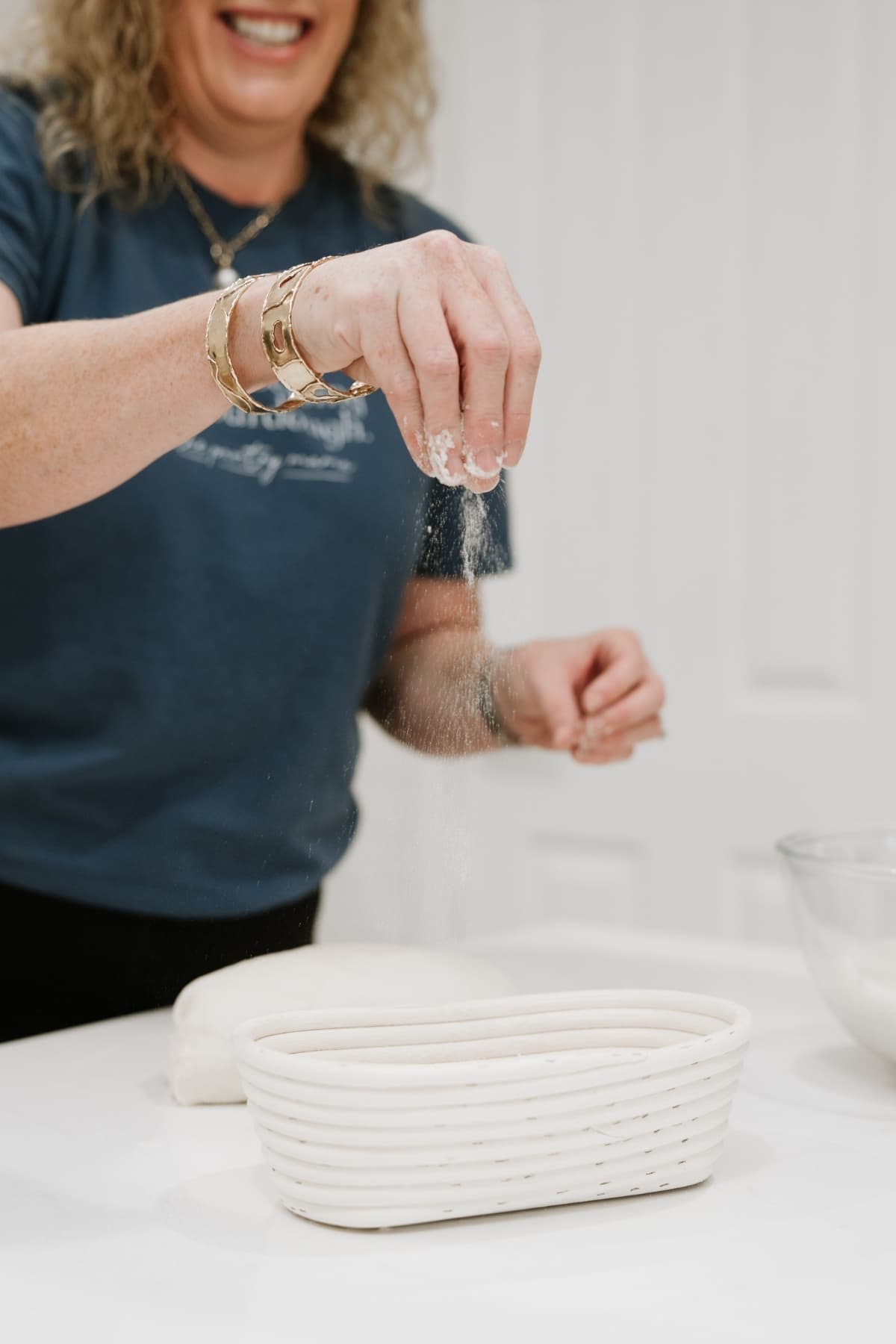
Rice flour is an absolute must for a sourdough baker. Rice flour is gluten free and thus will not stick to your dough. It is like teflon for your dough so it’s perfect to dust your bannetons with.
You can make your own by grinding white or brown rice in a high powered blender or food processor. However, it’s cheap and easy to buy and the shop bought flour is ground super fine, making it much easier to use.
If you’ve ever had dough stuck to the inside of your banneton, get yourself some of this and you’ll never have an issue again.
Semolina
Semolina is absolutely essential in my sourdough pantry. It’s a flour made from Durum wheat that’s often used in making pasta. I use a coarse semolina flour to line my banneton baskets (I prefer it over rice flour) as well as stop my sourdough discard pizza dough sticking to wooden pizza peels. You can use a finer semolina flour for this, but I find the coarse textured flour much more efficient for this purpose.
Vital Wheat Gluten
Vital Wheat Gluten is not often talked about in sourdough – but it should be! This handy sourdough ingredient should be in your pantry. It can help in many ways. If you’ve run out of bread flour, you can add Vital Wheat Gluten to your all-purpose flour to increase its protein content. It’s also really handy when working with wholegrain or rye flours. I’ve put together a guide on how to use vital wheat gluten in sourdough.
Rolled Oats
Rolled Oats are a great sourdough pantry staple. They are perfect for making delicious Honey & Oat Sourdough Bread. You can throw a handful into any loaf to give it texture. They are also a great topping for a loaf too. I love adding some rolled oats to our sourdough discard pancakes too for some extra goodness, as well as these sourdough oatmeal raisin cookies!
You can also use rolled oats in the base of your Dutch Oven to stop the base of your bread from burning. Throw a handful on the base underneath your parchment paper. Just make sure you get old fashioned Rolled Oats and not quick oats which are used for microwave porridge.
Cornmeal
Cornmeal may seem like strange ingredient to have on hand for baking sourdough bread, however it can be very useful for the sourdough home baker. Cornmeal is a coarse maize flour and can be used to dust sourdough English Muffins, making delicious sourdough tortillas and even dusting pizza bases to stop them sticking. Cornmeal can also be used in the base of your Dutch Oven to stop the base of your bread from burning.
Good Quality Olive Oil
Good quality olive oil is a great staple to have on hand. It can add a lovely subtle flavor to your sourdough bread, as well as being a solution for a tough, chewy crust. Adding some olive oil to your sourdough bread at autolyse or fermentolyse can help to soften the crust. You’ll also find olive oil makes a lovely addition to sourdough flatbread and sourdough discard pizza. I love using a good quality olive oil as the base for this bread dipping oil.
Whole Wheat Flour
Whole wheat flour or wholemeal flour, depending on where you are from, is a nice addition to basic sourdough bread. Unlike all-purpose flour, whole wheat flour is made by grinding all parts of the wheat (the endosperm, germ and the bran). This makes it different from “white” flour and means that it absorbs more water too – something you need to account for in sourdough baking. You’ll also need to adjust the hydration of your sourdough depending on whether you’re using a traditional whole wheat flour or a white whole wheat or even a sprouted whole wheat flour.
If you love the flavor of whole wheat flour, you could try making a whole wheat sourdough loaf or adding some whole wheat to this Coffee and Maple Infused Date Sourdough.











You are my hero!!
I follow you from a far away place on the other side of the Atlantic, the Canary Islands.
Thanks for this post. It’s been so useful and enlightening 💗
Thanks for explaining about the different uses of different flours! How do you calculate 12% protein like you mention?
Your linked bread flour has 4g protein per 1/4 cup so I’m using that as a baseline but wondering about the 12% calculation so I can check others. Thanks!