
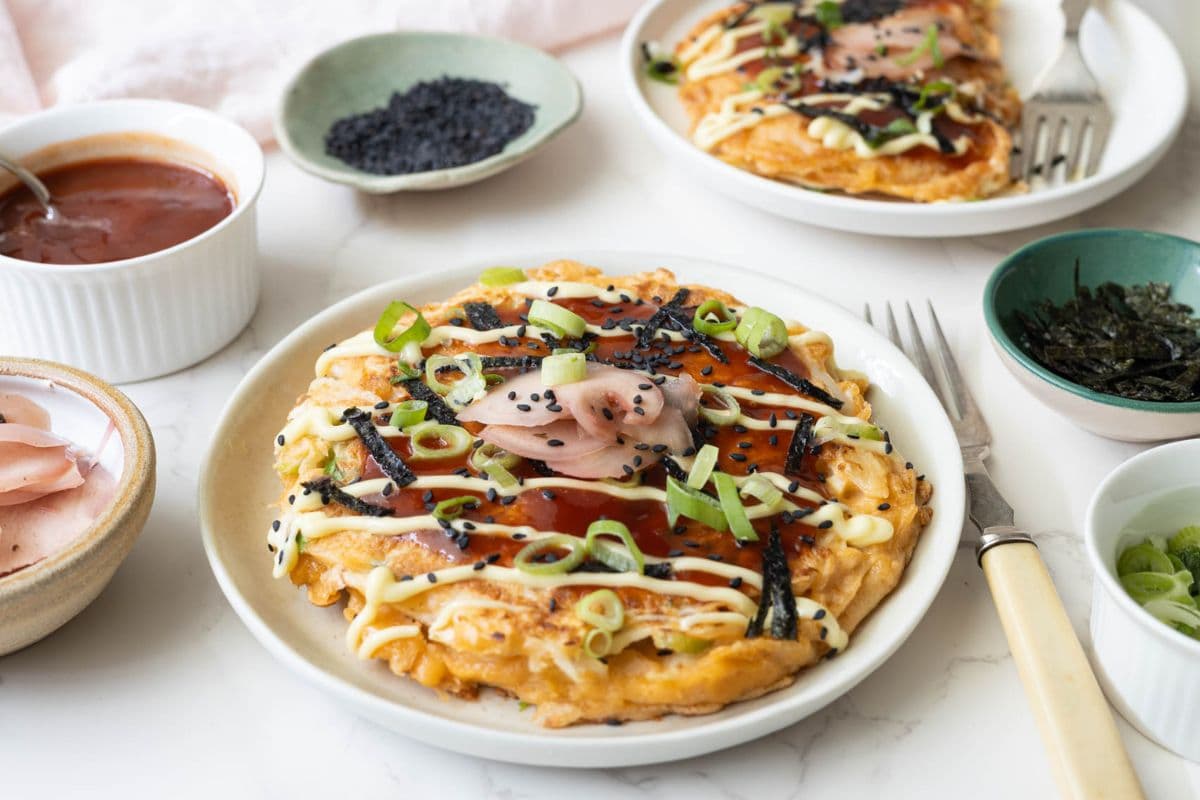
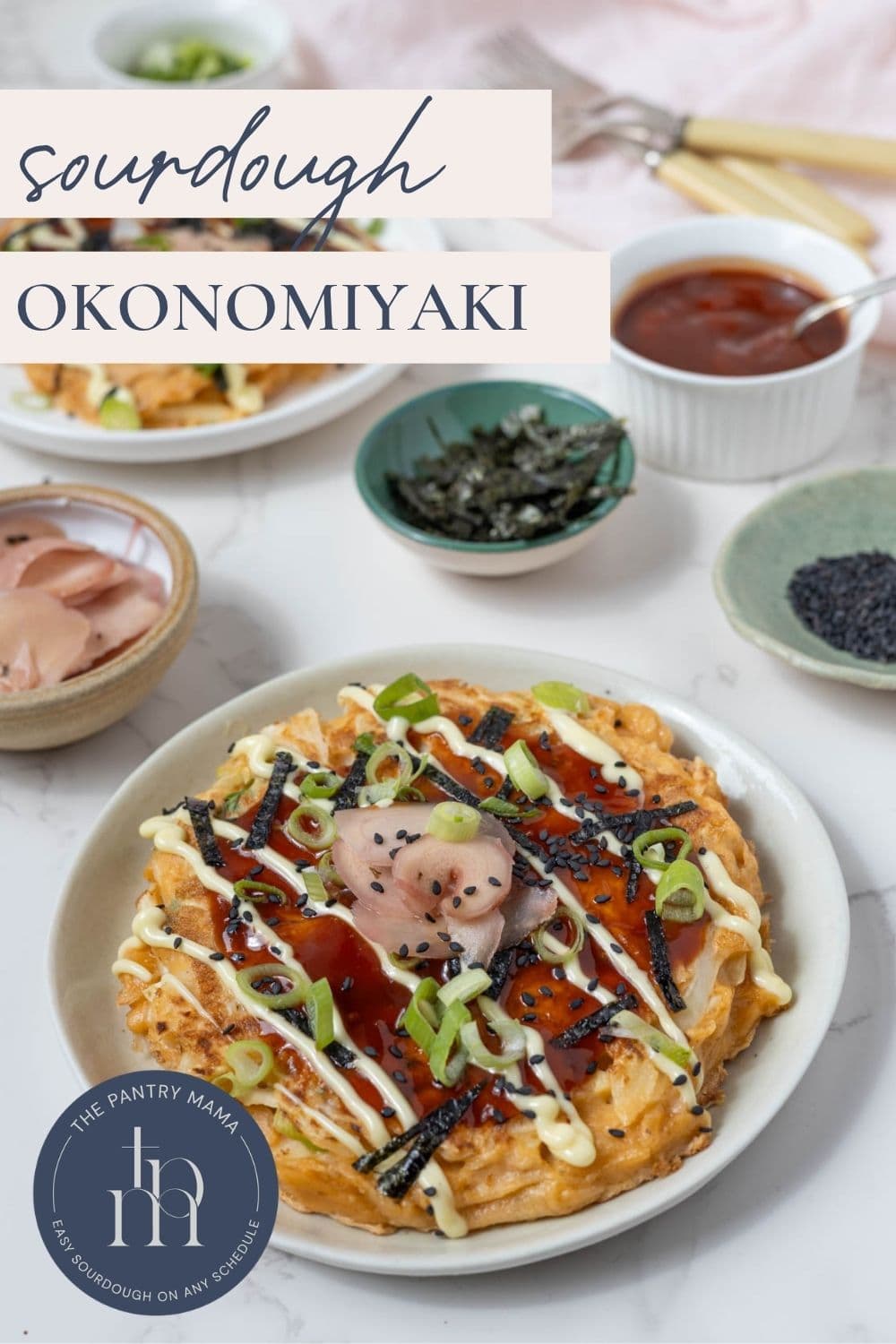
If you’ve never tried okonomiyaki, you’re going to love this Japanese savory pancake that I’ve adapted to include sourdough starter! It’s a bit like a cross between a frittata and an omelette stuffed with cabbage and scallions, although you can easily tailor the ingredients to make it the way you like. Crispy, crunchy, and full of flavor, you just might have found your new favorite weeknight dinner!
This post contains affiliate links. Please see our disclosure policy.
Why You’ll Love This Recipe!
- Easy to make – This recipe is a cinch to put together, all you do is combine the ingredients in a big bowl and then cook them in a pan!
- Super customizable – In Japanese, yaki means “grill” and okonomi translates roughly to “as you like it”, so the whole point of this recipe is to be versatile and include lots of different ingredients. Traditional versions might include pork belly or shrimp or squid, although this dish is made differently across different regions of Japan and there are so many variations. In fact, I’ve heard it called “Japanese pizza,” so think of it as a dish where you add in any ingredients or toppings you want!
- Budget friendly and no food waste – Not only does this recipe use up lots of sourdough discard, but the ingredients are very economical. I often make sourdough okonomiyaki to use up the last of a head of cabbage that I’ve already got in the fridge – and because it’s so good!
Ingredients for Savory Sourdough Pancakes
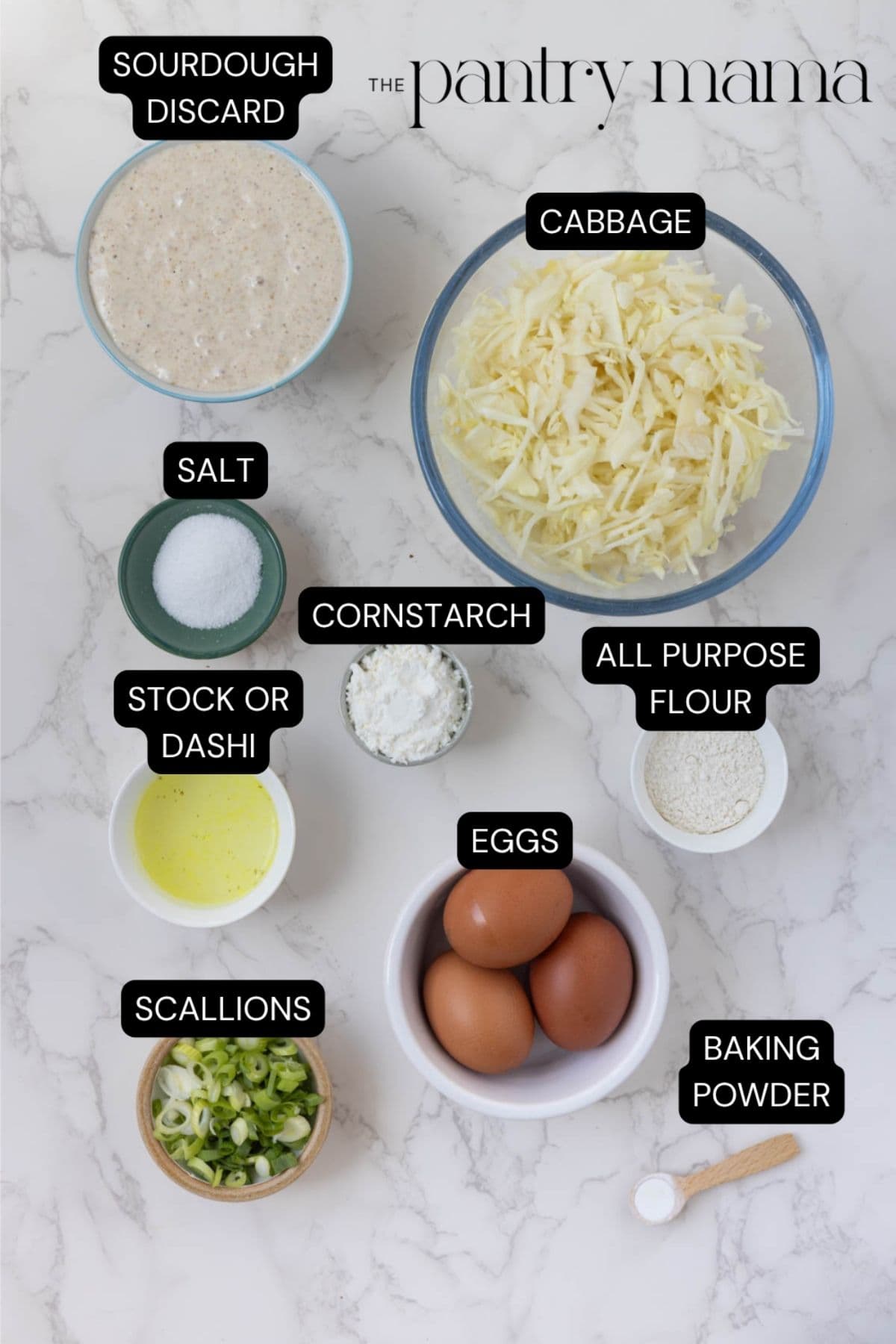
- Sourdough Starter or Discard – You can use sourdough discard – or you can just feed your starter for the purpose of making these savory sourdough pancakes. Either will work just fine, just like when you make regular sourdough discard pancakes.
- Eggs – I’ve used large eggs (if you’ve got lots of eggs to use, check out these sourdough recipes that use lots of eggs).
- Salt
- Baking Powder – you just need a pinch.
- Shredded Cabbage – I’ve used white cabbage here (which is actually the same plant as green cabbage), but you can use any variety of cabbage. You want the cabbage sliced nice and thin, not in big chunks, so I recommend using a sharp knife, a food processor with the slicing attachment, or a mandoline.
- Scallions – there are also known as green onions or spring onions.
- Chicken stock or dashi – traditional okonomiyaki uses dashi, a Japanese soup stock, but I often have trouble finding dashi near me and have successfully substituted chicken stock (using bouillon cubes) or even just water in a pinch. Depending on the consistency of your sourdough starter or discard, you may even find you don’t need the additional liquid.
- Oil – just a basic neutral oil, such as vegetable oil, for frying the okonomiyaki.
- Okonomiyaki Sauce (optional) – you can buy this in many Asian grocery stores or online, but I like to make my own version with a combination of ketchup, Worcestershire sauce, soy sauce, and honey, which I always have in my kitchen.
- Mayonnaise (optional) – it’s very common to drizzle mayo on top of okonomiyaki, so it’s easiest if you can find a brand in a squeezable bottle like Kewpie.
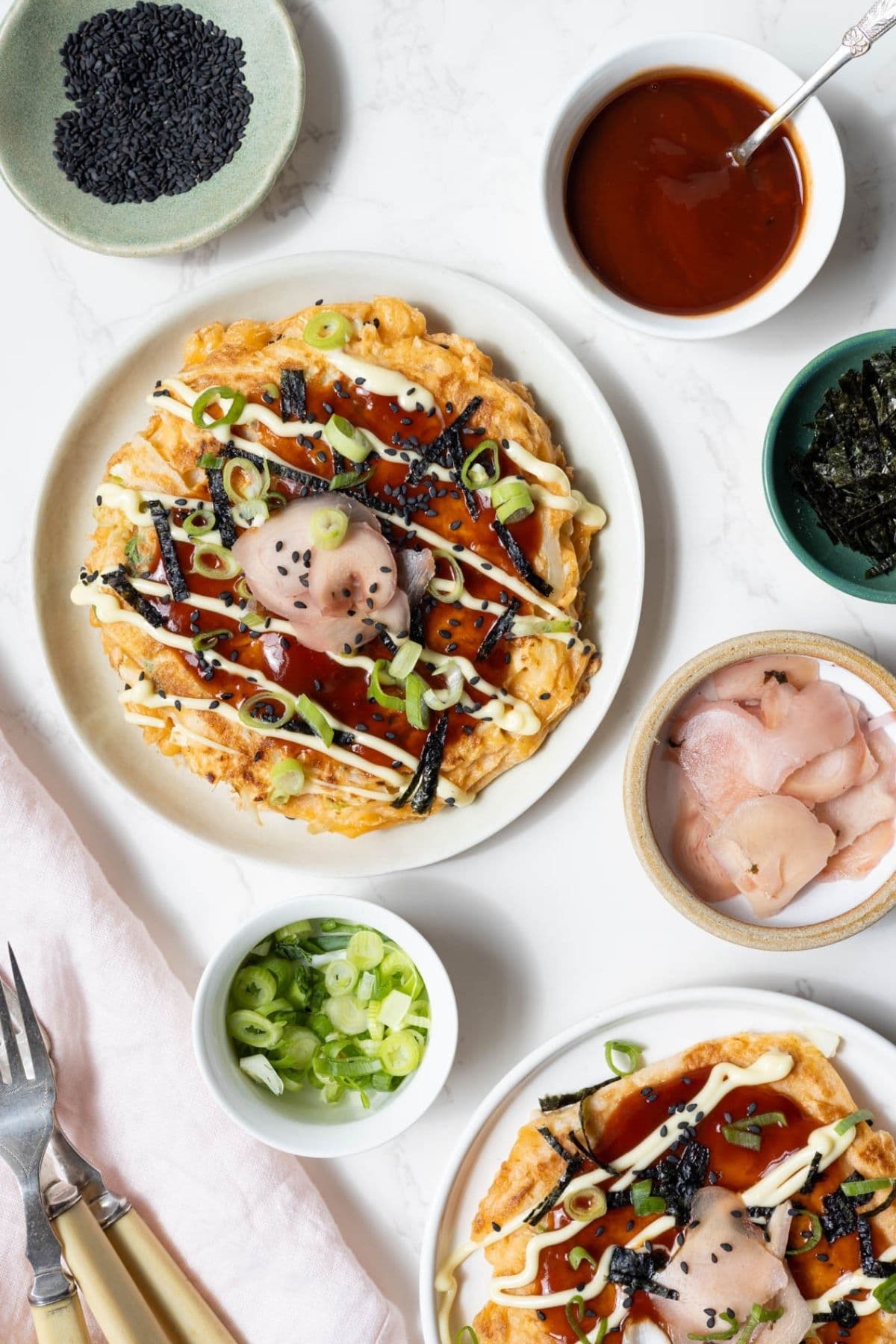
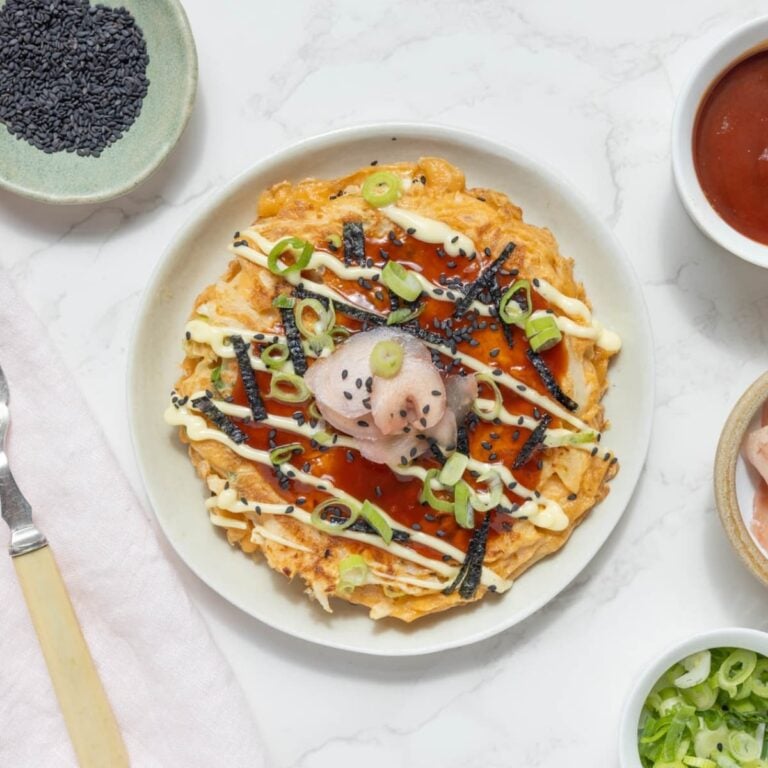
- Sesame Seeds, Seaweed (Nori) and Pickled Ginger (optional) – not essential, but I love to top my okonomiyaki with sesame seeds, nori, and ginger for the pops of color and flavor!
How to Make Sourdough Okonomiyaki
Making sourdough okonomiyaki could not be easier. In fact, it’s a great sourdough recipe that kids can make with just a little adult help (just like making sourdough zucchini fritters). All you need is a mixing bowl and a frying pan!
Start by beating the eggs in a medium sized bowl. Then, whisk in the sourdough discard, cornstarch, all-purpose flour, and baking powder.
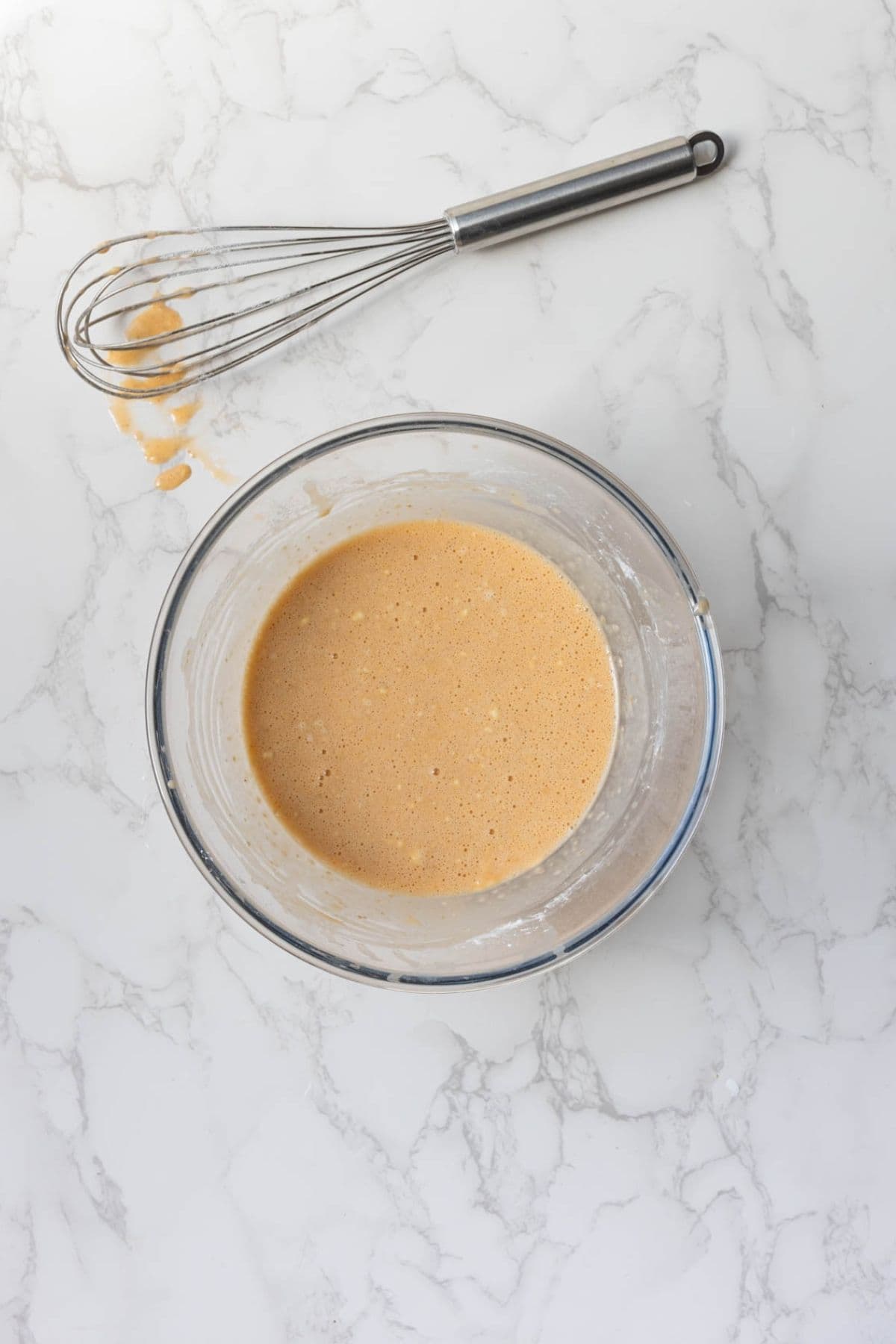
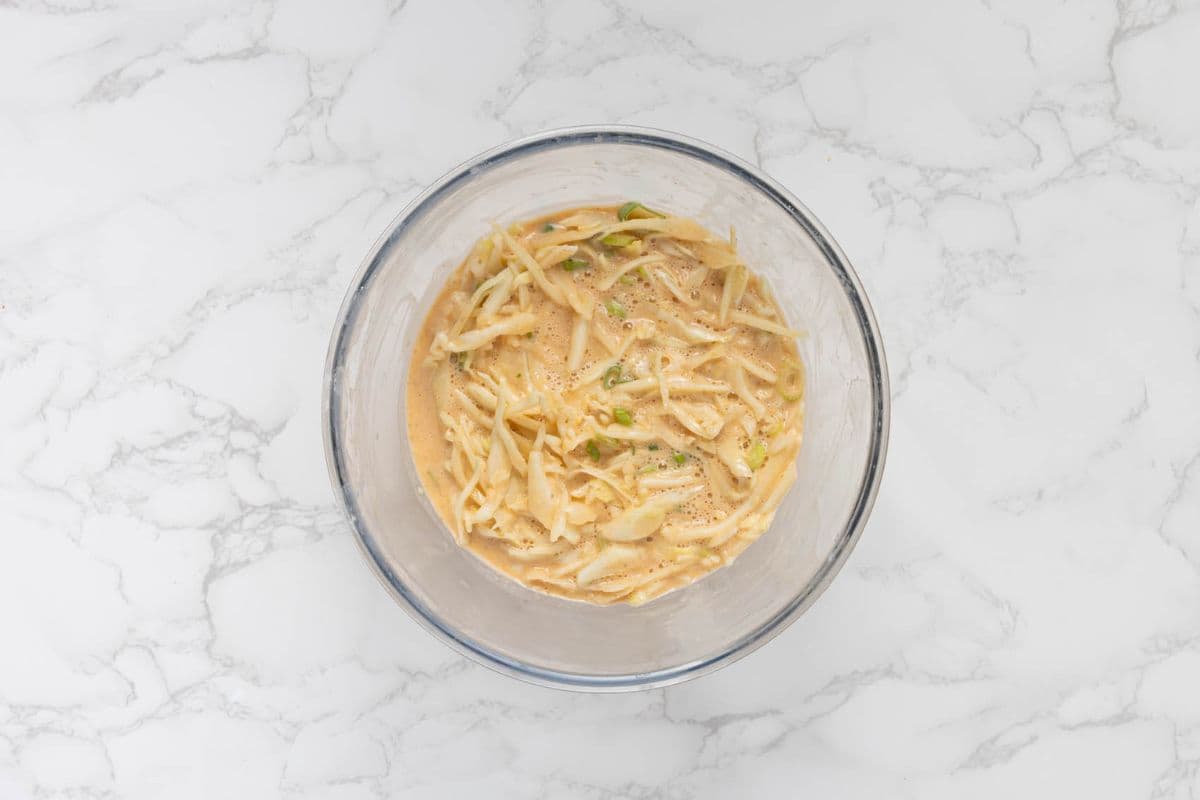
Use a spatula to mix in the shredded cabbage and scallions. Now this part requires a bit of adjusting depending on the texture of your starter. You’re looking for the batter to be fairly thick with the vegetables so you can see the cabbages and scallions, not like a runny batter with a bit of vegetables mixed in.
Kate’s Pro Tip
Consistency of Batter
If your sourdough starter or discard is quite thick, mix in the chicken stock or dashi. If you have a runny discard, you may not need any more liquid or may even need a bit more flour. You should be able to scoop up a large spoonful without liquid running everywhere. If you’re not sure about the texture, you can adjust further once you scoop the okonomiyaki batter into the pan.
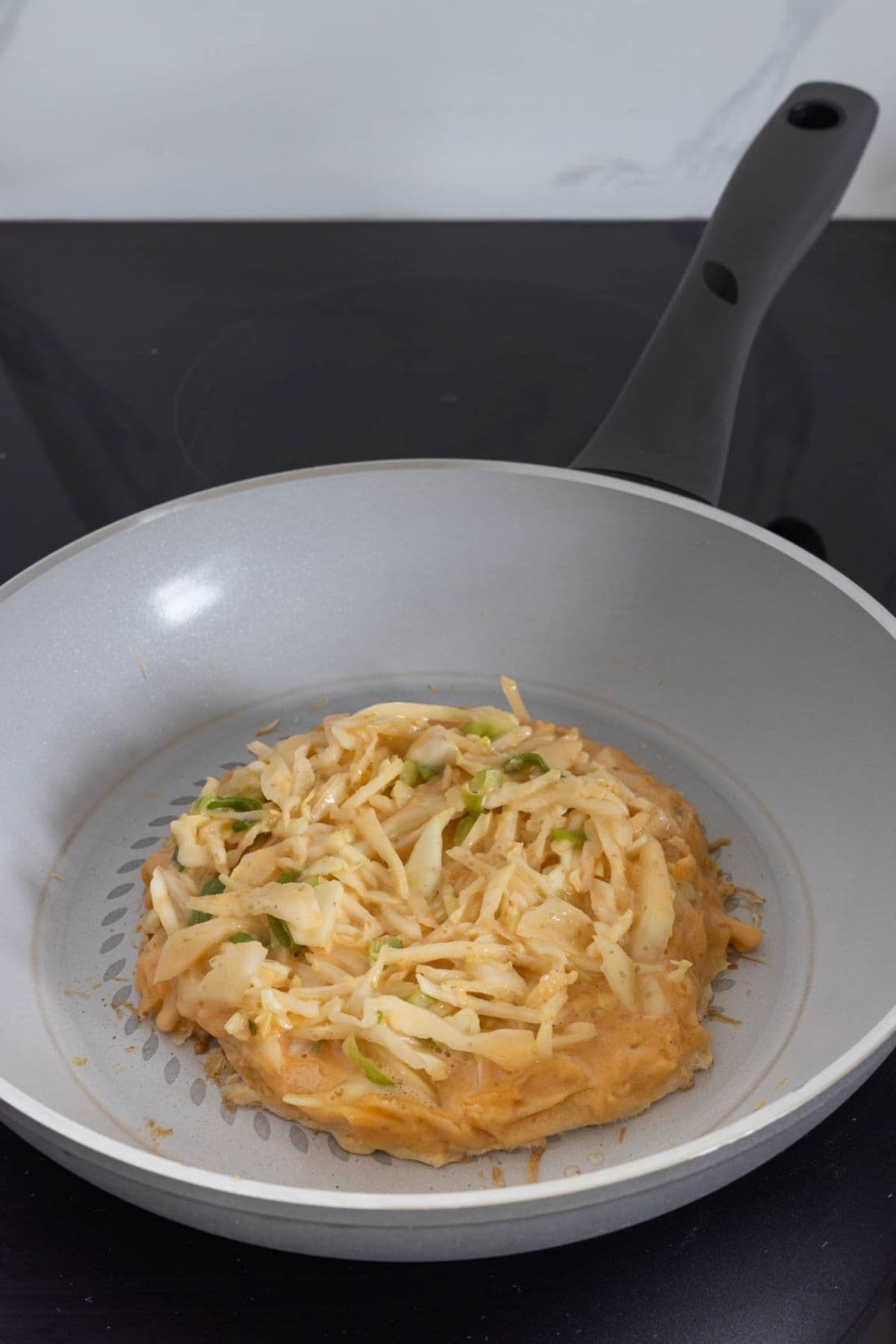
Heat a large skillet over medium heat and add a splash of neutral oil to lightly coat the bottom. Once the oil is shimmering, scoop about a cup’s worth of the sourdough okonomiyaki batter into the pan. The batter should stay in a big puffy pancake. (Don’t worry if it runs a bit, just use a spatula to push the batter back into the circular shape. If it runs a lot, whisk in a bit more flour). Fry until the bottom is set and golden brown, about 5 minutes, then flip the pancake and cook the other side until nicely browned. Don’t pat the pancakes down too much when cooking, you want them to be airy and puffy rather than flat and dense.
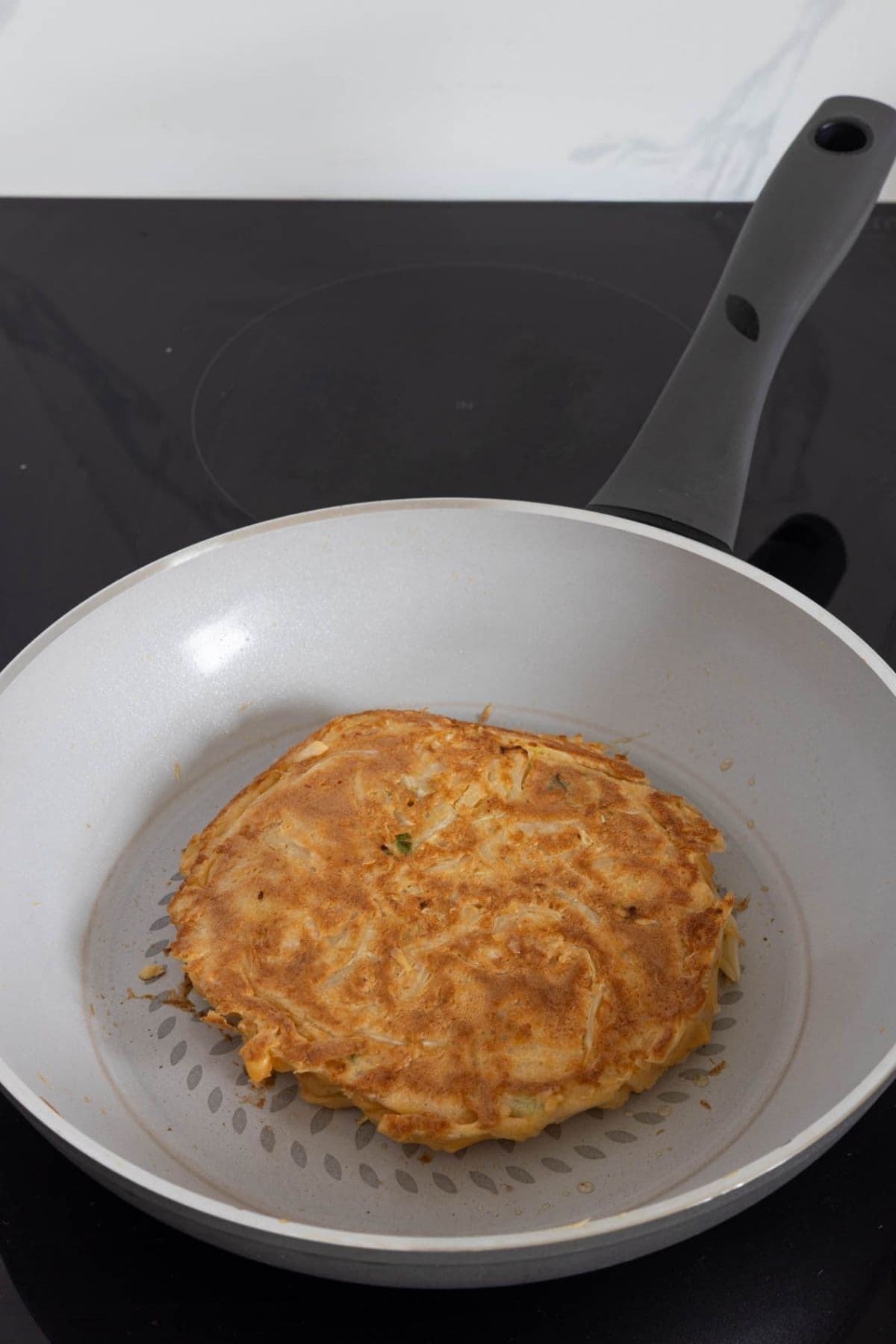
Repeat until all the pancakes are cooked, then dress them up with your favorite toppings!
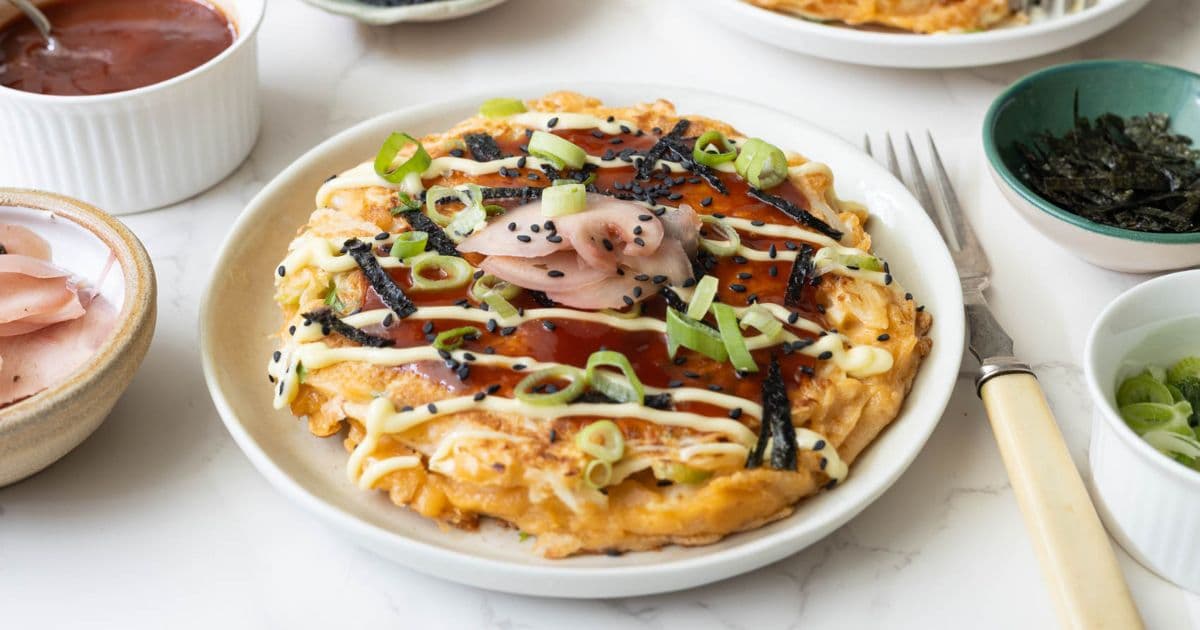
If you want to make your own okonomiyaki sauce, whisk together the ketchup, Worcestershire sauce, soy sauce, and honey, then spread on top of the pancake before drizzling mayonnaise and sprinkling on other toppings.
Toppings for Savory Sourdough Pancakes (Okonomiyaki)
Traditional Okonomiyaki is served with a range of toppings including Japanese Mayonnaise, seaweed and sauces. Meat is a popular topping too – think pork belly strips, bacon, grilled prawns (sounds good right). You can basically add whatever you like to these. They can almost become like pizza pancakes! Here are some ideas for toppings for sourdough okonomiyaki:
- Japanese Mayonnaise (Kewpie Mayo)
- Sliced Chili
- Sesame Seeds
- Yakatori Sauce
- Crispy Seaweed (Nori Sprinkles)
- Dried Bonito Flakes
- Pickled Red Ginger
- Sriracha
My favorite way to eat these is to cut them into wedges, top with Kewpi Mayo, sesame seeds, nori sprinkles and chili cruch oil and then dip them into a bowl of Yakatori sauce (with a little chilli jam added). Seriously cannot get enough!
How To Store and Freeze
Like most egg-based dishes, these sourdough okonomiyaki taste best when straight out of the pan. However, you can definitely store and freeze them and they still taste great.
To store, let the okonomiyaki cool, then wrap well in aluminum foil or plastic wrap and refrigerate for up to three days or freeze for up to a month. To reheat, thaw in the fridge overnight if necessary, then reheat in the oven at 350ºF/175ºC for 10 to 15 minutes until piping hot.
Frequently Asked Questions
Okonomiyaki is a savory Japanese pancake. The word means “as you like” and refers to the fact that the pancake is made to personal preference and topped with whatever you like. Okonomiyaki savory pancakes are a popular street food in Japan.
While it is referred to as a pancake or Japanese pizza, it’s probably more a cross between a savory pancake and a frittata. Because Okonomiyaki is made with egg, flour and water, it’s quite easy to use sourdough starter in the mixture. The texture and flavor of sourdough starter lends itself easily to the recipe.
Yes, I’ve used white cabbage here (technically the same as green cabbage), but feel free to use whatever cabbage you can find or already have in your kitchen. Some cabbage varieties are sturdier than others though, so just be sure to slice the cabbage very thinly and you’ll have no problems.
Honestly, the options are endless! Traditional Japanese toppings often include katsuobushi, which are dried bonito (fish) flakes, and various types of seaweed. My family loves thinly sliced dried seaweed, sesame seeds and a bit of pickled ginger.
Sourdough Okonomiyaki – Savory Japanese Pancakes
Equipment
- Mixing Bowl
- Frying Pan
Ingredients
To Make The Pancakes
- 3 Eggs
- 120 g Sourdough Starter
- 30 g Cornstarch
- 20 g All-purpose Flour
- 5 g Salt
- 1 g Baking Powder, (approx. ¼ tsp)
- 300 g Cabbage, (shredded)
- 2 Scallions, (thinly sliced green onions)
- 20 g Chicken Stock, (or dashi)
For Frying and Topping
- 30 g Neutral Oil, (for frying)
- Sesame Seeds
- Scallions
- Nori, (Japanese seaweed)
- Pickled Ginger, (optional)
- Mayonnaise, (optional)
Okonomiyaki Sauce
- 50 g Ketchup
- 15 g Worcestershire Sauce
- 10 g Honey
- 8 g Soy Sauce
Instructions
- Beat the eggs in a medium sized bowl. Then, whisk in the sourdough discard, cornstarch, all-purpose flour, and baking powder.
- Use a spatula to mix in the shredded cabbage and scallions. The batter should be fairly thick with the vegetables, not a runny batter with a bit of vegetables mixed in.
- This part will depend on the texture of your starter. If your sourdough starter or discard is quite thick, mix in the chicken stock or dashi until you have a uniform batter. If you have a runny discard, you may not need any more liquid, or may even need a bit more flour. You should be able to scoop up a large spoonful without liquid running everywhere. If you’re not sure about the texture, you can adjust further once you scoop the okonomiyaki batter into the pan.
- Heat a large skillet over medium heat and add a splash of neutral oil to lightly coat the bottom. Once the oil is shimmering, scoop about a cup’s worth of the sourdough okonomiyaki batter into the pan. The batter should stay in a big puffy pancake. (Don’t worry if it runs a bit, just use a spatula to push the batter back into the circular shape. If it runs a lot, whisk in a bit more flour). Fry until the bottom is set and golden brown, about 5 minutes, then flip the pancake and cook the other side until nicely browned.
- Repeat until all the pancakes are cooked, then dress them up with your favorite toppings! If you want to make your own okonomiyaki sauce, whisk together the ketchup, Worcestershire sauce, soy sauce, and honey, then spread on top of the pancake before drizzling mayonnaise and sprinkling on the toppings of your choice.
Nutrition
Nutrition information is automatically calculated, so should only be used as an approximation.
Like this? Rate and comment below!










This is next on my list, to make for breakfast. I have dashi powder (but, not chicken stock cubes!) and am guessing that a “pinch” or two of dashi powder will be more than enough for a nice, unami flavor?
I used chicken bone broth instead of water and cubes, dash kelp granules, several sugar snap peas sliced thin, and splash of coconut aminos. I was out of spring onions so sautéed sliced leeks and a bit of fresh grated ginger which I added after the cabbage and peas. I made a sauce out of a couple of tablespoons of paleo mayonnaise, paleo siracha, tiny amount mustard, and a dash of ground ginger. Cooked in oil, but added splash of toasted sesame oil when finishing and turned off the heat. Yummmmm! Great light dinner, but I will need to double the recipe next time.
I happened upon this recipe and it sounded great. I cut the ingredients down by a third, since I was just making a late-night snacking portion for my pregnant self. =) The dish came together very quickly. I did have to add a bit of flour to the batter to thicken it a little—my starter is 50-50 water and flour, for reference. And the verdict: these were really good! I had them with mayonnaise, tamari, and sesame oil, and that was delicious. I’m sure other toppings would be great too. I hope to make more soon! Thanks for the recipe.
This recipe has become my FAVORITE discard recipe – I often will use bone broth vs cubes, and a splash of Red Boat fish sauce, but absolutely love these flavors. Thank you for this!!
Could you thicken with arrowroot powder or tapioca flour instead of cornstarch? Thanks!