
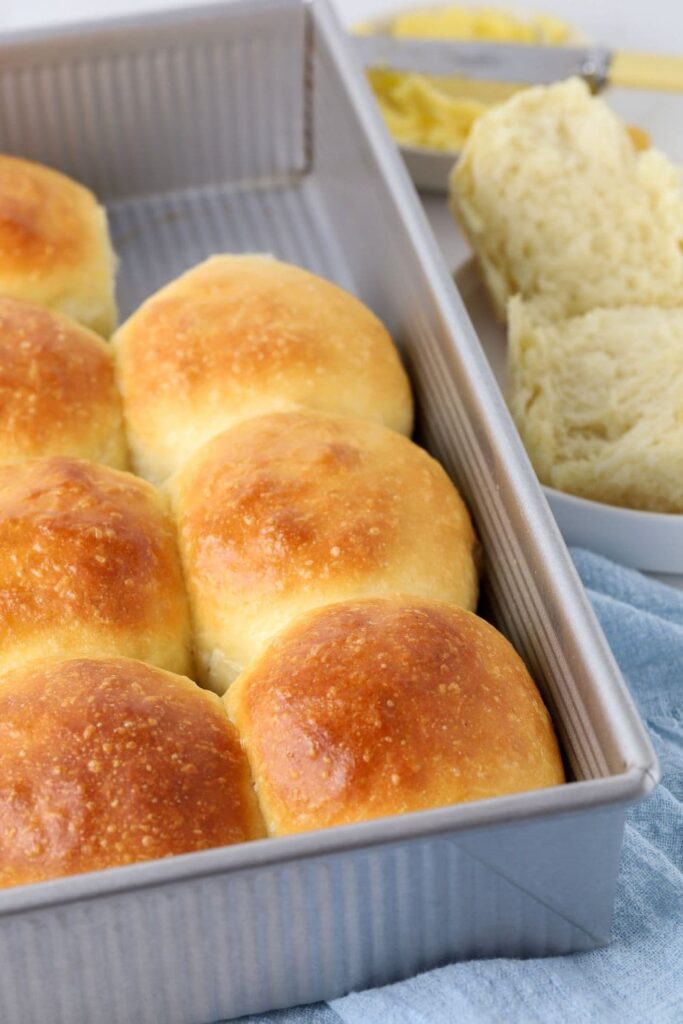
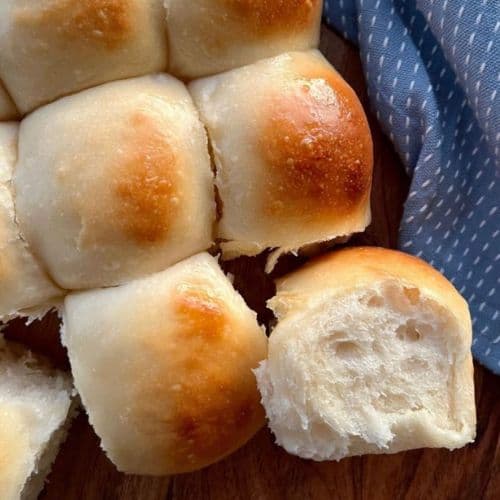
These soft sourdough dinner rolls are light, fluffy and slightly sweet, with a buttery golden top and pillowy pull-apart centre. They’re naturally leavened with active sourdough starter, no commercial yeast and no eggs required. They are just as perfect for a weeknight dinner as they are for Thanksgiving or Christmas.
You can make them on an overnight schedule or adjust the timing to suit your day, making them an easy way to put warm homemade sourdough rolls on the table without spending the whole day in the kitchen.
This post contains affiliate links. Please see our disclosure policy.
Why You’ll Love This Recipe!
- Soft + Fluffy – These naturally leavened dinner rolls have a pillowy, pull-apart centre with a soft golden crust. They’re slightly sweet but still versatile enough to serve with almost any meal.
- Choose Your Size – You can choose to make these sourdough dinner rolls whatever size you’d like. I find that this recipe makes around 12 rolls at 80 g (I use a scale to ensure all the dough balls are all the same size). Alternatively, you could make 18 rolls at 50 g.
- No Eggs – unlike many sourdough dinner roll recipes, this recipe doesn’t use eggs in the dough or as an egg wash on the top of the rolls. This is great if you have egg allergies.
- Flexible Schedule – Make the dough overnight, or adjust the timing to suit when you want the rolls on the table.
Ingredients
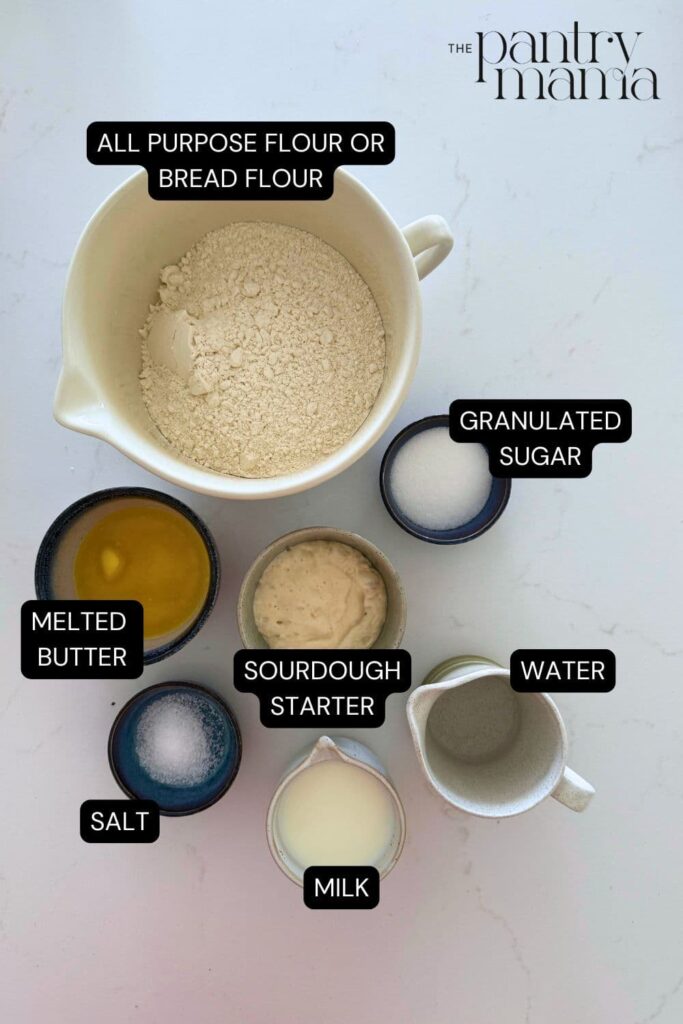
- Whole Milk – I’ve tested this recipe with whole milk and 2% and it works equally as well. You can also substitute buttermilk if you prefer.
- Water – room temperature water is best, but using warm water will get the wild yeast in your starter activated more quickly. Just be careful not to make it too warm or you’ll end up with soupy dough.
- Sugar – You can reduce the sugar if you want to but it will change the composition and flavor of the rolls. They are meant to have a slight sweetness to them.
- Salt
- All Purpose Flour – You can use bread flour for this recipe, but all purpose is better. You’ll get a softer roll as the protein content is generally lower. They will still be soft if you use bread flour, but will have a slight chew to the bite. If you want to use whole wheat flour, I recommend using this recipe for whole wheat sourdough dinner rolls.
- Sourdough Starter – You’ll need active sourdough starter to make this recipe. Feed your starter well before you plan to make these so that it’s bubbly and at peak, ready to rise your dough!
- Butter – I’ve used salted butter, melted and cooled, but as always you can use unsalted butter if you prefer.
Recipe Testing Notes

Over the years, I’ve tested this recipe multiple times, plus it’s a recipe that I make on a very regular basis for my own family. When I first started making these sourdough dinner rolls, I would mix the dough to a dry, shaggy dough and then let the dough rest for around 30 minutes before I kneaded it. I’ve tested it without this rest and there’s no noticeable difference in the texture of the rolls, so I no longer do it this way.
How To Make Sourdough Dinner Rolls
I’ve used a stand mixer with a dough hook attachment to create soft and fluffy dinner rolls, but you can absolutely knead this by hand if you prefer. These soft sourdough dinner rolls have been created using parts of my sourdough sandwich bread – it’s another soft sourdough recipe you might enjoy.
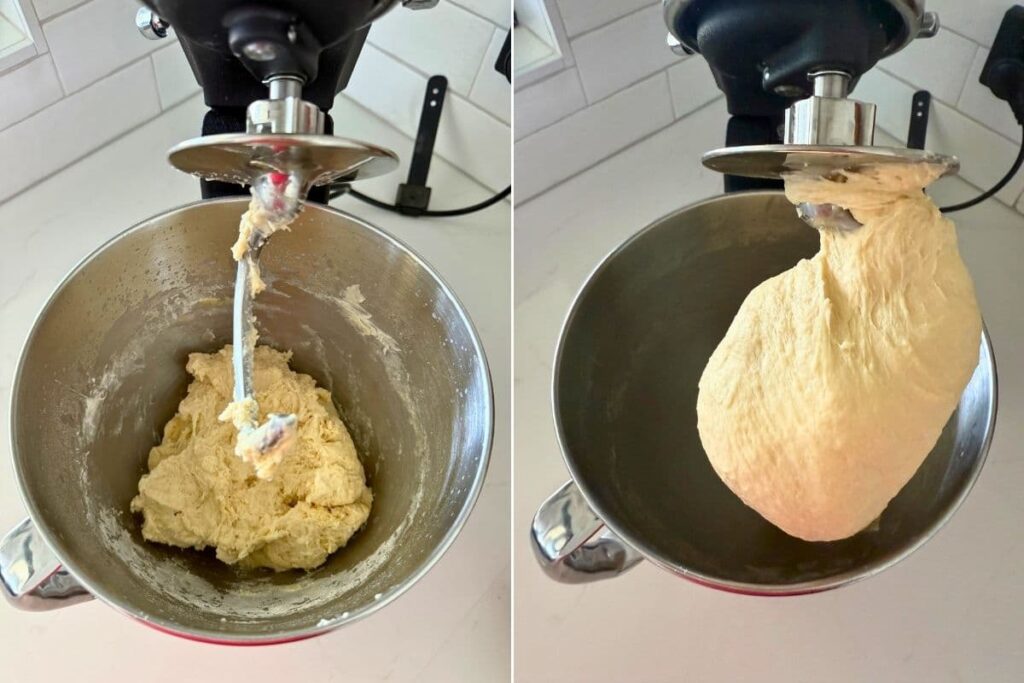
To start the recipe, you’ll need to add all of the ingredients to the bowl of your stand mixer (I do like to dissolve the sugar into the milk and butter first). Knead with a dough hook until the dough is silky, slightly tacky, and pulls away from the bowl. This usually takes about 3 to 8 minutes depending on your mixer. I recommend not adding extra flour, just keep kneading until it comes together. Extra flour will alter the texture of the cooked rolls.
Once the dough has been sufficiently kneaded, cover it and let it rise at room temperature. Because this is an enriched dough containing milk, butter and sugar, it will ferment more slowly than a lean sourdough bread dough. Look for the dough to increase by around 75–100%, feel aerated and slightly domed, and jiggle gently when you move the bowl.
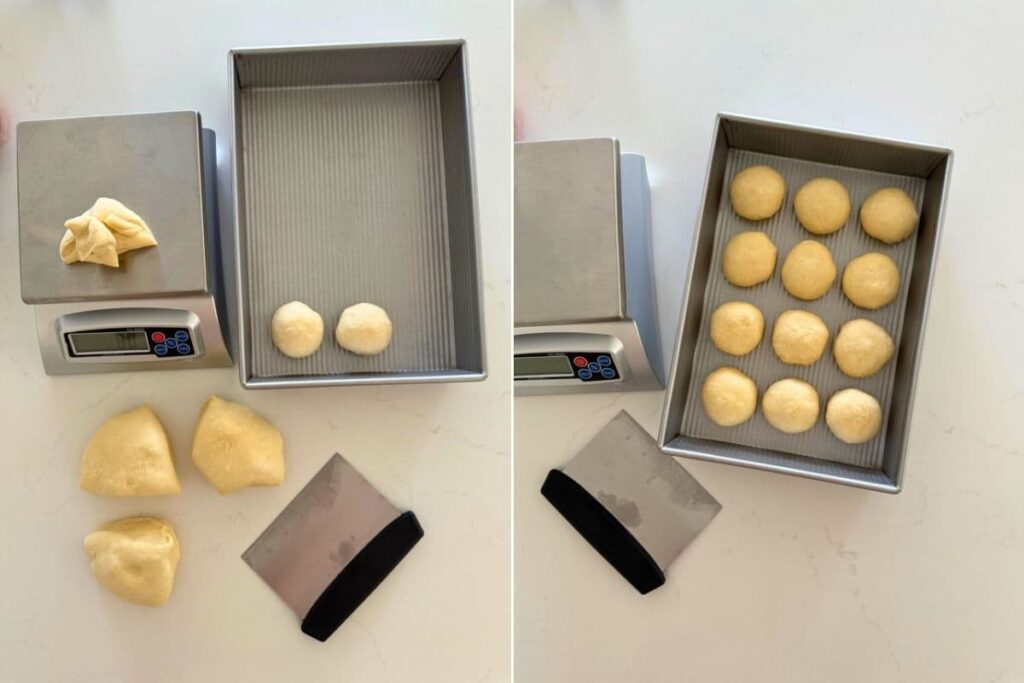
When you’re ready to shape the sourdough rolls, you’ll need to divide it into 12 equal pieces (a kitchen scale helps here for consistency), and gently shape into balls. I’ve chosen to make 12 rolls at 80 grams each. The smaller you make the rolls, the more you’ll get out of each batch of dough.
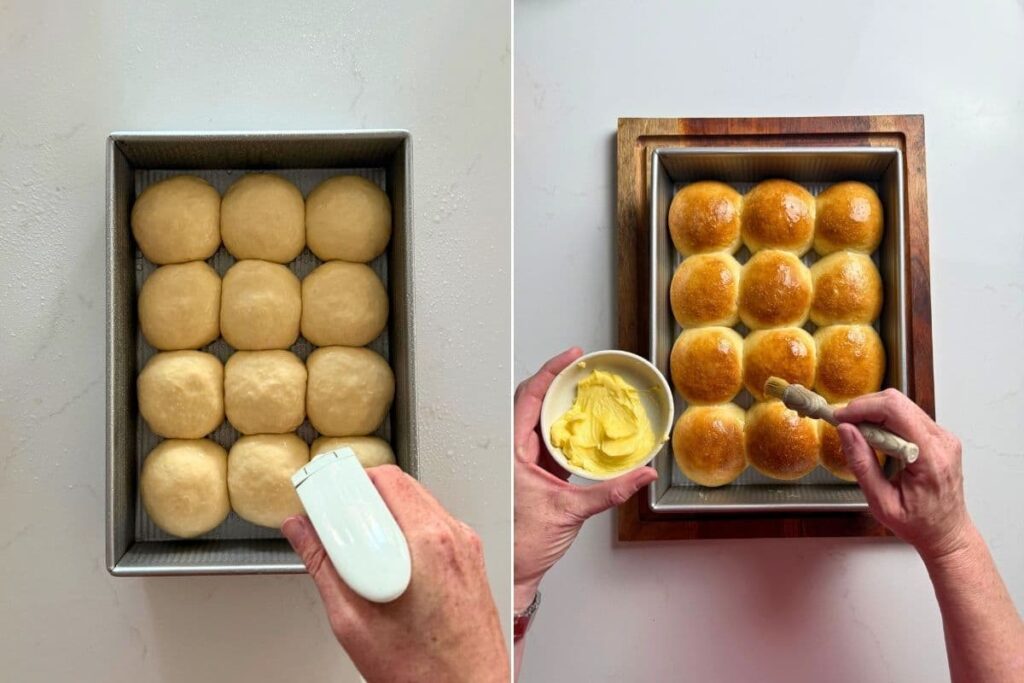
Create surface tension on each of the dough balls by rolling them in a circular motion on the counter top and using a cupping motion to pull the dough towards you. This surface tension helps to ensure they rise properly and helps them to maintain their shape through the proofing and baking process. Arrange them in a parchment-lined baking pan or greased dish.
For a flatter, wider roll, space them a little apart in a 9 x 13-inch baking pan (like you can see in the photo below). For taller, pull-apart rolls, use a smaller baking dish and ensure they are touching before you allow them to proof.
Once they’re shaped, it’s time to cover and set them aside for the second rise (this can take quite a while given that it’s an enriched dough). The shaped rolls should be noticeably larger, touching one another and feel light, soft and puffy. Gently press one with a fingertip. The indentation should slowly spring back rather than bouncing back immediately.
When you’re ready to bake the rolls, spray them with water, then bake at 180°C (350°F) for 25 to 30 minutes or until golden brown. For a soft, shiny finish, brush with melted butter while still warm, then let cool slightly before serving.
You might also like to try these sourdough buttered knot rolls, sourdough discard rolls or these sourdough skillet rolls with honey thyme butter. These sourdough cheese and garlic dinner rolls are also popular!
Baking Timelines
This recipe has 100 grams of active sourdough starter – you can reduce the amount of starter if you wish to ferment the rolls overnight. The dough is an enriched dough so it will take longer to ferment than a lean dough. It’s perfectly safe to ferment them at room temperature overnight with milk in the dough. Read more about creating a sourdough baking timeline.
I’ve created 2 baking timelines for you – one for a same day bake and another for an overnight schedule. Remember the role of temperature here. You’ll need to keep the dough quite warm for the same day bake.
Overnight Timeline
| TIME | PROCESS |
|---|---|
| 1 pm | Feed your sourdough starter with a 1:1:1 ratio for a faster rise. |
| 8 pm | Mix and knead the dough. |
| 9 pm | Bulk ferment the dough at room temperature overnight (remember this is enriched dough so it will take a while to bulk ferment). |
| The Next Morning | |
| 7 am | Shape the rolls and allow them to proof for a few hours before you bake them. Remember you want them to be light and puffy. |
| 1 pm | Bake the rolls. |
Same Day Timeline
| TIME | PROCESS |
|---|---|
| The Night Before | |
| 7 pm | Feed your sourdough starter a 1:5:5 ratio so that it peaks the next morning. |
| The Next Morning | |
| 7 am | Mix and knead the dough. |
| 3 pm | Shape the rolls and allow them to proof somewhere warm. You want the rolls to be light and puffy before you bake them. |
| 5.30 pm | Bake ready for dinner. |
These timelines are a guide only. Your dough may ferment faster or slower depending on the strength of your starter and the temperature of your kitchen.
Kate’s SCHEDULING TIP
Want To Pause These Dinner Rolls Overnight?
Once the rolls are shaped, cover them and place them in the refrigerator overnight. When you’re ready to bake, take them out and allow them to finish their second rise at room temperature.
Don’t bake them straight from the fridge unless they are already fully proofed. They should feel soft, light and puffy before going into the oven. If they still feel firm or dense, give them more time. Baking under-proofed rolls can leave them gummy and heavy in the centre.
Serving Suggestions
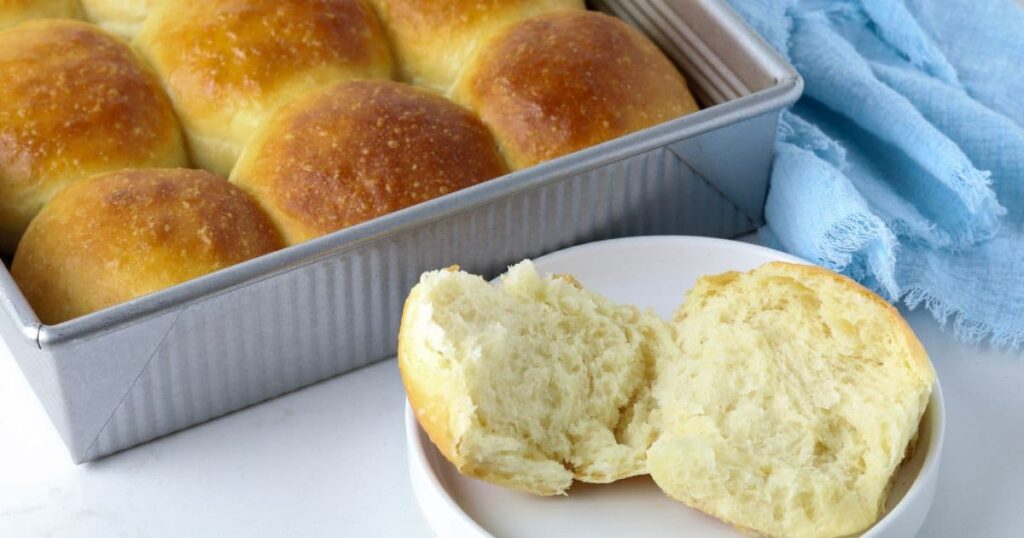
These tender sourdough dinner rolls are perfect just on their own – seriously try not to eat them all at once! They will be the stars of your Thanksgiving table, alongside some of these other sourdough Thanksgiving recipes!
But just in case you need some inspiration, these are some of the ways that we use them in our home:
- Instead of plain butter, brush them with whipped herb butter after baking and serve with your fave Italian dish.
- Fill them with leftover Thanksgiving turkey or Christmas ham and a generous dollop of tomato chutney.
- Perfect accompaniment to your favorite soup.
- Serve instead of sourdough tortillas or taco shells next time you make pulled pork.
When serving them at the table, I like to place a linen cloth or tea towel into a basket, pop the buns in it and then cover them with the cloth to keep them warm. You could even place a wheat pack that’s been heated in the microwave in the bottom of the basket before placing the cloth on top. This will keep the rolls soft and warm.
How To Store + Freeze
Room Temperature – Store these sourdough dinner rolls in an airtight container on the counter for up to 3 days. They won’t be super fresh after the first 24 hours but you can warm them a little in the microwave to freshen them up.
Freezing – These sourdough dinner rolls freeze really well. Place the cooled rolls into a ziplock bag (I prefer not to pull them apart if I’m going to freeze them). Seal the bag and place into the freezer.
When you’re ready to use the rolls, allow them to thaw on the counter in the resealable plastic bag. If you want to serve them warm, wrap the thawed rolls in aluminum foil and place into a warm oven for around 20 minutes. You can brush with melted butter just before you serve if you want to. Once warm, pull them apart.

Sourdough Dinner Rolls
Equipment
- Stand Mixer
- Digital Scales
- Baking Pan or Dish (9" x 13")
Ingredients
- 200 g Milk, (whole milk, warm)
- 50 g Butter, (melted)
- 80 g Water
- 40 g Granulated Sugar
- 10 g Salt
- 500 g All Purpose Flour
- 100 g Sourdough Starter, (active, fed and bubbly)
Instructions
- Add the milk, melted butter, water, sugar and salt to the bowl of your stand mixer. Mix the ingredients together using the whisk attachment so that the sugar and salt are dissolved and the butter is mixed through the milk.
- Now add your flour and sourdough starter to the bowl. Use your dough hook attachment to knead the dough until it becomes silky and slightly tacky. It should come away from the sides of the bowl.
- Bulk Ferment:Once the dough is sufficiently kneaded you need to let it ferment and rise. You can leave it in your stand mixer bowl for this (saves washing up) or you can transfer it to another bowl if you like. Cover the bowl with plastic or a damp dish towel and let it bulk ferment at room temperature. You want it to come to just under double.
- Once your dough has risen you need to divide it into 12 equally weighted pieces and shape into balls. This recipe will give you 12 rolls around 80 grams in weight.Arrange the dough balls onto a parchment lined pan or baking dish. They need to be just touching each other in the pan. You could also choose to bake these as individual rolls (space them further apart on a baking tray).
- Second Rise:Cover the pan with a dish towel and allow the rolls to double in size. It will generally take around 2 hours for them to double – but of course will take longer if your house is cold (ideally you want to put them some place warm).
- Baking The Rolls:Preheat your oven to 180ºC (350ºC)Once the oven is warm and the rolls have doubled, spray the rolls liberally with water.Place the rolls into the oven and bake for around 30 minutes. Take them out of the oven and brush immediately with melted butter (this is completely optional but it makes the sourdough dinner rolls lovely and soft).Allow them cool on a wire rack for around 10 minutes before serving.
Notes
Nutrition
Nutrition information is automatically calculated, so should only be used as an approximation.
Like this? Rate and comment below!











Generally, how long does #4 take? Thanks!
I made two batches last Xmas and they were the best rolls ever. Wow. It took me a while to find the recipe again. So grateful for this!!
Can I refrigerate the rolls after the second rise and take out a few hours later and bake?
You can. Just bring to room temperature before baking.
Is the dough supposed to come together in a ball after the initial mix or is the consistency more of a thick pancake batter?
Hello! I attempted to make these but was only had 2% milk on hand. It resulted in a very runny dough. I left it to rise either way. It’s been 5 hours in 72 degrees and it is still very runny but it has risen. At this point, can I save it by adding more flour to get it to a better consistency? Thanks!
Hi. How do you count 10 hours for the fermentation time? Than you. I love your blog 🙂
Can you do the second rise in the fridge overnight?
Will you need to bring them to room temperature before baking? Thanks so much. I want to make these rolls for our X-mas dinner and I’m just experimenting😉💗
To suit my timeline can I refrigerate after bulk ferment and shaping? Before or after the second rise?
I couldn’t see the notes for using bread flour, is it a no as in Australia we don’t have AP flour. Thanks.
We do have AP Flour in Australia – it’s called plain flour 🙂 But you can use Bread Flour if you want to … you’ll get a chewier roll 🙂
Can I make these using dairy alternative?
Yes you can use dairy alternatives in these soft sourdough dinner rolls. TPM x
Can I go through all the steps of making the rolls but not bake them, instead keep them in the fridge overnight then bake in the morning?
Yes you can definitely do this – TPM xo
Should I let the buns do the second rise then stick them in the freezer? Or let them do the second rise then put them in the fridge??
At what step would you stop and put them in the fridge if you want to bake them the next day?
You’ll put them in the fridge after shaping the rolls (after step 5 in this recipe). Bring to room temperature and let them rise before baking.
Will these still be as tasty if i make them a few hours before a bbq?
I use a few other of your recipes. Is there no stretch and folds before the bulk ferment?
Can i use plant based milk and butter for these, or do the dairy products “make” the recipe?
You can use plant based milk and vegan butter with good results. TPM x
Hello, I’m looking to bake about 6 dozen of these for Thanksgiving. Could I bake them on a cookie sheet, or does it require something with higher sides? Any other suggestions for such a large scale? (By the way, I came here because I’ve been baking your Sale Day Sourdough recipe for a few years now. It is by far the best!)
You’ll need something with higher sides. But a large baking Pyrex should do it!
In step 2, it says to mix the ingredients until they just come together. Should I let it sit after this or go straight into kneading?
I made this recipe today and they are amazing! The taste is delicious and the texture is fluffy/soft. Thank you for a great recipe!!
I have made these a couple of times now with great results! Instead of using milk and water for the liquid I have been replacing the whole amount for whey leftover from yogurt making. I also did a half wheat half white flour recipe and it turned out yummy. Thanks for the awesome recipe!
Hello, I made these tonight and they came out soo dense and heavy. Do you know what I did wrong?
Can’t wait to try these! I’m wanting to make pepperoni rolls with them—would I add the filling before the second rise? Thanks!
These look amazing! Can I use honey instead of sugar?
They’re so beautiful and the dough was incredibly easy to work with. Due to inexperience, I refrigerated overnight a half hour after I shaped and let them warm up for 4 hours before baking. I’m hoping it had no effect on the crumb … they’re cooling now. Thanks for the great recipe.
Can these rolls be made with egg(s)? and, if so, how would you adjust the recipe?
Thanks!
If wanting to adjust the recipe to a busy schedule would you recommend refrigerating the rolls after shaping or after the second rise?
Hello!
I have lots of family coming into town and I can’t wait to wow them with your dinner roll recipe!
I was wondering if I made the dough and froze it in the pan and pulled it out the night before to come to temperature and rise, would they turn out as nice?
Hi there! If I want to refrigerate the rolls before baking, do I refrigerate them after second rise? Thanks in advance, love this recipe.
How long is second rise if they are frozen?
If you make them the night before are they going to over ferment? I’m trying to do a triple batch for Thanksgiving.
Do you use salted butter or unsalted butter?
It really makes no difference – but I always use salted 🙂
Can you bake these let the cool and reheat the next day?
Also can you use low fat milk?
This is my favorite recipe! How can I use these for Ham & Swiss rolls in the oven without burning rolls?
Can I add fresh herbs like dill into the dough? If so, which step would I add?
Can I do this with a hand mixer rather than a stand mixer?
No you would need to either knead by hand or use a stand mixer. A hand mixer won’t be strong enough.
Anyone try doing a bulk ferment overnight? It’s barely movin and it’s getting late lol. I M so excited to try these just checking to make sure this is normal too
Can I honey are sugar?
I use fresh milled flour, I have hard and soft. I’ve tried this recipe twice and they turn out rather dense. Do you recommend I increase my hydration, add a little extra yeast, or just bag the fresh milled and use store-bought flour?
Thanks!
Using freshly milled flour is very different to using store bought flour. This recipe was developed with store bought flour, so I know it will work best this way. I haven’t actually used freshly milled flour with this recipe, but if I was going to, I would definitely increase the hydration because freshly milled flour absorbs a lot more water than store bought.
Can I freeze these?
Yes! They freeze really well. You can reheat them in the oven and they will be like fresh baked rolls.
Mine came out more like biscuits, what did I do wrong?