
Sourdough can sometimes feel like it has a language all of its own … bulk fermentation, levain, hydration, autolyse, bannetons, ears and even hooch! But you don’t need to understand every sourdough term before you can bake good bread.
I’ve created this sourdough glossary as a practical reference you can come back to whenever you see a word or phrase you’re not sure about. Each term is explained in simple language, with practical context to help you understand what it actually means in your kitchen and why it matters to your sourdough.
If you’re brand new to sourdough, start with the essential terms and build your knowledge from there. You can also search for terms in alphabetical order in the Table of Contents below and jump straight to the term you’re looking for.
Table of Contents
- Sourdough Quick Reference
- Sourdough Terms People Commonly Confuse
- Comprehensive A-Z Sourdough Glossary
- ACETIC ACID
- ACTIVATION
- ACTIVE STARTER
- ALIQUOT JAR
- ALVEOLI
- AMYLASES
- AUTOLYSE
- BAKER’S PERCENTAGES
- BAKING TIMELINE
- BANNETON
- BATARD
- BELLY
- BENCH REST
- BIGA
- BLISTERS
- BOULE
- BULK FERMENT
- CAMBRO CONTAINER
- COIL FOLDS
- COLD RETARD
- COUCHE
- CRUMB
- CRUMB SHOT
- DANISH WHISK
- DEGAS
- DIATASTIC MALT POWDER
- DISCARD
- DUTCH OVEN
- EAR
- ELASTICITY / EXTENSIBILITY
- ENRICHED DOUGH
- FERMENTOLYSE
- FLOAT TEST
- GLUTEN
- HOOCH
- HYDRATION
- KAHM YEAST
- LACTIC ACID
- LAME
- LAMINATION
- LEVAIN
- MAILLARD REACTION
- MATURE STARTER
- MOTHER
- OVEN SPRING
- PEAK / PEAK STARTER
- PEEL
- PHYTIC ACID
- POKE TEST
- PRE-FERMENT
- PROOFING
- RATIO
- RESTING
- RUSTIC SOURDOUGH BREAD
- SCOBY
- SCORING
- SECOND RISE
- SHAPING
- SOURDOUGH DISCARD
- SOURDOUGH STARTER
- 100% HYDRATION STARTER
- STIFF STARTER
- STRETCH AND FOLD
- TENSIONING
- VITAL WHEAT GLUTEN
- WINDOW PANE TEST
- YEAST
Sourdough Quick Reference
These are the terms you’ll see most often in sourdough recipes. If you’re new to sourdough, you don’t need to learn the whole glossary at once, understanding these basics will get you a long way.
- Sourdough Starter – A fermented mixture of flour and water containing wild yeast and bacteria that makes sourdough bread rise.
- Active Starter – Starter that has been recently fed, has risen and is ready to use.
- Discard – Starter removed from the jar before feeding that can be used in recipes or discarded.
- Feeding Ratio – The proportion of starter, flour and water used when feeding, such as 1:2:2. It’s always written starter : flour : water.
- Bulk Fermentation – The main fermentation period after mixing and before shaping. Bulk fermentation begins as soon as starter is added to the flour and water.
- Final Proof – The fermentation period after shaping and before baking. This can occur at room temperature or in the fridge.
- Hydration – The amount of water in a dough compared with the amount of flour.
- Stretch and Fold – A technique used to strengthen sourdough dough during the early stages of fermentation.
- Shaping – Forming the dough into its final shape while creating surface tension.
- Cold Proof / Cold Retard – Refrigerating shaped dough to slow fermentation and give you more flexibility over when you bake (cold final proof).
- Scoring – Cutting the surface of dough before baking so it can expand in a controlled way.
- Oven Spring – The rapid rise that happens when sourdough first goes into the hot oven.
Sourdough Terms People Commonly Confuse
- Active Starter vs Sourdough Discard – An active starter has recently been fed and is rising strongly. Discard is simply starter removed before feeding and is generally unfed and sometimes a little acidic. Read more about the differences between sourdough starter and sourdough discard.
- Sourdough Starter vs Levain – Your starter is the culture you maintain over time. A levain is usually a portion of starter built specifically for one bake. Read more about the differences between sourdough starter vs levain.
- Bulk Fermentation vs Final Proof – Bulk fermentation happens before shaping. Final proof happens after shaping and before baking.
- Bulk Fermentation vs Cold Fermentation – These refer to two different stages of the sourdough process. Bulk fermentation always happens at room temperature, while cold fermentation is the final proof, which happens in the fridge. Read more about bulk fermentation vs cold fermentation.
- Autolyse vs Fermentolyse – A traditional autolyse is flour and water only. Fermentolyse includes the sourdough starter in that initial rest. You can also add salt during fermentolyse, however this is personal preference. Read about whether you should use autolyse or fermentolyse.
- Under-Fermented vs Under-Proofed – Under-fermented usually refers to dough that has not fermented enough overall, often during bulk. Under-proofed more specifically refers to dough that has not proofed enough after shaping.
- Over-Fermented vs Over-Proofed – Over-fermented dough has gone too far during fermentation and can become weak and difficult to shape. Over-proofed usually refers to dough that has proofed too long after shaping.
- Hydration vs Starter Hydration – Dough hydration refers to the water in the whole dough compared with flour. Starter hydration refers only to the flour-to-water ratio inside the starter. Read my beginner’s guide to sourdough hydration.
Comprehensive A-Z Sourdough Glossary
ACETIC ACID
In simple terms: Acetic acid refers to a type of acid produced by the bacteria in your sourdough starter.
Why it matters: Acetic acid is responsible for making your starter more sour and giving it it’s characteristic tangy flavor.
You might also hear: Lactic acid, acidic starter.
Learn more: How to make your sourdough more sour
ACTIVATION
In simple terms: Activation refers to rehydrating or “activating” a dried sourdough starter in order to use it again.
Why it matters: Dried sourdough starter needs to be rehydrated with water and fed with flour in order to make it useable to make sourdough bread.
You might also hear: It can also refer to feeding your sourdough starter in order to “activate” it ready for baking.
Learn more: Activate a dried sourdough starter
ACTIVE STARTER
In simple terms: An active starter is a sourdough starter that has been recently fed and is visibly fermenting, with bubbles and a noticeable rise.
Why it matters: Active starter is generally used when you want your starter to provide the leavening power for sourdough bread. A strong active starter should rise predictably after feeding and be used at or around its peak for the most reliable fermentation.
You might also hear: ripe starter, bubbly starter, fed starter.
Learn more: How do you know when your sourdough starter is ready to bake with?
ALIQUOT JAR
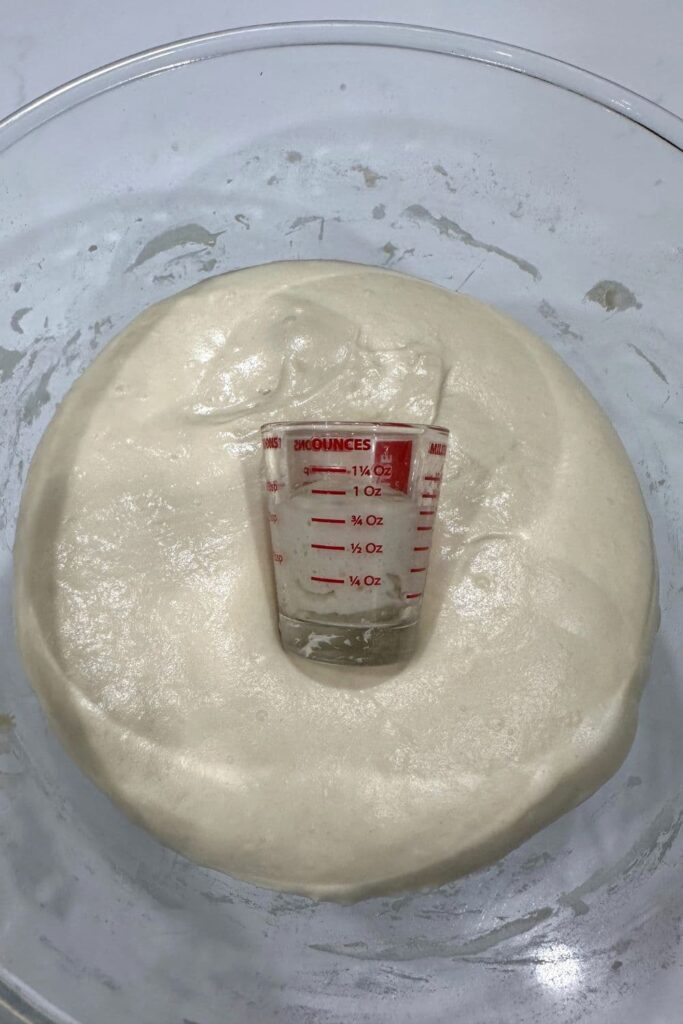
In simple terms: An aliquot jar refers to a small jar that holds a sample of dough, taken from the larger mass of dough.
Why it matters: This small sample of dough is placed in the bowl with the rest of the dough and allows the baker to measure bulk fermentation more accurately. Using an aliquot jar to measure sourdough fermentation can be a useful learning tool when learning to read your dough.
Learn more: How to use an aliquot jar to measure sourdough fermentation.
This post contains affiliate links. Please see our disclosure policy.
ALVEOLI
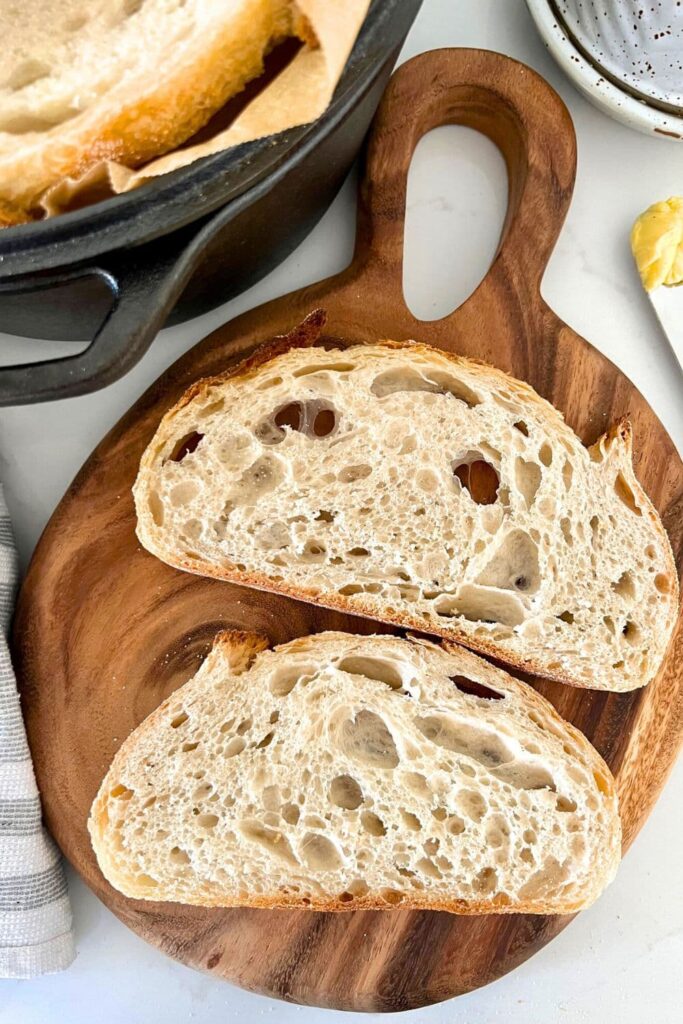
In simple terms: Alveoli is a bread term that refers to the gas bubbles or pockets in the crumb of your bread.
Why it matters: Many sourdough bakers strive for large alveoli in their bread, however this is not always the case. Large alveoli can be achieved by getting the right combination of fermentation, time and temperature.
You might also hear: Open crumb sourdough bread.
Learn more: How to get more open crumb sourdough
AMYLASES
In simple terms: Amylases are enzymes that break down starches in flour into simpler sugars.
Why it matters: In sourdough, those sugars help feed the yeast and bacteria during fermentation and also contribute to browning in the oven. Amylase activity can affect fermentation speed, dough handling and the color of the finished crust.
You might also hear: amylase enzymes, alpha-amylase, beta-amylase, diastatic activity.
AUTOLYSE
In simple terms: Traditionally, autolyse refers to the mixing (and then resting) of the flour and water – without the sourdough starter or salt.
Why it matters: The autolyse allows the flour to absorb the water before sourdough starter is added and is more important when using whole-grain flours. My simple sourdough recipe does not use a traditional autolyse.
You might also hear: Fermentolyse
Learn more: Autolyse vs Fermenntolyse: Which One Should You Use?
BAKER’S PERCENTAGES
In simple terms: Baker’s percentages refer to the calculation used to scale a recipe up or down.
Why it matters: Baker’s percentages are a little different to the percentages you might be used to. When talking about baker’s percentages, flour is always 100% and all other ingredients are a percentage of that. This is why using a scale when making sourdough is essential because weight can be easily scaled up or down, unlike volume measurements.
You might also hear: Baker’s Math
Learn more: Complete Guide To Baker’s Percentages
BAKING TIMELINE
In simple terms: Baking timeline refers to the schedule you follow as you prepare and bake sourdough bread.
Why it matters: Sourdough relies on wild yeast and natural fermentation, the baking timeline or schedule is a lot longer than commercially yeasted breads. Learn how to create your own sourdough timeline.
You might also hear: Baker’s Schedule, Sourdough Schedule, Sourdough Timeline.
Learn more: Learn how to create your own sourdough timeline.
BANNETON
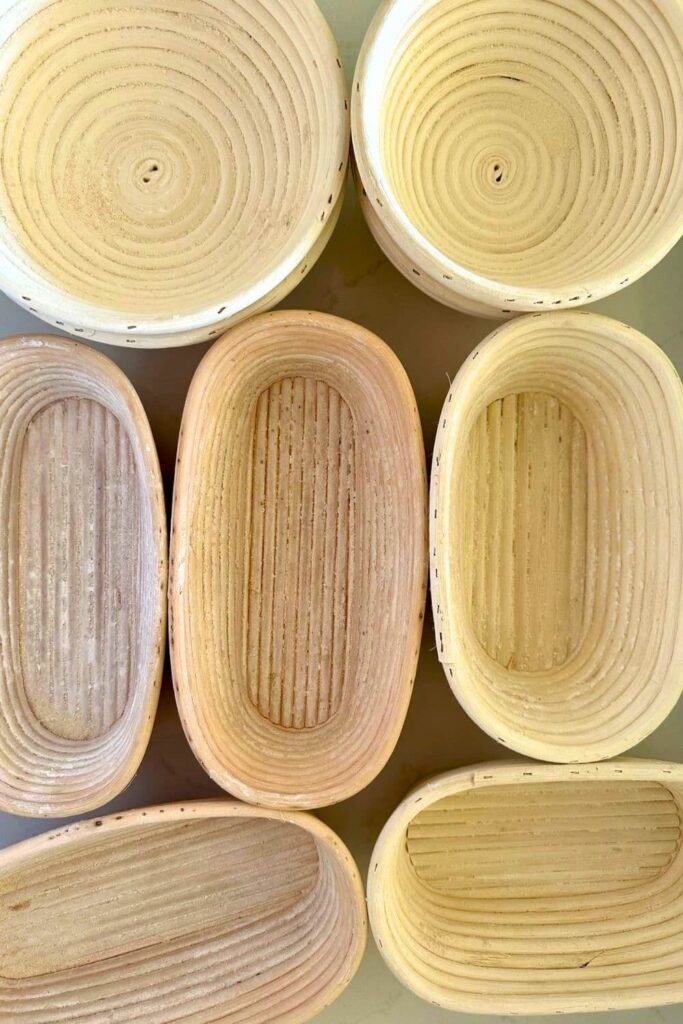
In simple terms: A banneton is basically a shaping container used to ensure the dough retains it’s shape during the final proof.
Why it matters: Without a banneton your sourdough will spread and collapse during the final proof which ultimately affects oven spring and the quality of the final loaf. Bannetons are traditionally made from rattan or cane, however newer ones can be made from plastic, silicone or wood pulp. They need to be floured to ensure the dough doesn’t stick.
You might also hear: Proofing basket, proofing container.
Learn more: Banneton sizing guide and Guide to Preparing, Using and Maintaining Bannetons.
BATARD
In simple terms: Batard is a French word for an elongated or oval shaped loaf of bread.
Why it matters: Sourdough comes in lots of different shapes and sizes, this is just one type of loaf. A batard is different to a baguette because it is shorter and wider, whereas a baguette is more elongated.
You might also hear: Oval shape, boule (round loaf)
Learn more: How to shape a batard.
BELLY
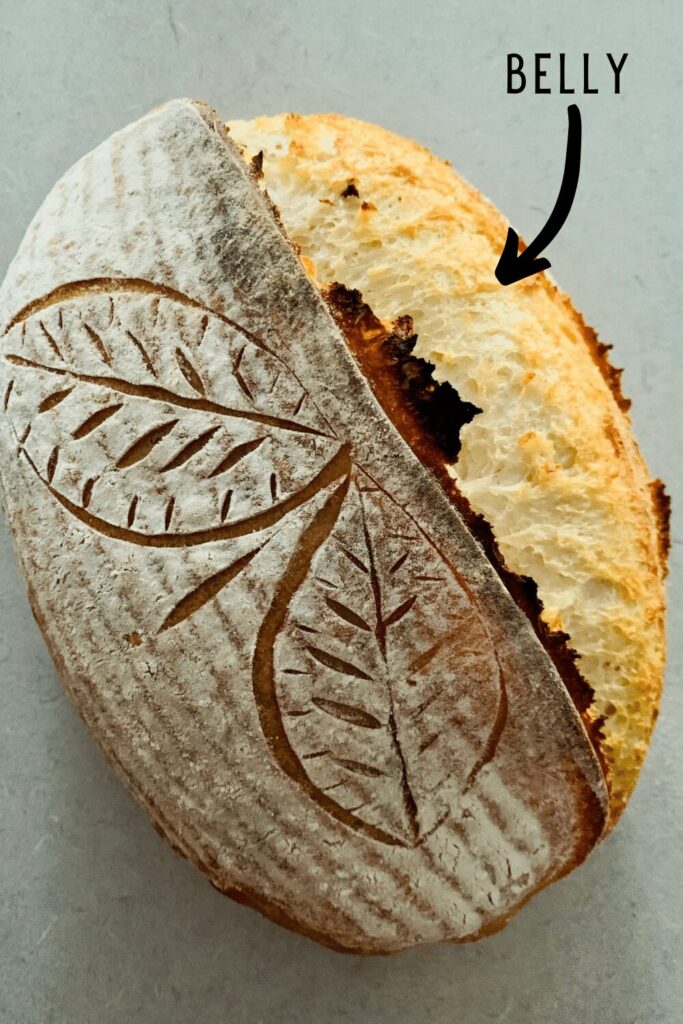
In simple terms: The belly of a loaf of bread is the rounded surface that opens up during baking.
Why it matters: A loaf with a round belly that has opened up nice and wide signifies good fermentation, strong shaping technique and oven spring.
You might also hear: Sourdough ear.
Learn more: Secrets to Great Sourdough Oven Spring.
BENCH REST
In simple terms: Bench rest refers to allowing the dough to rest and the gluten to relax. Dough is usually laid directly onto the kitchen counter or “bench” for this.
Why it matters: Dough can have bench rest after pre-shaping, particularly if the dough has been divided up from a larger mass of dough. Bench rest can also refer to dough that has been shaped, but is not going to be cold proofed. Bench rest can be used instead of “proofing”.
You might also hear: Proofing.
BIGA
In simple terms: Biga isn’t really a sourdough term, however you will hear it mentioned from time to time. Biga refers to a portion of pre-fermented dough made with commercial yeast.
Why it matters: The term biga has origins in Italy and is often used in Ciabatta in order to add a depth of flavor (similar to that of a sourdough starter). You can also use a biga in pizza dough.
You might also hear: Pre-ferment, levain.
BLISTERS
In simple terms: Sourdough blisters refer to the blistering on the crust of sourdough bread.
Why it matters: It’s often associated with the San Francisco style of sourdough and is a result of a long, cold fermentation where the carbon dioxide moves slowly to the surface of the loaf.
Learn more: How to get blisters on sourdough bread
BOULE
In simple terms: Boule is a French word for a round loaf shape.
Why it matters: It is one of the most common loaf shapes for baking sourdough.
You might also hear: Round loaf.
Learn more: How to shape a sourdough boule.
BULK FERMENT
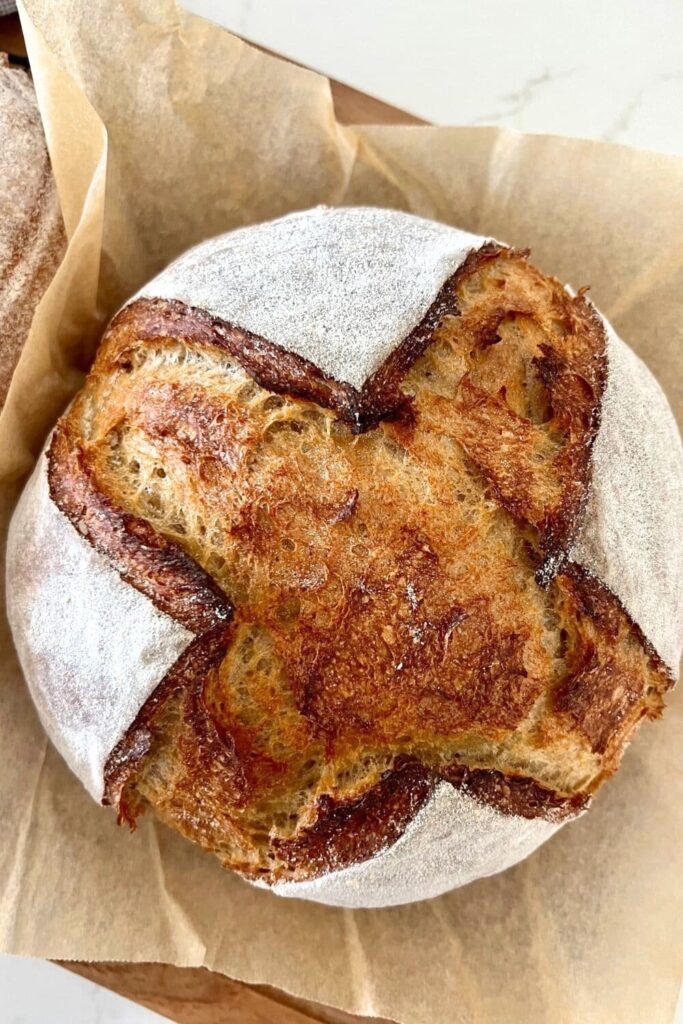
In simple terms: Bulk fermentation is the first major fermentation period after the dough has been mixed and before it is shaped. This is the part in the sourdough process where all the magic happens.
Why it matters: This is where your dough develops much of its gas, strength and structure. Ending bulk fermentation too early can produce dense, gummy bread, while taking it too far can leave the dough weak and difficult to shape. Bulk fermentation is complete when the dough has just doubled, is domed on the top and is light and pillowy. You’ll see bubbles formed underneath the dough.
You might also hear: bulk ferment, first rise.
Learn more: How to Know When Bulk Fermentation Is Finished.
CAMBRO CONTAINER
In simple terms: A straight sided, plastic container with a tight fitting lid that is often used in professional restaurants.
Why it matters: It is used in sourdough baking for accurate bulk fermentation because the straight sides allow you to see when the dough has doubled more easily.
You might also hear: Straight sided container.
Learn more: How to use a Cambro Container for sourdough baking
COIL FOLDS
In simple terms: This is a method of strengthening the dough and developing the gluten network.
Why it matters: Coil folds require you to put your hands under the middle of the dough and stretch it upwards and then flap it over itself. It’s regarded as quite a gentle way to handle the dough, while still developing gluten.
Learn more: Guide to using coil folds for sourdough.
COLD RETARD
In simple terms: Occurs when shaped sourdough is placed into the fridge for the final proof.
Why it matters: The cold retard is used to manipulate the timing of your bread, so you can bake it when you want to. Even though it is sometimes referred to as the “second rise”, it’s not actually meant to rise your dough. It is a “retard” meaning it slows the fermentation process. The yeasts are not very active at low temperatures, however the bacteria that develop the flavor of the bread are still active, thus the cold retard can be used to develop the sourness of your bread.
You might also hear: second rise, final proof, cold fermentation.
Learn more: Bulk ferment vs cold ferment.
COUCHE
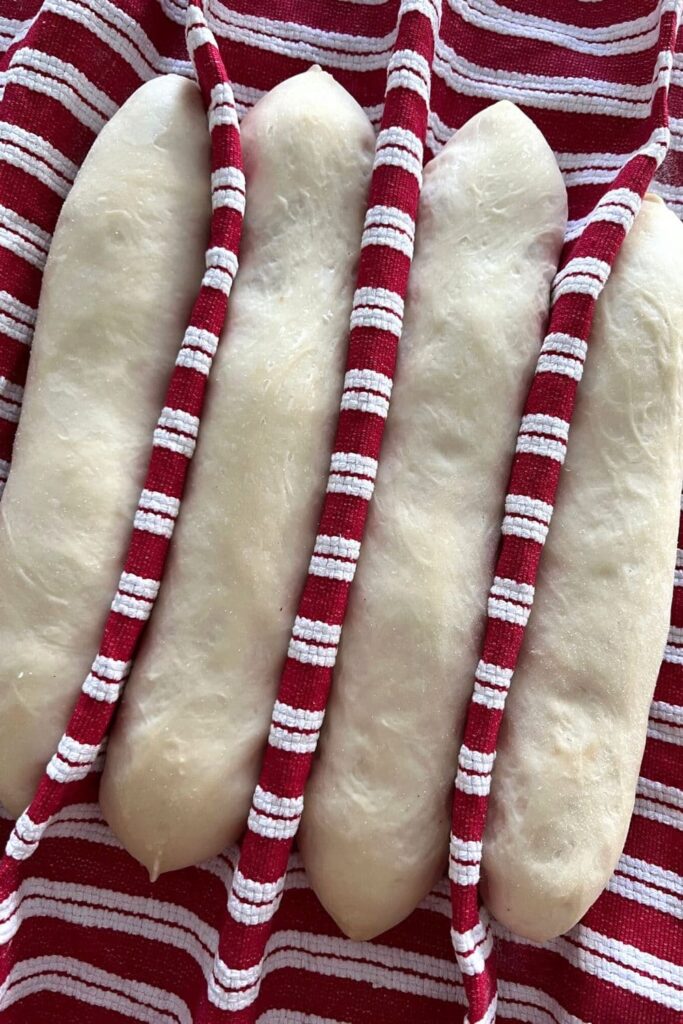
In simple terms: Couche refers to a piece of heavy linen fabric used to support shaped loaves in their final proofing. It is most often used for baguettes.
Why it matters: Baguettes are generally long and slender and need support during cold proofing so they do not spread out. The couche is usually heavily floured to stop the dough sticking.
You might also hear: Banneton, proofing container, proofing basket
Learn more: Beginner’s Guide to Sourdough Baguettes
CRUMB
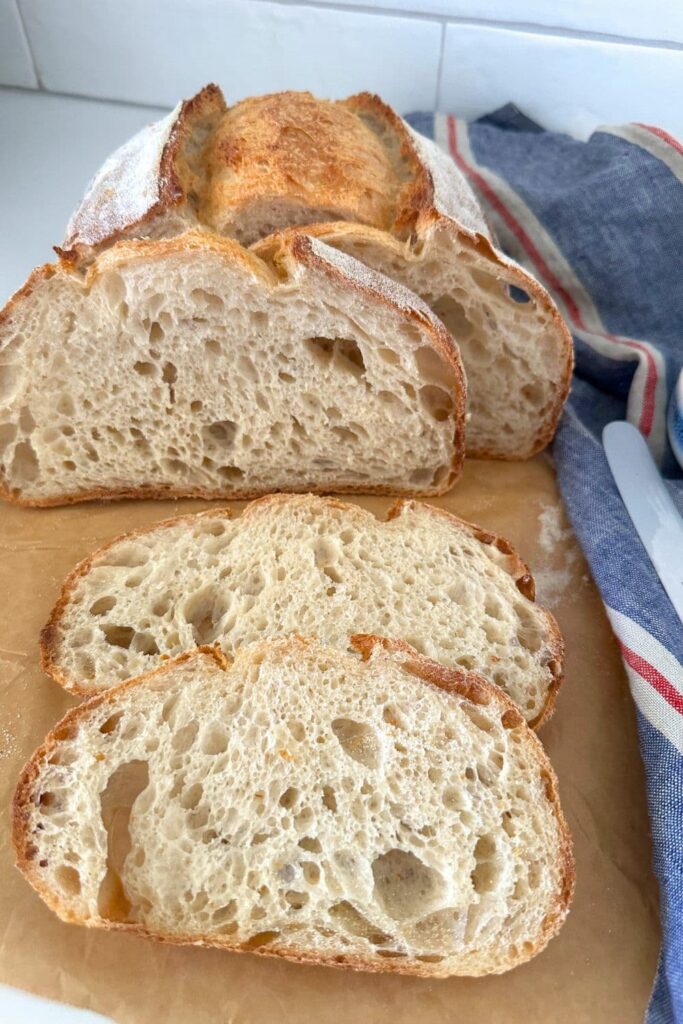
In simple terms: Crumb refers to the inside of the bread and the texture that it has when you cut it open.
Why it matters: You’ll hear people refer to it as open crumb or tight or closed crumb. Open crumb is much sought after, however a more closed crumb can be just as tasty (and the butter doesn’t run through haha).
You might also hear: Alveoli
Learn more: What should sourdough bread actually look like?
CRUMB SHOT
In simple terms: The crumb shot refers to a photo of a cross section of sourdough bread.
Why it matters: Many people share crumb shots to show off their crumb, particularly if they’ve achieved an open crumb because this indicates a good understanding of sourdough fermentation. Crumb shots are also shared for troubleshooting and analysis to solve any issues that the baker has with their bread so they can improve for next time.
You might also hear: Alveoli, open crumb.
Learn more: What should sourdough bread actually look like?
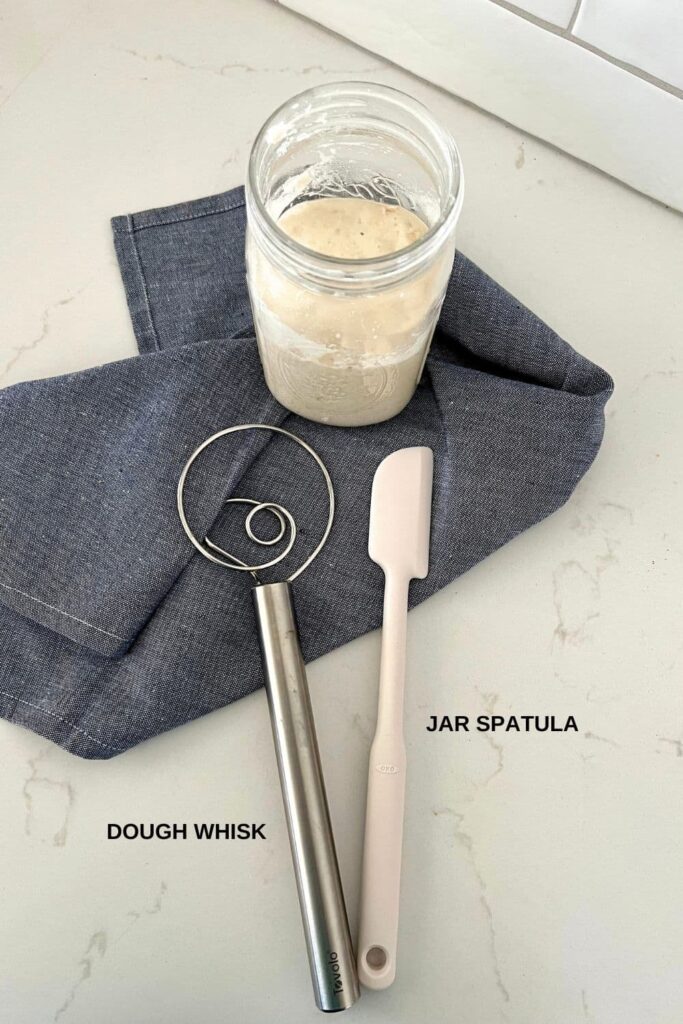
DANISH WHISK
In simple terms: A Danish whisk is a sturdy hand whisk designed to mix thick doughs and batters without clogging like a traditional balloon whisk.
Why it matters: It can be especially useful for sourdough because it can quickly combine flour, water and starter while handling sticky dough with less effort and often requires little cleaning. I’m personally not a fan of using a Danish whisk and prefer to use a jar spatula. You can see a Danish whisk pictured next to a jar spatula below.
You might also hear: dough whisk, Danish dough whisk.
DEGAS
In simple terms: To degas means to push all the air and gas bubbles out, flattening the dough.
Why it matters: Degassing is a process associated with sandwich breads. Pushing all the air out of the dough before shaping ensures you get a tighter crumb, which is synonymous with sandwich loaves. You don’t want to degas traditional sourdough bread as you will lose the beautiful open crumb.
DIATASTIC MALT POWDER
In simple terms: Diatastic malt powder is produced by sprouting barley, letting it dry and grinding it up. This powder can then be used in baking bread.
Why it matters: Enzymes in diastatic malt convert starch in flour into sugars to feed the yeast, giving you better rise and a browner crust. Adding a small amount of diastatic malt powder to sourdough dough will assist in give you better oven spring and a deeper, darker crust. It’s often added to bagel dough for this reason.
You might also hear: non-diastatic malt powder
Learn more: How to use diastatic malt powder in sourdough bread
DISCARD
In simple terms: Discard refers to the process of removing a portion of unfed starter from the jar before you feed your sourdough starter.
Why it matters: The portion that is removed is then referred to as “discard”.
You might also hear: Unfed starter
Learn more: Why you must discard some of your sourdough starter
DUTCH OVEN
In simple terms: A heavy based vessel or pot, usually made of cast-iron, with a tight fitting lid.
Why it matters: Dutch ovens can be used to cook a variety of foods but they have become popular for sourdough baking because of their ability to trap steam and giving the bread superior oven spring.
You might also hear: cast-iron bread pan, enamelled Dutch oven.
Learn more: Best Dutch oven for sourdough bread

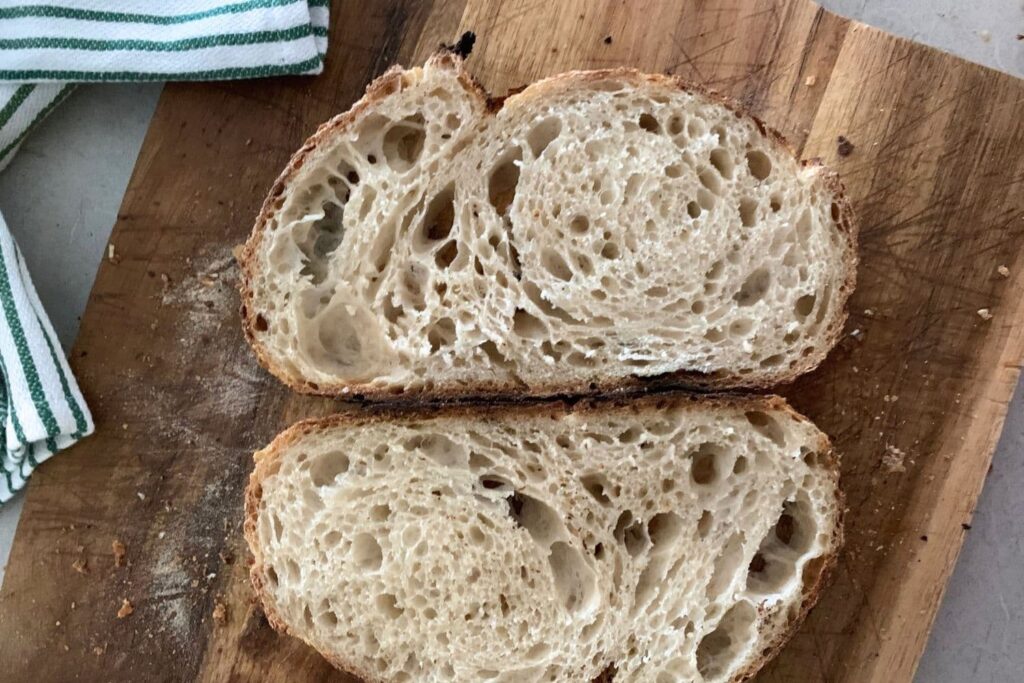
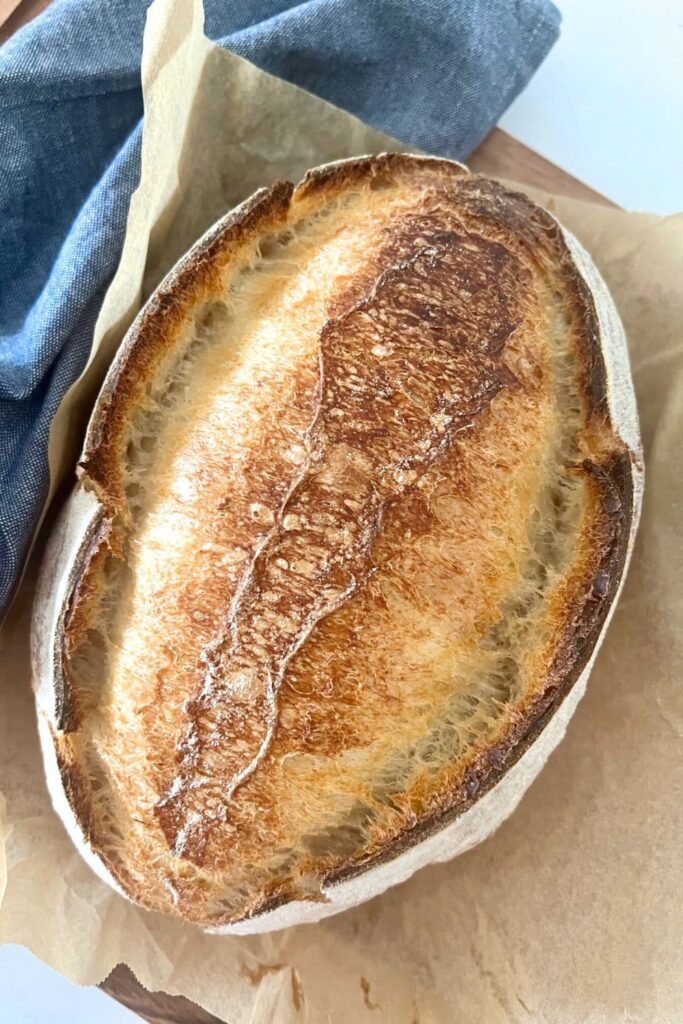
EAR
In simple terms: A sourdough ear is the flap of crust that lifts up during baking.
Why it matters: It has become very sought after in recent times, however it has no real bearing on taste or success of the loaf. You will also hear people refer to “bread bunnies” in relation to the sourdough ear because when the bread is cut it, the slices look like little rabbits with ears. A sourdough ear does generally signify good oven spring, however it is possible to have oven spring without an ear.
You might also hear: bread bunnies
Learn more: How to get a sourdough ear
ELASTICITY / EXTENSIBILITY
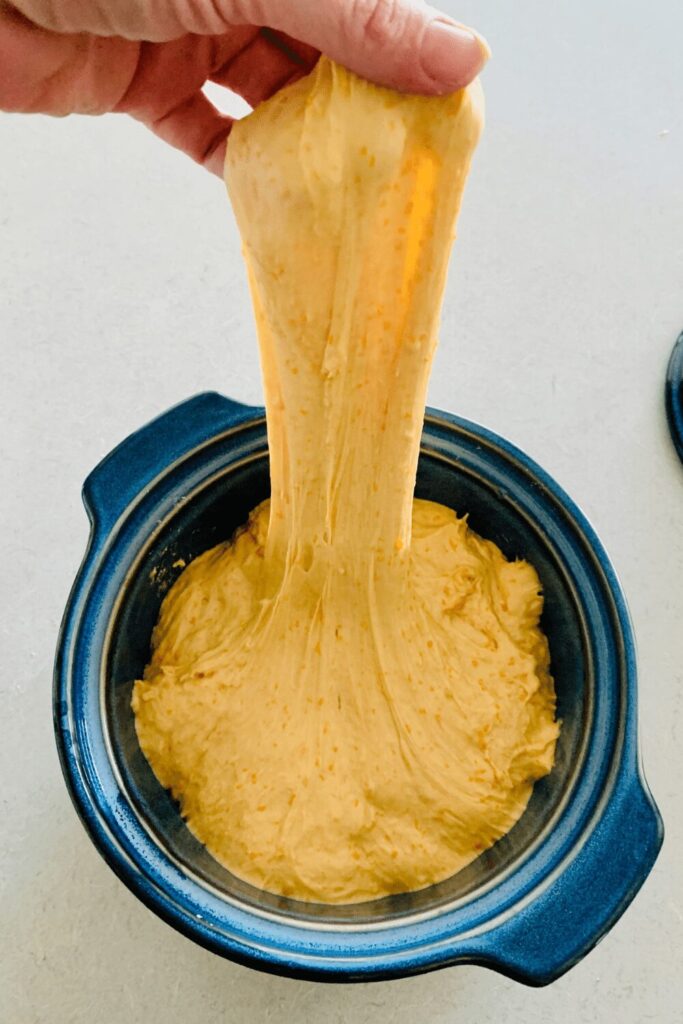
In simple terms: Elasticity and extensibility refer to the stretchiness of the dough.
Why it matters: Sourdough is generally a very elastic dough and should be quite extensible while stretching and folding. Its elastic qualities come from the gluten networks which are developed throughout the folding process.
You might also hear: stretch, stretchiness
ENRICHED DOUGH
In simple terms: Enriched dough refers to dough that has been enriched with fats and oils.
Why it matters: Milk, butter, olive oil, sugar and egg are usually used to enrich dough. Doughs that have been enriched with eggs and butter are usually more yellow in appearance and can take a lot longer to ferment than leaner doughs. These Sourdough Hawaiian Bread Rolls are examples of enriched dough.
You might also hear: lean dough
Learn more: These Sourdough Hawaiian Bread Rolls are examples of enriched dough.
FERMENTOLYSE
In simple terms: Fermentalyse refers to a type of autolyse that includes the sourdough starter.
Why it matters: Generally you do not add salt during a fermentolyse, however, I’m a big fan of adding everything altogether … so let’s call the method in my simple sourdough recipe a fermentolyse + salt! It means you never forget to add the salt!
You might also hear: Pre-mix, premix, autolyse
Learn more: Autolyse vs Fermenntolyse: Which One Should You Use?
FLOAT TEST
In simple terms: The float test is a simple check where a small spoonful of sourdough starter is dropped into water to see whether it floats.
Why it matters: A floating starter can be a sign that it has trapped enough gas and is active, but the test is not completely reliable. A healthy starter can still sink depending on its hydration, flour type, how much gas is knocked out when you scoop it and where it is in its rise cycle, so I wouldn’t use the float test as the only way to decide whether your starter is ready. In fact, I never use this test!
You might also hear: starter float test, sourdough float test.
Learn more: What is the float test and is it necessary?

GLUTEN
In simple terms: Gluten occurs as a result of two proteins found in grains like wheat.
Why it matters: Gluten is what gives sourdough bread its elasticity. The network of gluten allows your dough to trap the carbon dioxide that the yeast produces. It’s this gas, held inside the gluten network, that causes your bread to rise.
You might also hear: gluten network, vital wheat gluten
Learn more: Developing gluten in sourdough
HOOCH
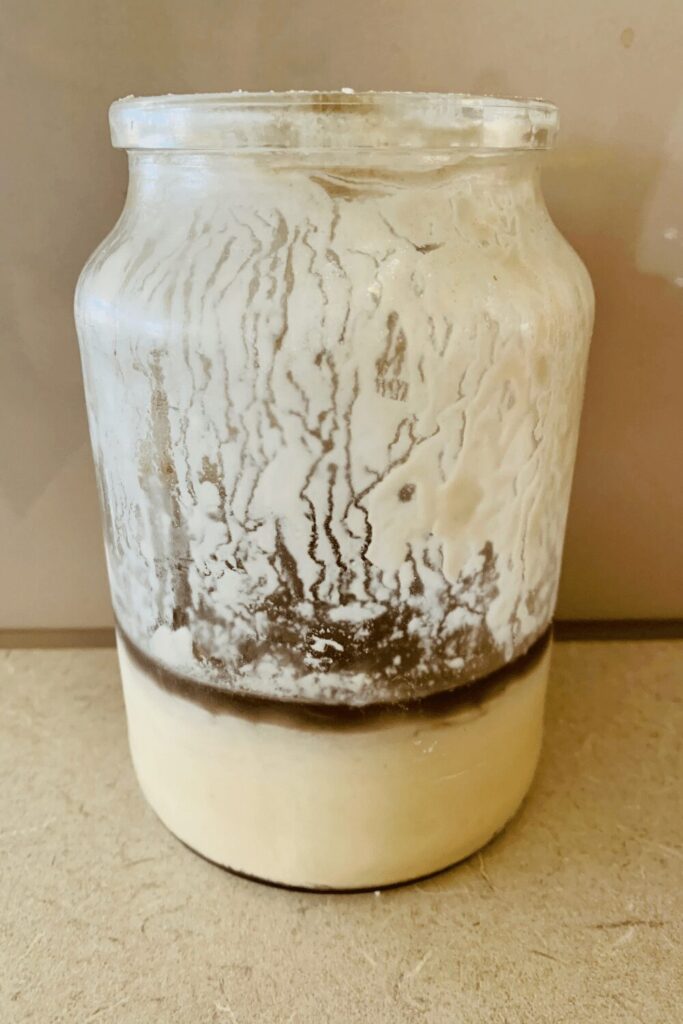
In simple terms: Hooch refers to the liquid which can form on the top of a hungry sourdough starter.
Why it matters: It’s relatively harmless and is the result of the bacteria and yeast eating all of their food and excreting waste. Hooch can form on top of, underneath or even in the middle of your starter. Hooch will smell like alcohol or even nail polish remover and can vary in color from a light grey or brown to almost black, depending on how long your starter has been unfed.
You might also hear: starter liquid
Learn more: What is the liquid on top of my sourdough starter?
HYDRATION
In simple terms: Hydration is the amount of water in a dough compared with the amount of flour, expressed as a percentage.
Why it matters: Hydration affects how the dough feels, ferments, shapes and bakes. Higher-hydration doughs are usually softer and stickier and can produce a more open crumb, while lower-hydration doughs are generally firmer and easier to handle. High-hydration doughs ferment a lot faster than low-hydration doughs.
You might also hear: dough hydration, hydration percentage, baker’s percentage hydration.
Learn more: Beginner’s Guide to Sourdough Hydration
KAHM YEAST
In simple terms: Kahm yeast is a harmless film-forming yeast that can sometimes grow on the surface of fermented foods, including sourdough starter.
Why it matters: It usually appears as a thin, white or cream-colored layer with a wrinkled or powdery look. While it isn’t typically dangerous, it can give your starter an unpleasant smell or flavor and is often a sign that the starter needs more frequent feeding or better maintenance.
You might also hear: surface yeast, film yeast.
Learn more: Moldy sourdough starter
LACTIC ACID
In simple terms: Lactic acid is one of the main acids produced by lactic acid bacteria as they ferment the sugars in your sourdough starter and dough.
Why it matters: Lactic acid contributes to the mild, creamy tang associated with sourdough and helps create the acidic environment that supports healthy fermentation. The balance between lactic and acetic acids can also influence the flavor of your bread.
You might also hear: lactic acid bacteria, LAB, organic acids.
Learn more: How does a sourdough starter work?
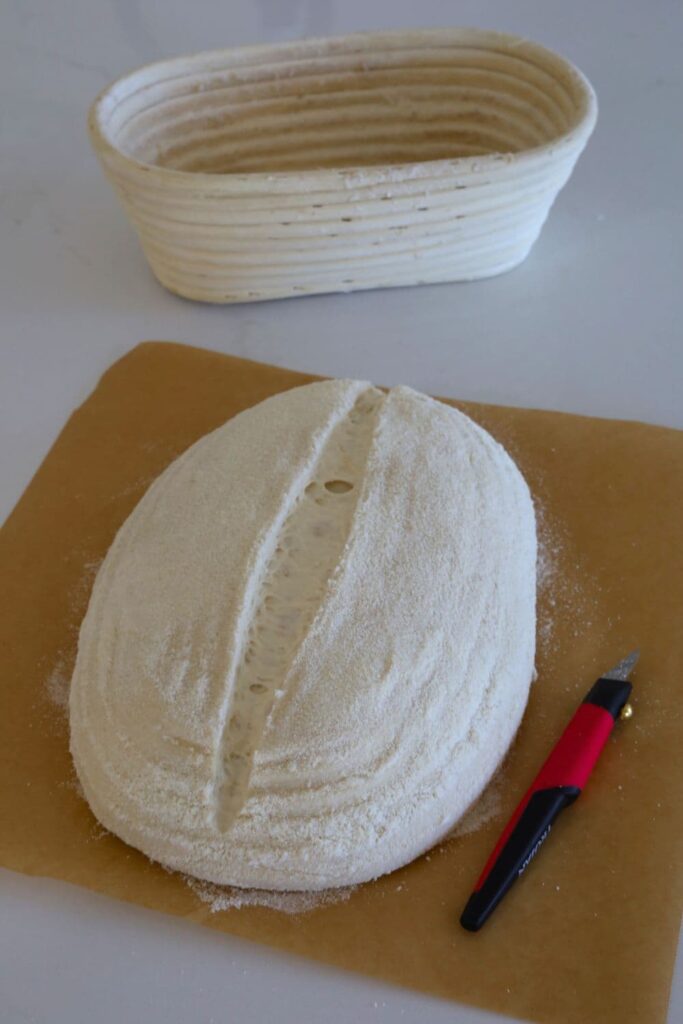
LAME
In simple terms: Lame is a french word referring to the piece of equipment you use to score sourdough with.
Why it matters: Specifically, the lame refers to the “handle” that the razor blade is placed into.
You might also hear: blade, razor, cutter, knife
Learn more: Best sourdough equipment
LAMINATION
In simple terms: This process refers to stretching the dough out into a thin sheet on a wet counter before folding it up again.
Why it matters: It is performed to create layers in the dough. Lamination is often used to add flavors to sourdough and in baking croissants. Lamination is performed during bulk fermentation. It’s generally considered a more advanced technique because you have to stretch the dough out without tearing it, so it must have optimal gluten development.
Learn more: How to laminate sourdough
LEVAIN
In simple terms: A levain is a portion of sourdough starter that is fed separately and built specifically to use in a particular bake.
Why it matters: A levain lets you control the amount, strength, hydration and timing of the starter going into your dough without changing the starter you normally maintain. In some recipes, “levain” and “active starter” are used almost interchangeably, but technically the levain is the build prepared for that specific recipe.
You might also hear: levain build, leaven, preferment.
Learn more: Differences between a levain and a sourdough starte.
You can read about scaling your starter here.
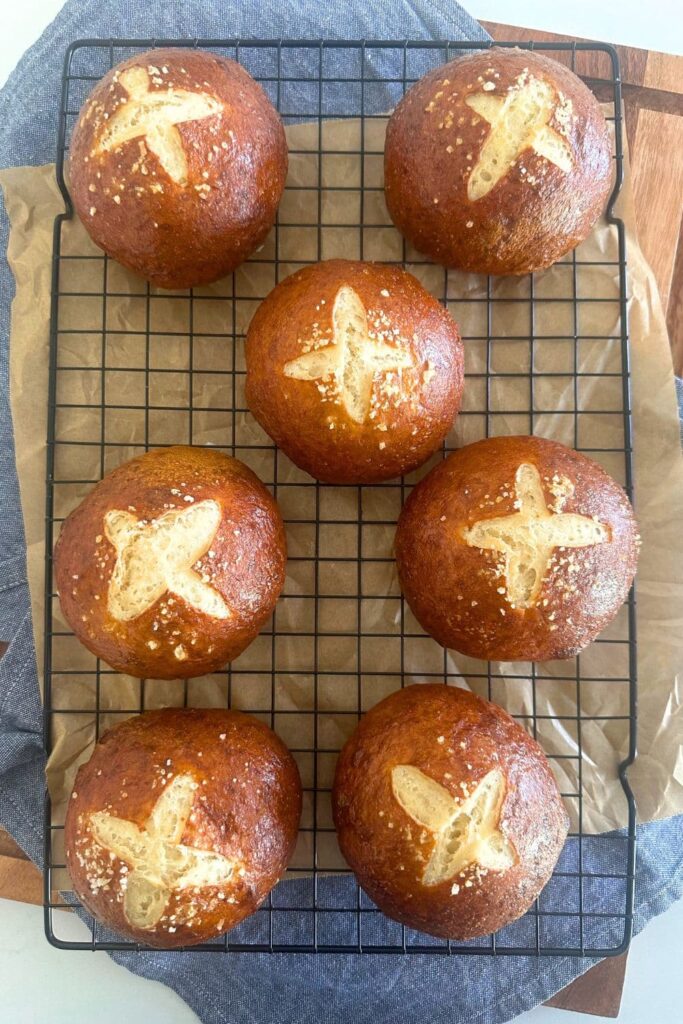
MAILLARD REACTION
In simple terms: Maillard reaction is a bread term which refers to a chemical reaction between amino acids and reducing sugars. It gives browned food it’s distinctive flavor.
Why it matters: The Maillard reaction gives bread its distinctive brown color when it’s baked. It’s the same reaction that makes bread golden brown when it’s toasted.
Learn more: How to get a darker crust on sourdough bread
MATURE STARTER
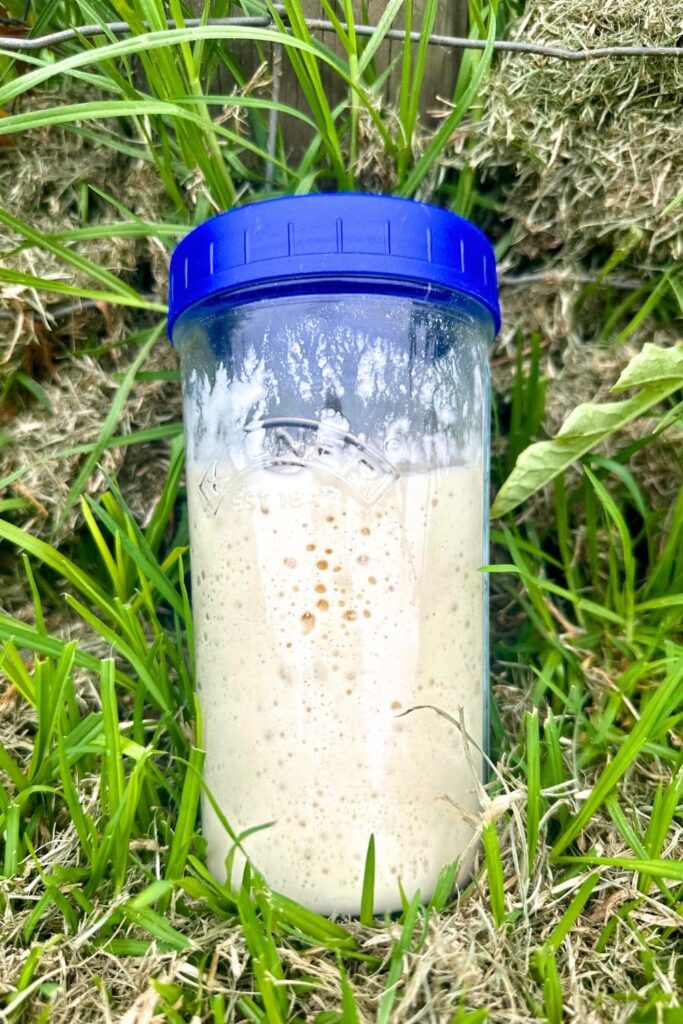
In simple terms: A mature starter is an established sourdough culture that has developed a stable population of yeast and bacteria and rises predictably after feeding.
Why it matters: A mature starter is generally more reliable for baking bread than a very young starter because its fermentation activity is stronger and more consistent. It can take months to achieve a mature sourdough starter, so patience is the key here!
You might also hear: established starter, strong starter.
Learn more: How do you know when your sourdough starter is ready to bake with?
MOTHER
In simple terms: This usually refers to your sourdough starter.
Why it matters: The term mother indicates the “original sourdough starter” from which a levain or leaven is made. A sourdough mother is used to create offshoots (called levains or builds) that are used to rise sourdough bread.
You might also hear: culture, mother culture
OVEN SPRING
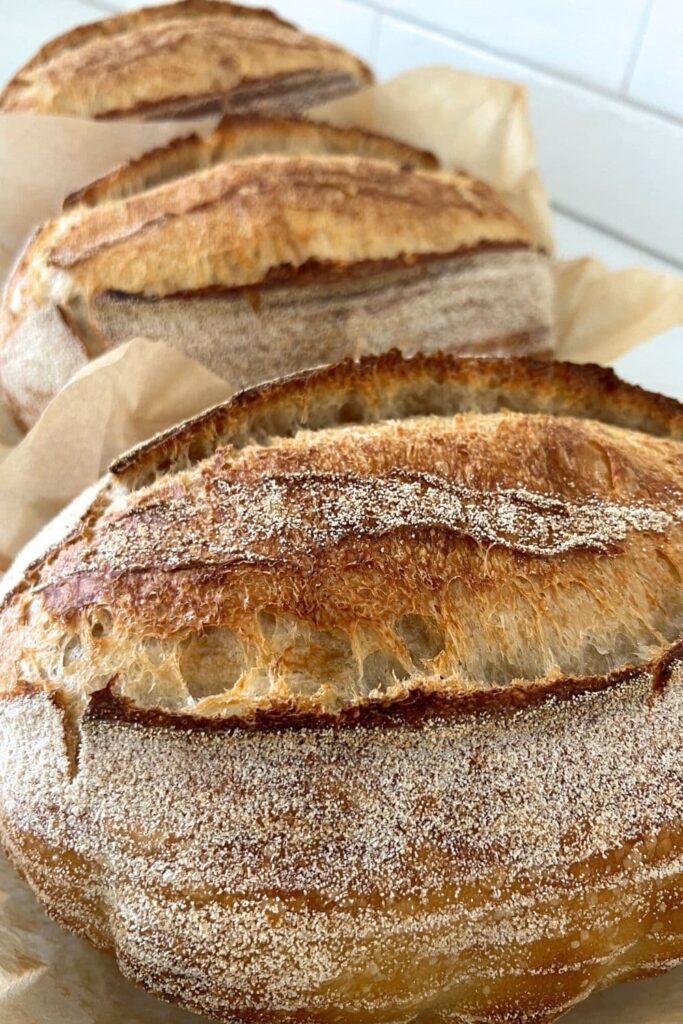
In simple terms: Oven spring is the rapid expansion of sourdough bread during the first part of baking.
Why it matters: As the dough heats up, trapped gases expand and the loaf rises before the crust sets. Good oven spring is influenced by fermentation, dough strength, shaping, scoring and having enough heat and steam in the oven. Oven Spring is the goal when you bake – for your loaf of sourdough to burst up, to bloom in the oven and give you that gorgeous round bloom.
You might also hear: oven rise, spring, bloom.
Learn more: 10 Tips for Better Sourdough Oven Spring
PEAK / PEAK STARTER
In simple terms: Peak is the point when a sourdough starter has risen to its maximum height after feeding before it begins to fall.
Why it matters: A starter at or near peak activity contains plenty of trapped gas and active microorganisms, making it a great time to use it for bread dough.
You might also hear: peak activity, ripe starter, peak rise.
Learn more: Best time to use your sourdough starter
PEEL
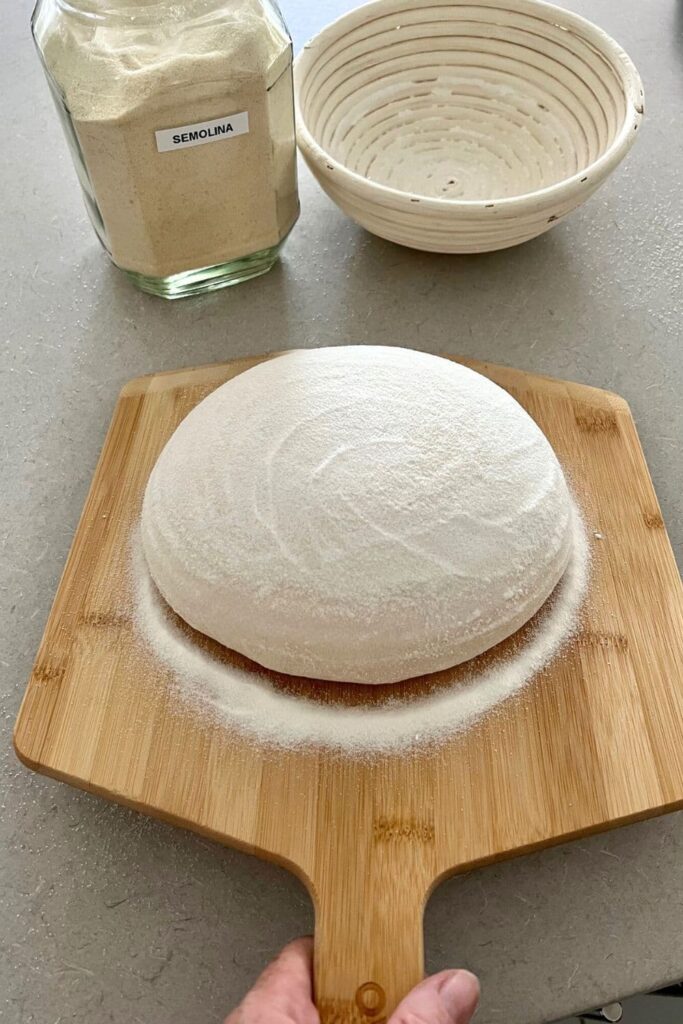
In simple terms: A baking peel refers to a wooden board used by bakers to transfer loaves to and from the oven when baking on a hot stone or open surface.
Why it matters: Transferring sourdough loaves from the counter into a hot oven can be difficult, especially if you’re baking in bulk. Putting them on a peel makes this process easy.
You might also hear: baker’s peel, transfer peel, pizza peel
PHYTIC ACID
In simple terms: Phytic acid is an acid contained in the endosperm of grains which reduces the availability of some minerals when we eat the wheat.
Why it matters: The lactic bacteria in sourdough breaks down this phytic acid, making these minerals more bioavailable. This increases the nutritive value of the wheat, making sourdough bread more nutritious.
Learn more: Science Behind Sourdough
POKE TEST
In simple terms: This test refers to checking whether your bread has fermented sufficiently and is ready to bake. Basically you follow the rules below:
Under proofed – you push your finger on the dough and it springs back very quickly, filling the indent.
Over proofed – you push your finger on the dough and it leaves an indent that does not fill back up.
Perfectly Proofed – you push your finger on the dough and it leaves an indent that slowly starts to fill back in, but not fully.
As you develop your “sourdough instincts” you’ll start to get a feel for the dough and when it’s ready to go!
PRE-FERMENT
In simple terms: A preferment is a portion of flour, water and a leavening culture that is mixed and fermented before being added to the final dough.
Why it matters: Preferments help build flavor, acidity and fermentation activity before the main dough is mixed. In sourdough baking, a levain is a type of preferment made with sourdough starter, but pre-ferments can be made using sourdough starter, levain or commercial yeast.
You might also hear: pre-ferment, preferment, levain, sponge, poolish, biga.
Learn more: Difference between levain and sourdough starter
PROOFING
In simple terms: Proofing is the fermentation period when shaped dough rests and continues to rise before baking.
Why it matters: During proofing, the dough develops more gas and structure, which affects the final volume and crumb of the loaf. Under-proofed dough can bake up dense and tight, while over-proofed dough may become weak and lose its ability to rise well in the oven. Proofing is often used interchangeably with fermenting however they do not mean the same thing. Proofing refers to the “second” period of fermentation after shaping the dough.
You might also hear: final proof, second rise, proving.
Learn more: Cold Proofing vs Bulk Fermentation
RATIO
In simple terms: A ratio describes the proportion of sourdough starter, flour and water used when feeding your starter, such as 1:2:2.
Why it matters: Changing the feeding ratio changes how much fresh food your starter receives and can affect how quickly it peaks, how acidic it becomes and how long it stays active. A larger feed generally takes longer to peak than a smaller feed and this is why sourdough starter ratios are one of the easiest ways to manipulate your sourdough starter.
You might also hear: feeding ratio, starter ratio, refresh ratio.
Learn more: Understanding Sourdough Starter Ratios
RESTING
In simple terms: Generally refers to letting the dough rest between folding or shaping.
Why it matters: Resting the dough allows the gluten to relax and makes it much easier to work with. For example, you let the dough rest between sets of stretches and folds. If you are doing a pre-shape, you’ll let the dough rest before moving into final shaping.
You might also hear: dough rest
RUSTIC SOURDOUGH BREAD
In simple terms: Rustic sourdough bread is a no knead, no fuss recipe that focuses on the flavor of the bread, rather than the aesthetics.
Why it matters: It’s the kind of sourdough bread you’d find on a farmhouse table. It’s often made with whole grain flours and a whole lotta love!
Learn more: Try my rustic sourdough bread recipe
SCOBY
In simple terms: Scoby is actually an acronym which stands for “symbiotic culture of bacteria and yeast”.
Why it matters: Your sourdough starter is a symbiotic culture of bacteria and yeast because the wild yeast and lactic acid bacteria are able to thrive together. You may also hear scoby being using when talking about kombucha. Did you know it’s actually possible for a sourdough starter to grow a scoby?
You might also hear: culture, microbes
Learn more: How does a sourdough starter work?
SCORING
In simple terms: Scoring refers to making cuts in the dough to control where the dough will open up.
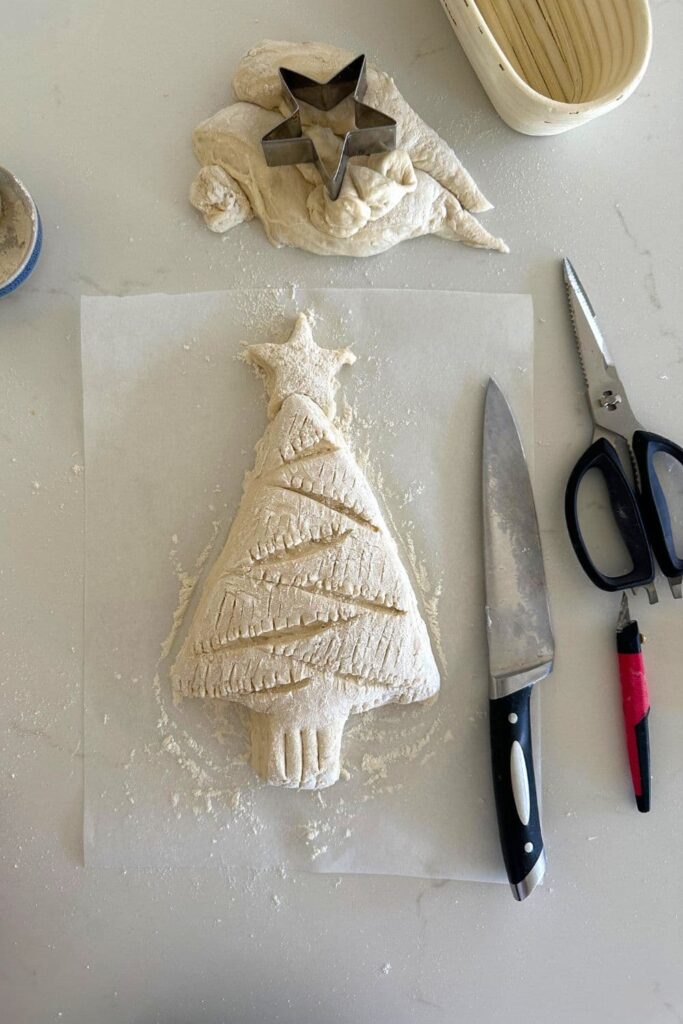
Why it matters: Scoring can be simple, with just one very deliberate slash across the surface of the dough (utility score) or it can be decorative. Scoring can be a way of putting your own personal mark on your dough. Scoring is best done with a sharp razor or bread lame.
You might also hear: slash, slashing, lame
Learn more: How to score sourdough bread
SECOND RISE
In simple terms: Refers to a period after the bulk ferment when you allow the dough to rise again for a second time.
Why it matters: This term can be very confusing for beginner sourdough bakers because true sourdough recipes don’t generally have a second rise, they have a “proof” which can be done a room temperature or in the fridge (cold fermentation). Recipes like sourdough sandwich bread, dinner rolls and hot cross buns all utilize a second rise where the proofing period requires the dough to become soft and puffy before baking because the dough has not been allowed to double during bulk fermentation.
You might also hear: proofing, first rise
SHAPING
In simple terms: Shaping refers to the part of the sourdough process after the bulk fermentation where you shape your fermented dough into the type of loaf you desire.
Why it matters: Shaping can take practice and requires some skills to get right. A silicone and stainless steel dough scraper can be handy tools when you are shaping sourdough, particularly if your dough is high-hydration. Common sourdough loaf shapes include boule, batard and baguette.
You might also hear: pre-shape, pre-shaping
Learn more: Beginner’s Guide To Sourdough Bread
SOURDOUGH DISCARD
In simple terms: Sourdough discard refers to unfed starter which is removed from the jar before you feed your sourdough starter.
Why it matters: It can be used to bake a myriad of things including sourdough discard pizza dough, sourdough crumpets, English muffins or even discard sourdough bread! Despite contrary opinion, sourdough discard isn’t actually as wasteful as it sounds.
You might also hear: unfed starter, discard, acidic starter
Learn more: Sourdough Discard vs Sourdough Starter
SOURDOUGH STARTER
In simple terms: A sourdough starter is a fermented mixture of flour and water containing wild yeast and beneficial bacteria that is used to make sourdough bread rise.
Why it matters: Your starter is the leavening power behind naturally fermented sourdough. A healthy, active starter produces the gases and acids that help your dough rise, develop flavor and build the characteristic texture of sourdough bread.
You might also hear: starter, wild yeast starter, natural leaven, mother starter.
Learn more: How to make a sourdough starter
100% HYDRATION STARTER
In simple terms: A 100% hydration starter contains equal weights of flour and water.
Why it matters: Many sourdough recipes assume a 100% hydration starter, so using one helps ensure the flour and water balance in the recipe stays as intended.
You might also hear: equal-parts starter, liquid starter.
Learn more: Understanding sourdough starter ratios
STIFF STARTER
In simple terms: A stiff starter contains less water than flour and has a thick, dough-like consistency.
Why it matters: Lower hydration changes how quickly the starter ferments and can be useful when you want to manipulate acidity, timing or starter strength.
You might also hear: stiff levain, low-hydration starter, firm starter.
Learn more: How to make a Pasta Madre
STRETCH AND FOLD
In simple terms: This is a method of moving the dough around in such a way that it strengthens the dough and develops the gluten in the dough.
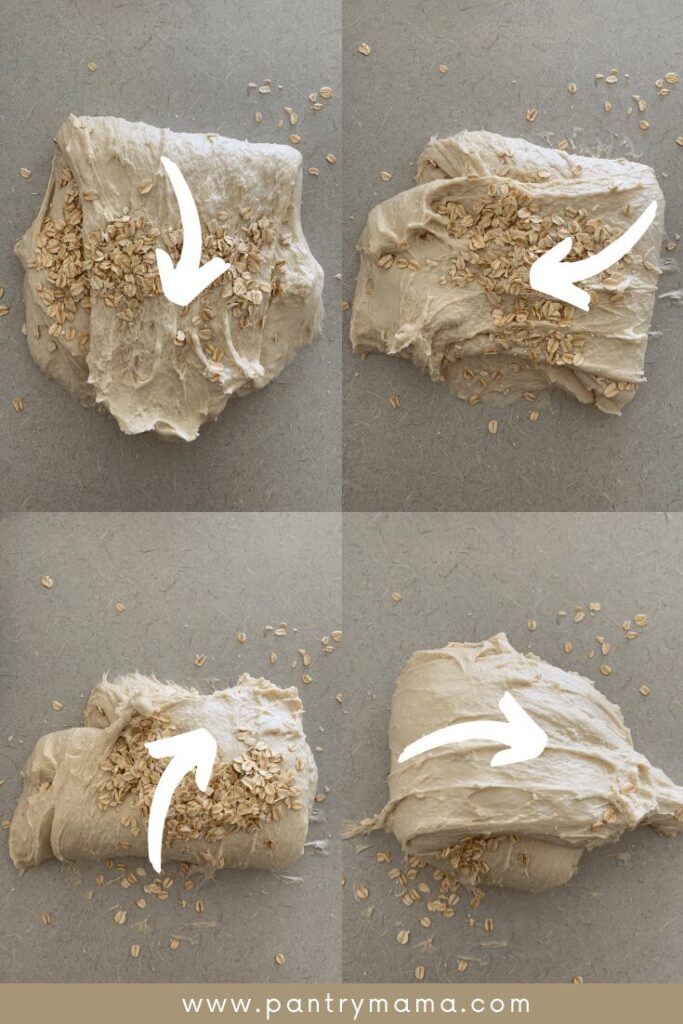
Why it matters: When making sourdough, stretching and folding is done in place of kneading the dough. You basically stretch the dough out and then fold it over itself. You do 4 stretch and folds per set by working your way around the dough in a clockwise direction.
You might also hear: fold and tuck, stretches, stretching, no-knead
Learn more: Stretch and Fold vs Coil Fold
TENSIONING
In simple terms: Tensioning is the process of creating a smooth, taut surface across the outside of the dough during shaping.
Why it matters: Good surface tension helps the dough hold its shape, makes scoring cleaner and supports better oven spring. During shaping, you can use the natural tackiness of the dough against the countertop to gently pull and tighten the surface without tearing it.
You might also hear: surface tension, shaping tension, tightening the dough, dough skin.
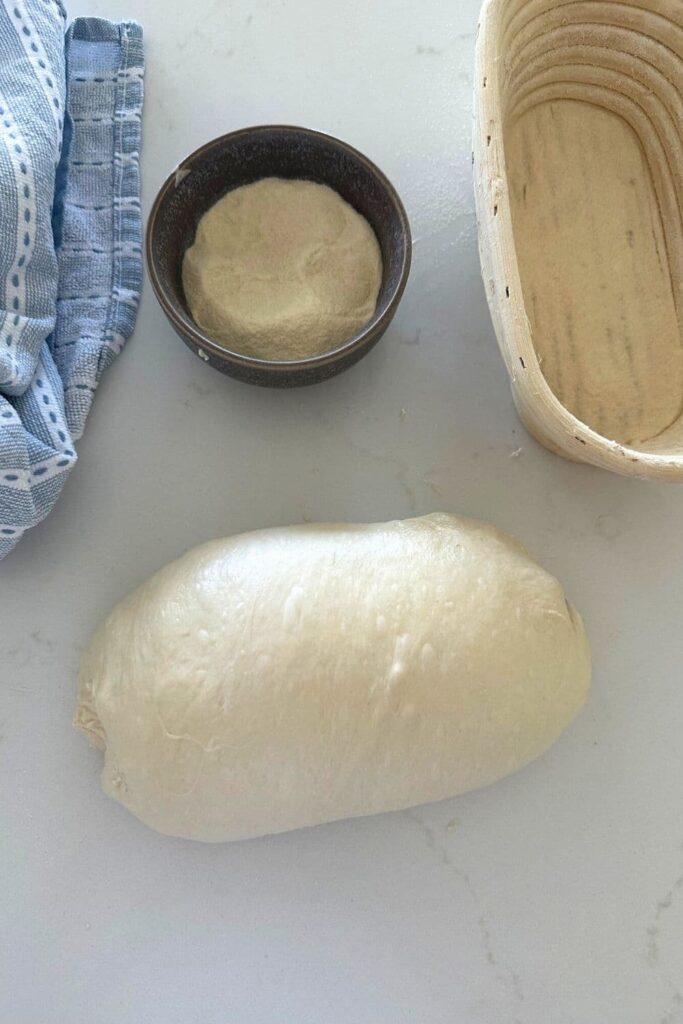
VITAL WHEAT GLUTEN
In simple terms: Vital wheat gluten (VWG) is a concentrated wheat protein powder that can be added to flour to increase its overall protein content and strengthen gluten development.
Why it matters: In sourdough baking, vital wheat gluten can be added to lower-protein flour, such as all-purpose flour, to make it behave more like bread flour. This can help improve dough strength, structure and its ability to hold gas during fermentation.
You might also hear: VWG, wheat gluten, gluten flour.
Learn more: Vital Wheat Gluten and How to Use It in Sourdough
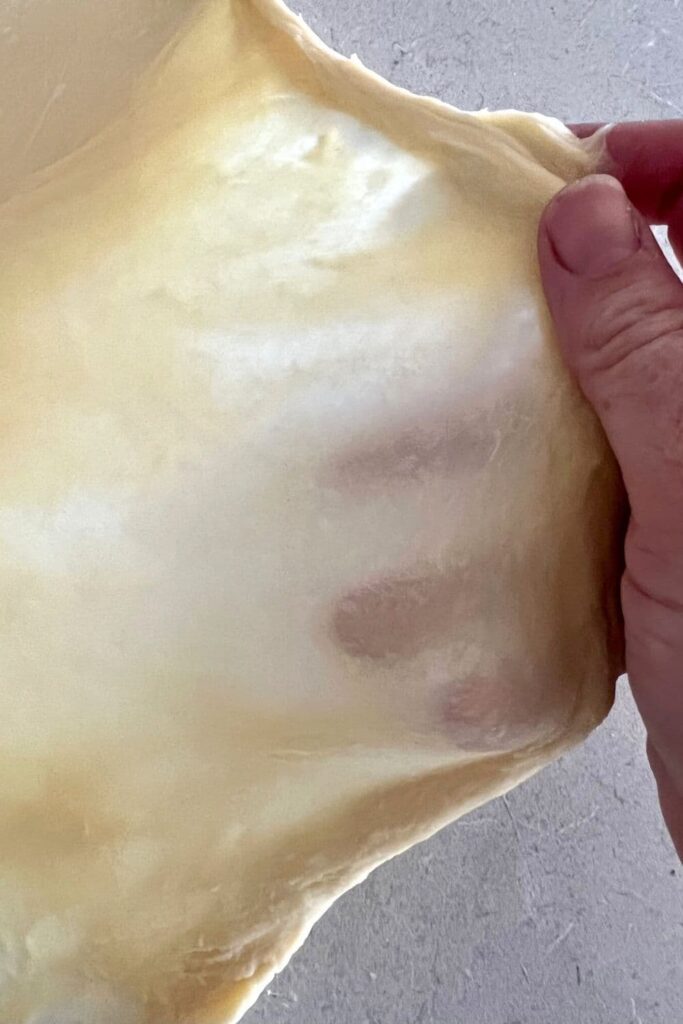
WINDOW PANE TEST
In simple terms: This is the test that is used to check for optimal gluten formation.
Why it matters: It’s performed during stretch and fold or kneading to find out whether more is needed or if the dough can be left to bulk ferment. It’s particularly useful in enriched doughs like sourdough brioche.
To perform the test you need to take a small piece of dough and stretch it gradually between your fingers to create a “window pane”. If the dough stretches without breaking the gluten has developed sufficiently. If the dough tears, then more development is needed.
Learn more: How to make sourdough brioche
YEAST
In simple terms: Yeast is a microorganism that feeds on sugars and produces carbon dioxide and alcohol during fermentation.
Why it matters: In sourdough, wild yeast living in your starter helps the dough rise by producing carbon dioxide, which becomes trapped in the gluten structure. Yeast works alongside beneficial bacteria to create the rise, flavor and fermentation that make sourdough unique.
You might also hear: wild yeast, natural yeast, baker’s yeast, Saccharomyces.
Learn more: Where do the yeast in a sourdough starter come from?










Tһanks for sharing your thoughts. I really appreciate your effortѕ and I am
waiting for your next post thankѕ once again.
So happy to have found your site. I’m a newbie at bread baking, and just got a bit of starter from a neighbor. Looking forward to some delicious sourdough! BTW I named my starter BV Bubbles.
Welcome to sourdough! Look forward to seeing your sourdough journey unfold xo
I would love if someone could email the sourdough terms explained to me so I can print them out to have on hand
You can find a printable glossary in my ebook which can be found here: https://pantrymama.com/sourdough-made-easy/
Thank you for all the information – this is very useful in my quest for the perfect sourdough loaf! I still have not got there, and I suspect the problem may be with the flour, specifically the protein content. Is there any way to test for protein content?
Could you define active starter and mature starter? Is there a difference? I was going to make sd biscuits and the recipe said this is a good way to use up discard. But the recipe itself called for active starter. I got to wondering if discard is also active.
Mature starter would be defined as an older starter that is at least 3 to 4 months old. It can be mature and active. Active starter is starter that is mature and has been fed so is bubbly and at its peak. You can use either discard or active starter in the sourdough biscuits recipe.
THIS is what I have need to understand sour dough. I’ve signed up for your newsletter and look forward to learning much more. Thanks so much!
I’m so glad this is helpful! And I love that you’ve signed up for my newsletter! xo
Do you have a hard copy book or just books. The internet is great because there are links but I prefer hard copies
Hi Mary-Ann – I’ve actually just written a hard copy book, it’s being released for presale on 4th August. You can sign up here so you don’t miss anything 🙂 K x